Skip to main content


If you have ever driven past a row of storage units and thought, “That looks simple,” you are not alone.
At first glance, self storage seems straightforward. Rent space. Collect monthly payments. Repeat. But starting a self storage business in 2026 requires far more strategy than pouring concrete and installing roll-up doors.
The good news is this: demand remains strong, margins can be healthy, and the model is highly scalable.
In this complete guide, you will learn how to start a self storage business the right way, from market research and financing to operations, marketing, and long-term growth.
If you plan to operate a modern facility, technology plays a major role. Platforms like Sharefox help operators automate bookings, billing, tenant management, and facility access.
Let’s break the process down step by step.
Understand the Self Storage Industry
Before investing capital into a self storage startup, it is essential to understand how the industry works and why it continues to grow.
What a Self Storage Business Means
A self storage business provides rentable units where individuals and businesses store personal or commercial items.
Customers typically pay monthly with flexible contracts and minimal long-term commitments.
There are several common types of storage facilities:
- Traditional drive-up storage units
- Climate-controlled indoor storage
- RV, boat, and vehicle storage
- Portable or modular storage
- Converted warehouse storage
The business model is attractive because operating costs remain relatively predictable once construction is complete.
Unlike retail or hospitality businesses:
- There is no inventory spoilage
- Staffing requirements are minimal
- Units generate recurring monthly revenue
Revenue streams typically include:
- Monthly unit rentals
- Late fees
- Tenant insurance
- Packing supplies
- Premium services like climate control or 24-hour access
Many modern facilities operate with only one manager or even fully remotely using automation software and digital access control.
Why Consider Opening a Storage Facility in 2026
The self storage industry has proven resilient through multiple economic cycles.
Demand tends to remain stable because storage is often tied to life transitions such as:
- Moving
- Downsizing
- Divorce
- Business expansion
- Relocation
According to industry research from the Self Storage Association and IBISWorld, the US self storage market generates tens of billions of dollars annually, with many markets maintaining occupancy rates above 85%.
Several factors continue to drive demand in 2026:
- Urbanization and smaller living spaces
- Growth of remote businesses
- Ecommerce inventory storage needs
- Increased mobility and relocations
For entrepreneurs seeking a semi-passive real estate asset with recurring revenue, self storage remains an attractive opportunity.
Market Research and Feasibility Analysis

Before starting a self storage business, conduct detailed market research.
This step determines whether your project becomes profitable or struggles to compete.
Conduct Market Research for Your Target Area
Start by analyzing local market demand.
Important data points include:
- Population growth
- Household income levels
- Housing density
- Apartment occupancy rates
One common industry metric is storage square footage per capita. Oversupplied markets typically experience lower rental rates and slower lease-up periods.
Visit competing facilities in your target area.
Check their websites and call as a potential customer to ask about availability and pricing.
Positive indicators include:
- High occupancy rates
- Waiting lists
- Limited climate-controlled units
- Outdated facilities lacking technology
Local government planning reports, census data, and commercial real estate platforms can help validate demand.
Choose the Best Location for Your Storage Facility
Location is one of the most important decisions in self storage development.
The best facilities typically offer:
- High visibility from main roads
- Easy vehicle access
- Proximity to residential areas
- Nearby commercial zones
Convenience is critical.
Many operators say customers will drive a few minutes for affordable storage but rarely travel long distances.
Zoning regulations must also be verified before purchasing land. Always confirm that local regulations allow storage facility development.
Analyze Your Target Customers
Understanding your target customer helps determine the optimal unit mix.
Common customer segments include:
- Apartment renters
- Homeowners renovating or downsizing
- College students
- Small businesses
- Contractors
Urban markets may demand smaller climate-controlled units, while suburban markets may favor larger 10×20 or 10×30 units.
Matching unit mix to local demand prevents costly design mistakes.
Create a Business Plan for Your Self Storage Startup

Once market feasibility looks promising, formalize your strategy with a business plan.
Key Components of a Strong Business Plan
A comprehensive business plan should include:
- Executive summary
- Market analysis
- Competitive positioning
- Operations plan
- Marketing strategy
- Financial projections
Be specific about:
- Number of units
- Unit sizes
- Target occupancy rates
- Expected rental prices
- Competitive advantages
Investors and lenders value realistic projections backed by market research.
Financial Forecast and Breakeven Analysis
Startup costs vary widely depending on location and project size.
Typical cost categories include:
- Land acquisition
- Construction
- Permits and legal fees
- Security systems
- Software and automation tools
- Insurance
- Marketing
- Operating expenses
Most storage facilities reach stabilization between 24 and 36 months.
Conservative financial projections improve credibility when seeking financing.
Legal Structure and Registration
Choosing the right legal structure protects your business and simplifies compliance.
Choose the Right Legal Entity
Many storage entrepreneurs operate under an LLC because it provides liability protection and tax flexibility.
Other options include:
- Corporations
- Partnerships
- Real estate investment entities
Consult both an attorney and accountant before finalizing your structure.
Register Your Business and Set Up Taxes
Key administrative steps include:
- Business registration
- Employer Identification Number (EIN)
- Required business licenses
- Business bank accounts
Separating business and personal finances protects your liability and simplifies accounting.
Permits and Regulatory Compliance
Self storage development requires several regulatory approvals.
These may include:
- Building permits
- Environmental assessments
- Fire safety inspections
- Stormwater management approvals
- Accessibility compliance
Ignoring regulatory steps can delay construction and increase project costs.
Secure Funding and Finance Your Facility

Financing is one of the largest challenges when starting a storage facility.
Estimate Startup and Operating Costs
Construction is usually the largest expense.
Climate-controlled buildings cost more than basic drive-up facilities due to insulation and HVAC requirements.
Modern facilities must also invest in:
- Security systems
- Access control technology
- facility management software
- automated billing systems
Explore Funding Options
Common financing sources include:
- Commercial bank loans
- SBA loans
- Private investors
- Joint ventures
- Real estate partnerships
Lenders will review your feasibility study, business plan, and projected cash flow.
Create a Solid Financial Plan
The lease-up phase is critical.
Occupancy may grow slowly during the first months of operation.
Maintain contingency reserves and plan for conservative growth scenarios.
Experienced operators often include a 10–15% cost buffer for unexpected expenses.
Build or Buy Your Storage Facility
Entrepreneurs typically choose between buying an existing facility or building a new one.
Buying an Existing Storage Facility
Acquiring an existing facility offers advantages such as:
- Immediate cash flow
- Established customer base
- Known occupancy history
However, purchase prices often reflect the stability of existing operations.
Due diligence should include reviewing financial records, lease agreements, and maintenance history.
Building a New Storage Facility
New construction allows full control over:
- facility design
- technology infrastructure
- branding and marketing
Work with experienced storage architects and contractors. Layout mistakes can permanently reduce profitability.
Construction timelines often range from 9 to 18 months.
Consider Conversion Storage Options
Warehouse conversions are becoming increasingly popular, especially in urban markets.
Portable or modular storage solutions also allow phased expansion and lower upfront investment.
Facility Design and Technology Integration

Facility design directly impacts operational efficiency and customer experience.
Design an Efficient Storage Layout
Key design considerations include:
- Wide driveways for moving trucks
- Clear directional signage
- Adequate lighting
- Convenient loading access
A well-planned unit mix maximizes revenue per square foot.
Integrate Technology for Facility Management
Technology is transforming the self storage industry.
Modern facilities rely on software platforms for:
- Online reservations
- Automated billing
- Digital contracts
- tenant management
- access control systems
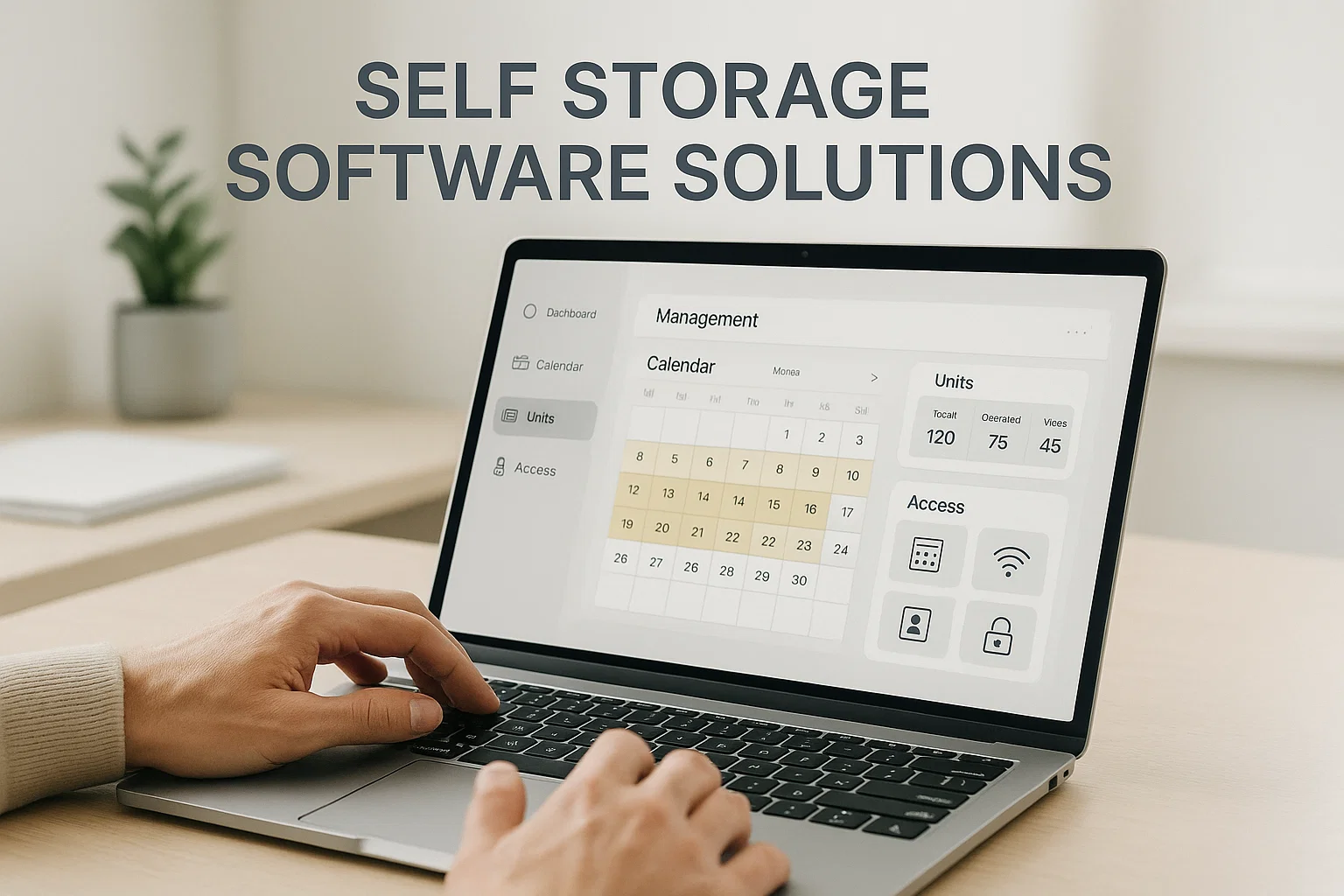
Many operators now use solutions like our Self Storage Software to automate daily operations and manage facilities remotely.
Automation reduces staffing requirements while improving tenant convenience.
Marketing Your Self Storage Startup
Even the best facility needs strong marketing to reach potential customers.
Branding and Online Presence
A professional online presence is essential.
Key steps include:
- Launching a website optimized for local search
- Creating a Google Business Profile
- Encouraging customer reviews
Online visibility strongly influences rental decisions.
Digital Advertising and Social Media
Digital advertising can accelerate occupancy growth during the lease-up phase.
Common strategies include:
- Pay-per-click advertising
- local SEO campaigns
- social media promotions
Target ads toward people searching for moving services, apartments, or home renovations.
Offline Promotion and Community Outreach
Traditional marketing still works.
Consider:
- partnerships with moving companies
- referrals from apartment complexes
- relationships with real estate agents
Community involvement builds trust and brand recognition.
Operations and Customer Service

Efficient operations determine long-term success.
Establish Daily Operating Procedures
Even automated facilities require oversight.
Standard operating procedures should cover:
- billing management
- late payment policies
- unit auctions
- maintenance schedules
- customer support processes
Consistency prevents operational problems.
Deliver Excellent Customer Experience
Storage customers are often dealing with stressful life events such as moving or downsizing.
Provide responsive communication and maintain clean, secure facilities.
Satisfied customers are more likely to renew their leases.
Measure Performance and Grow Your Business
Successful operators track performance and continuously improve operations.
Key Metrics to Monitor
Important metrics include:
- occupancy rate
- revenue per available unit
- customer acquisition cost
- net operating income
Data-driven decisions outperform guesswork.
Strategies for Scaling
Once your first facility stabilizes, growth opportunities include:
- expanding unit inventory
- acquiring additional properties
- adding climate-controlled units
- upgrading facility technology
Many successful entrepreneurs build regional storage portfolios over time.
Grow a Successful Self Storage Business in 2026
Starting a self storage business in 2026 requires planning, research, and disciplined execution. When done correctly, storage facilities can become reliable long-term real estate assets that generate recurring income.
Focus on market research, secure financing, build strategically, and prioritize operational efficiency. Modern technology platforms also play a critical role in scaling storage operations.
Explore how automation can streamline your facility here at Sharefox.

 All in one platform