Skip to main content


Tooler.no started with a simple idea: tool rental could be done in a much more customer-friendly way. But what does it actually take to make someone rent a drill instead of buying one? We looked at how Tooler.no built its service around that exact question — and what other rental businesses can learn from it.
Why customers rent instead of buy
Before writing a single line of code, Tooler.no ran customer interviews to find out what a genuinely good rental experience would look like. The answers were consistent: people wanted a digital booking interface, online guides for do-it-yourself projects, high-quality equipment, and pick-up or delivery close to home. Tooler.no built its entire service offering around those four points.
“Being able to book a drill online during my lunch break and pick it up at the 7-Eleven on my way home — that’s what made renting easier than buying for me.” — A Tooler.no customer, quoted in the company’s product-development interviews
That kind of friction removal is the difference between a customer renting a tool and a customer just buying one instead, out of habit or convenience.
Picking up tools where you already are
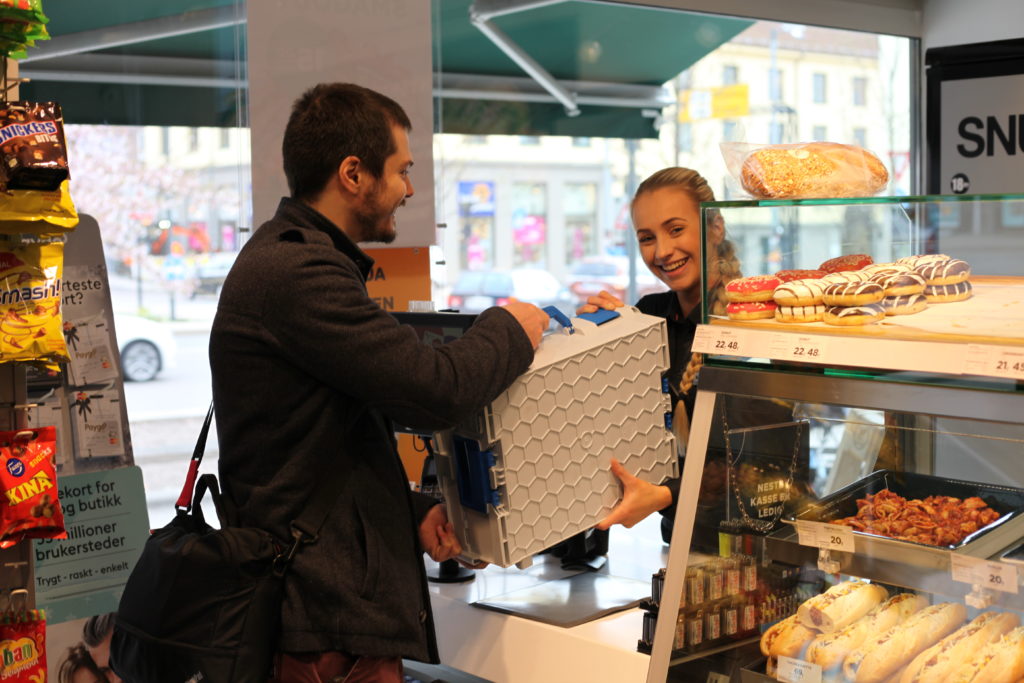
Rather than asking customers to detour to a warehouse, Tooler.no built its pick-up network around places people already visit. Orders are placed online, and customers can choose to collect from a local neighbourhood point, a 7-Eleven or Shell station, have the item delivered by PostNord or Helthjem, or collect from the Tooler warehouse directly. The system checks capacity and delivery time in the background before it ever shows the customer a pick-up or delivery slot — so the option on screen is always one that can actually be kept.
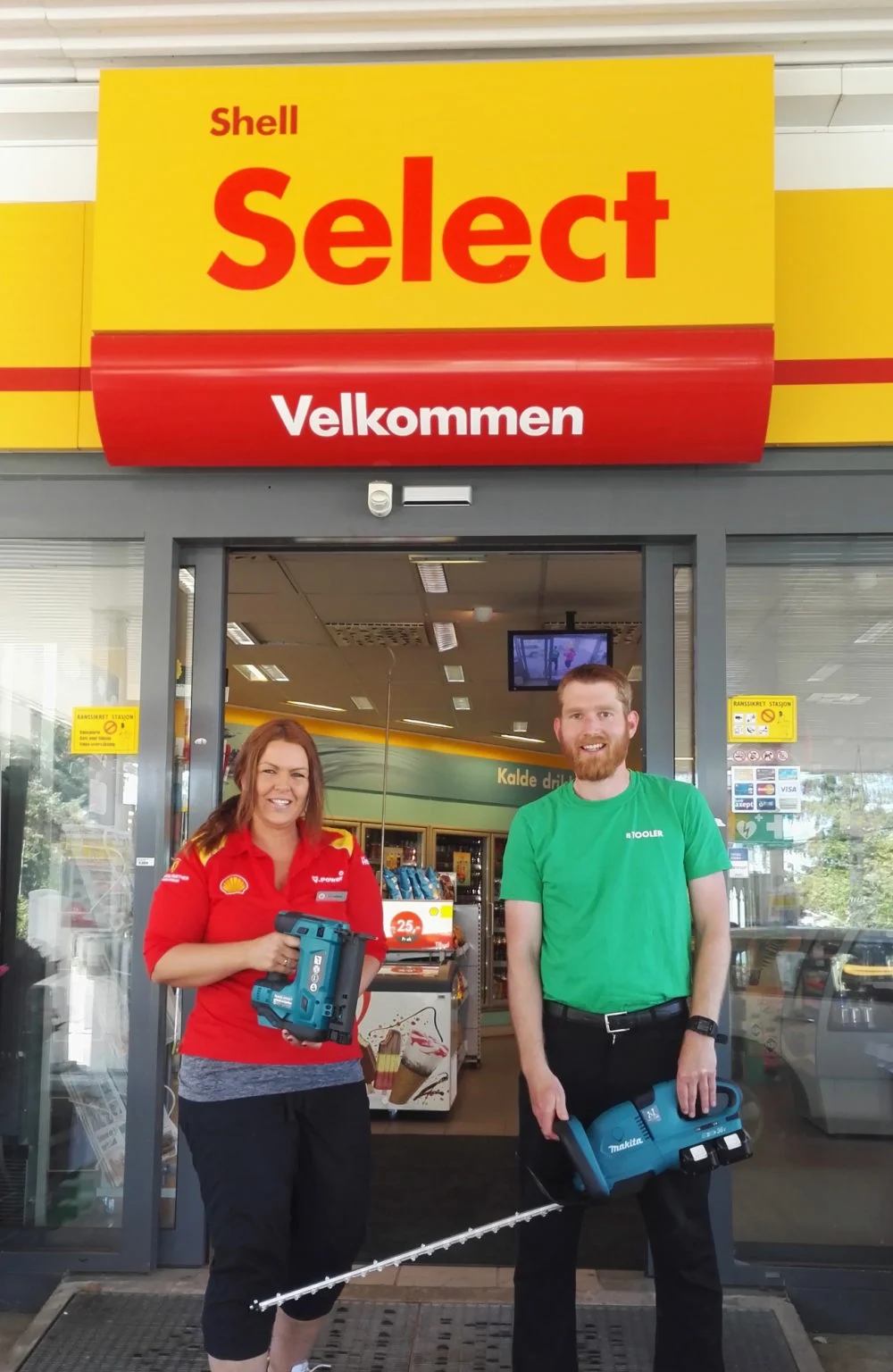
Tools can be picked up at gas stations or local 7-elevens
This is the same logic behind Sharefox’s broader self-service rental model: let the customer collect or return equipment on their own schedule, without waiting on staff or opening hours.
The booking experience behind the scenes
Tooler.no runs on the Sharefox rental commerce platform, which handles the parts customers never see but always feel — real-time availability, automated scheduling, and payment. On the customer side, this shows up as a straightforward online booking flow: pick a tool, pick a pick-up point, pay, and get a confirmation with a time window.
Behind that simple flow sits a full rental inventory management system that tracks which tools are available at which pick-up point, so the platform never promises a drill that’s already booked out.
Renting vs. buying: a quick comparison
For most one-off or occasional jobs, the maths tends to favour renting. The table below compares the two options for a typical home-improvement task.
Full retail price, paid once
Needs space in a garage or shed
Owner’s responsibility
Limited to what you’ve bought
Tools used often, long-term
Low per-project fee
None — return after use
Handled by Tooler.no
Wide range, on demand
Occasional or seasonal jobs
Buying still makes sense for tools used weekly. Renting tends to win for the drill, tile saw, or hedge trimmer that’s needed twice a year.
Membership for bigger, recurring projects
For customers with larger or ongoing projects, Tooler.no offers a membership tier with discounted pricing — closer to a subscription rental model than a one-off transaction. It’s a small but telling detail: not every rental customer is renting once, and the pricing structure reflects that.
Guides that turn browsing into doing
Tooler.no also publishes how-to and inspirational articles on projects customers can take on themselves, each one linking directly to the rental equipment needed for the job. It’s a pattern other tool rental businesses have adopted too — pairing equipment listings with practical content shortens the distance between “I wonder if I could build this” and an actual booking.
Media attention and industry recognition
Tooler’s approach to pick-up points and digital rental has drawn attention beyond its own customer base. The national trade organisation Virke has pointed to Tooler as an example of a new retail model within the circular economy, and Norwegian outlets including Dagens Næringsliv and broadcaster TV2 News have covered the service.
TV2 News visits Tooler.no together with the CEO of Virke.
Coverage like this matters for more than PR — it’s independent confirmation that the pick-up-point model works in practice, not just on a pitch deck.
The bigger picture: rental and the circular economy
Tooler’s model is part of a wider shift toward the circular economy in retail: fewer idle tools sitting in garages, more equipment in active use. For rental operators exploring a similar model, Sharefox’s case study on Toolbox24 shows a comparable approach to digitising a tool rental business from the ground up.
If you’re evaluating whether a similar setup could work for your own rental business, you can book a demo to see the platform behind Tooler.no in action, or read more about Sharefox.


 All in one platform