Skip to main content


A website is usually the easy part. The hard part — for a rental, mobility, or construction business — is everything that happens after someone lands on that website: checking whether an item is actually available, taking a deposit, sending a contract, and getting paid without a staff member on the phone. That gap between “we have a nice site” and “we run our rental business online” is exactly where digital agencies are finding a new, recurring line of business.
This article looks at how agencies are closing that gap in practice: what rental commerce actually requires, how four Scandinavian agencies have approached it differently for their clients, and what a partner program looks like once you decide to specialise in this niche.
Watch the Webinar
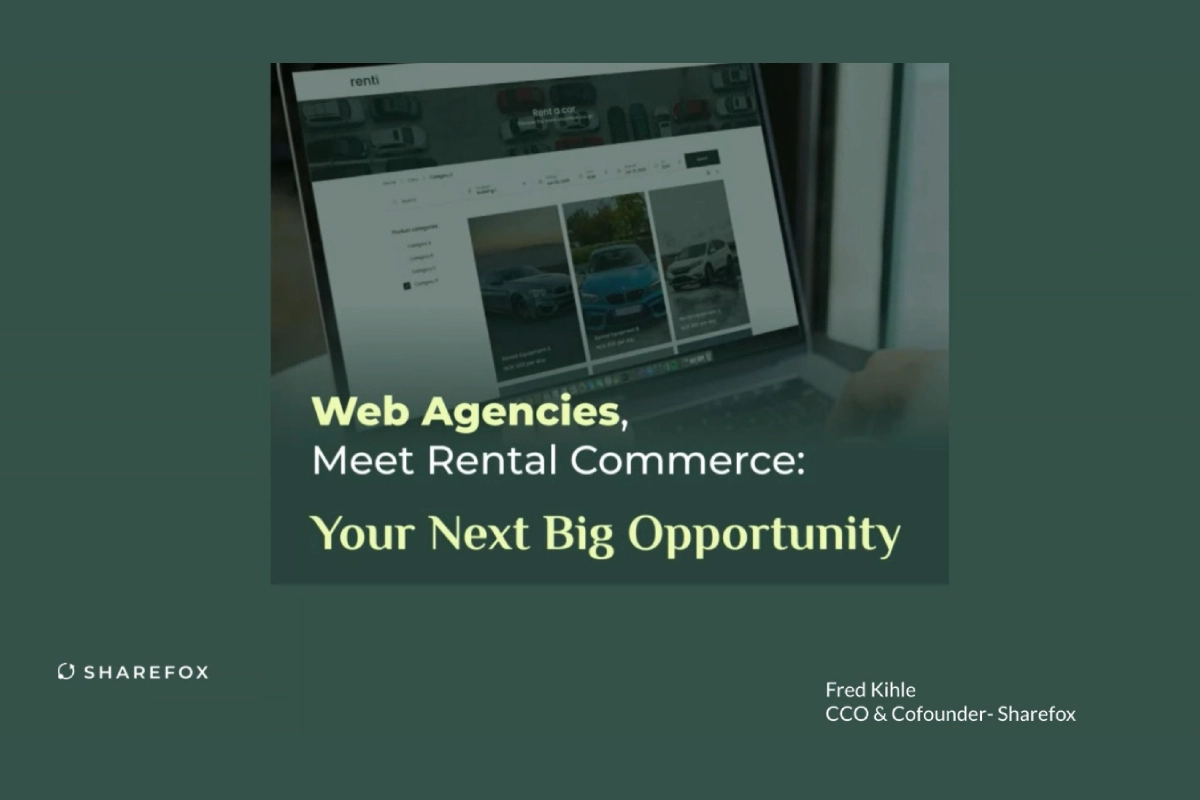
If you’d rather watch than read, our webinar “Web Agencies, Meet Rental Commerce: Your Next Big Opportunity” covers the same ground with live examples and Q&A.
Webinar agenda:
- Introduction to Sharefox
- Market insights: rental commerce and the opportunity for digital agencies
- Real examples of agencies using Sharefox
- The partner program, and how to get started
Why Rental Businesses Outgrow a “Normal” Website
Most rental, mobility, and construction clients don’t come to an agency asking for rental software — they come asking for a website, or a redesign. The rental-specific need usually surfaces later, once the agency starts asking how the client actually takes bookings today.
The honest answer, in a lot of cases, is: badly. Pen and paper. A shared spreadsheet. A phone that has to be answered during opening hours, even though customers — especially tourists and weekend renters — expect to book at 11pm on a Tuesday. A rental booking system that lets customers see live availability and pay on the spot removes that bottleneck without the agency having to build a booking engine from scratch.
This is the same shift e-commerce went through roughly a decade ago. Agencies that understood WooCommerce or Shopify became the go-to partners for retailers moving online. Rental and subscription businesses — car and trailer rental, machinery and tool hire, self-storage, sports and outdoor gear — are now going through a comparable move from “we have a shop” to “we run a channel.” An agency that already knows how to sell a client on structure, content, and conversion is well placed to lead that move, provided it has a platform partner that handles the parts a normal website builder doesn’t: live inventory, contracts, deposits, and self-service access outside opening hours.
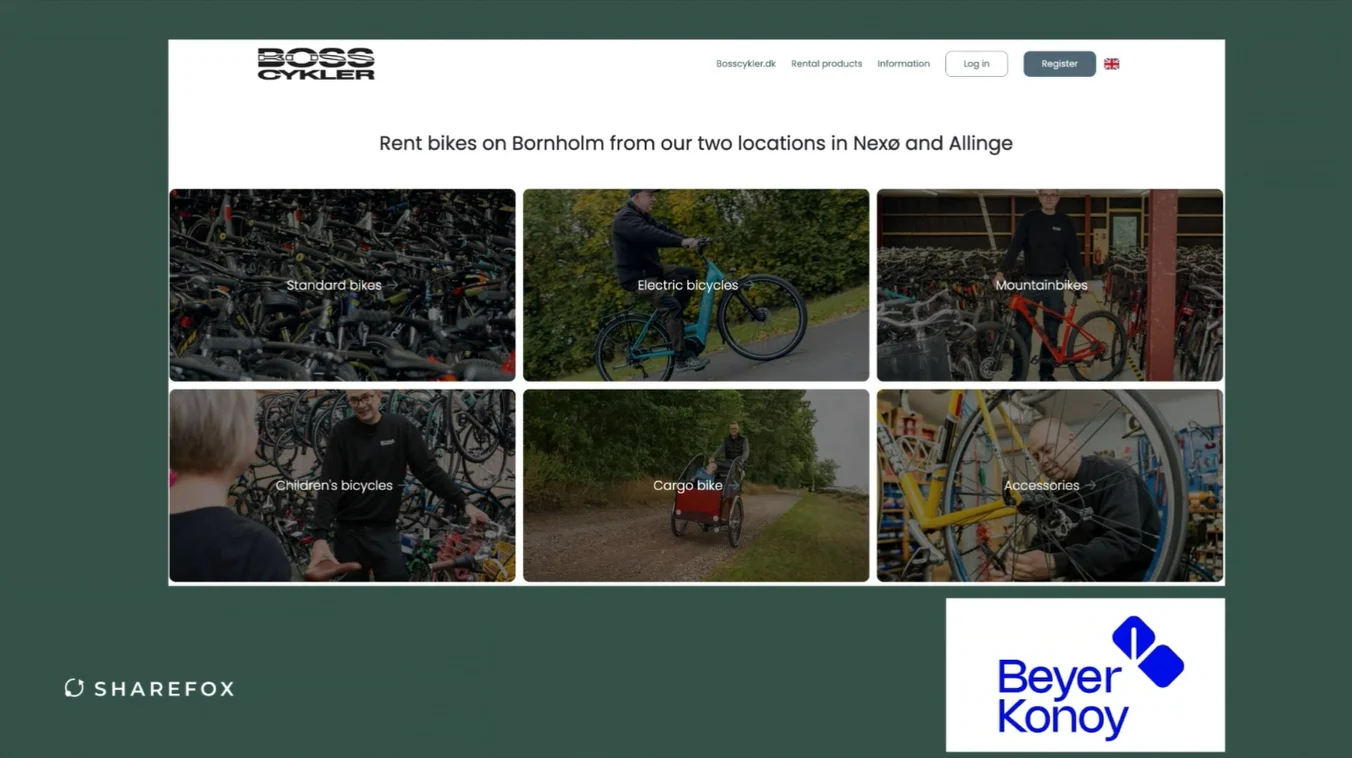
“Partnering with Sharefox has enabled us to deliver a future-proof rental solution for Boss Cykler. The platform gave us the flexibility to tailor a system that fits the client’s complex needs — from multilingual bookings and multiple locations to seamless local payments. Sharefox’s team was responsive, technically solid, and understood the market challenges from day one.” — Peter Beyer, CEO, Beyer Konoy
Four Agencies, Four Different Approaches
There’s no single “correct” way to bring rental commerce into an agency’s service line — it depends on the client’s existing site, their team’s technical comfort, and how much of the operational side they want to own. Four Scandinavian agencies illustrate that range well.
| Agency | Country | Client & Industry | How They Used Sharefox | Result |
|---|---|---|---|---|
| Beyer Konoy | Denmark | Boss Cykler — large-fleet bike rental | Standalone rental site alongside the client’s existing SEO-optimised homepage; multilingual setup; MobilePay | Multi-location booking replaced pen-and-paper tracking |
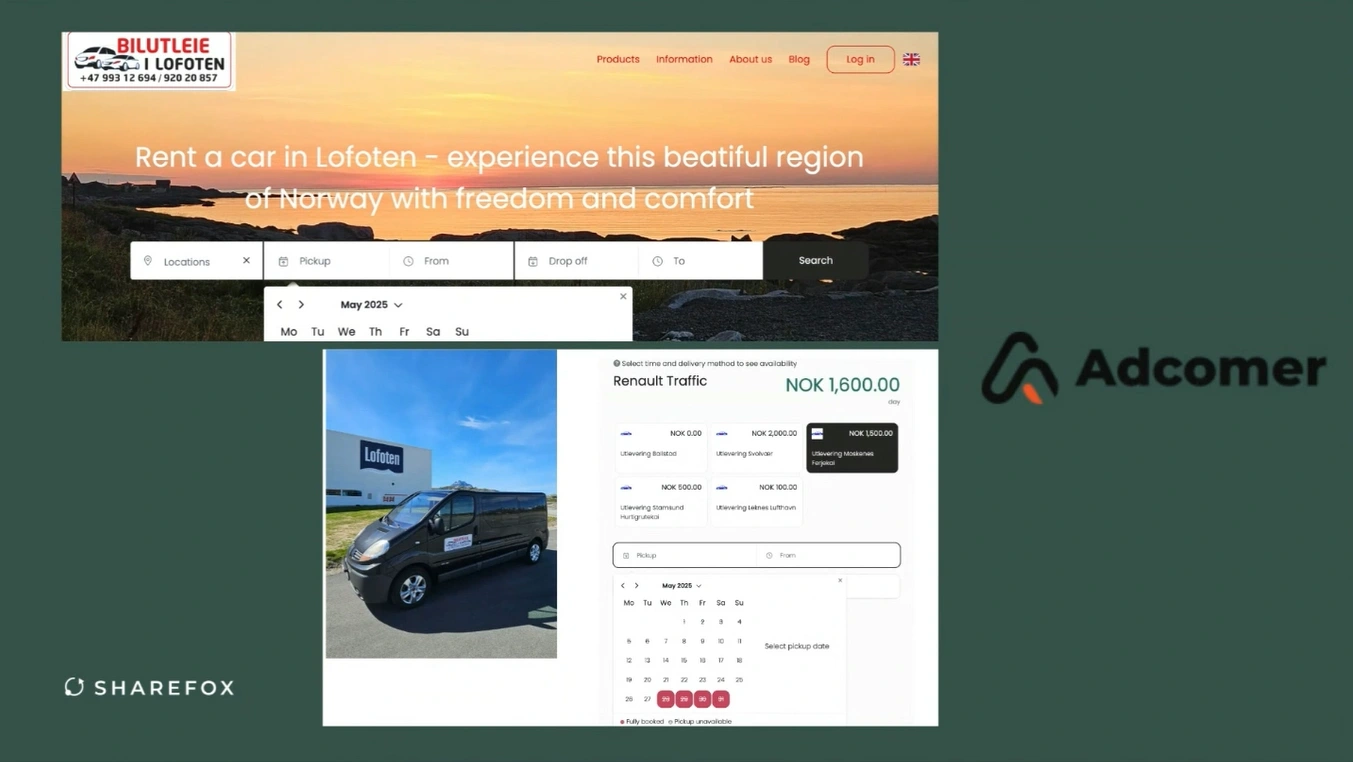
| Adcomer | Norway | Bilutleie i Lofoten — car rental | Content publishing and SEO/blog support on top of a client-built Sharefox site | Improved organic visibility without touching the booking system |
| Netron | Norway | Boksen Minilager — self-storage | Sharefox embedded as a booking widget inside a new WordPress site, plus access-control integration | Full brand build with a professional booking layer from day one |
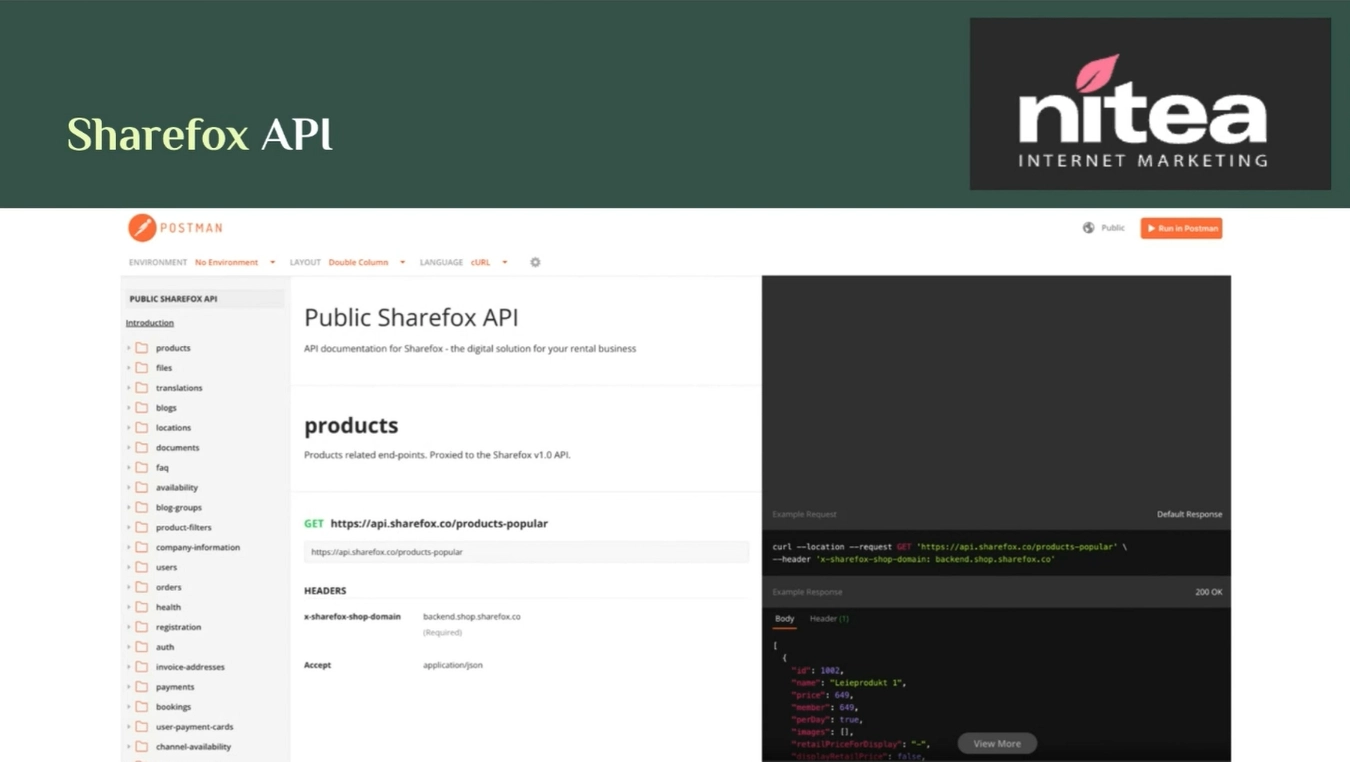
| Nitea | Sweden | A sauna rental business | Custom WordPress build using Sharefox’s open API for subscriptions and access tracking | Subscription-based access management running on a bespoke front end |

The pattern across all four: the agency kept doing what it’s good at — design, content, WordPress builds, SEO — and let the rental platform handle bookings, inventory, and payments underneath. None of them had to build a reservation system from scratch, and none of them had to hand the entire relationship over to a software vendor either.
“Working with Sharefox has been easy, fun, and very interesting!” — Malin Ringsell Olafsrud, CEO, Netron
“We had a seamless solution with Sharefox and extremely good cooperation with you guys. Very happy with this collaboration!” — Kristian Lindberg, Nitea
What “Full Rental Service” Actually Means Technically
When agencies talk about turning a website into a “full rental service,” they’re usually describing three things working together rather than one big platform:
- The customer-facing journey — a booking page or full site where a renter can see availability and pay.
- Distribution and access — how the item or space is actually handed over, including self-service and smart-lock access for 24/7 operation.
- Order and back-office management — contracts, deposits, invoicing, and inventory tracking so the business owner isn’t reconciling a spreadsheet at midnight.
Agencies that offer all three — even if they’re only building #1 and pointing #2 and #3 to a partner platform — end up delivering more value per project, and picking up recurring integration and content work rather than a single invoice for a website launch.
Setting Up as a Partner
Agencies that go further usually formalise the relationship through a partner program. In practice, that covers:
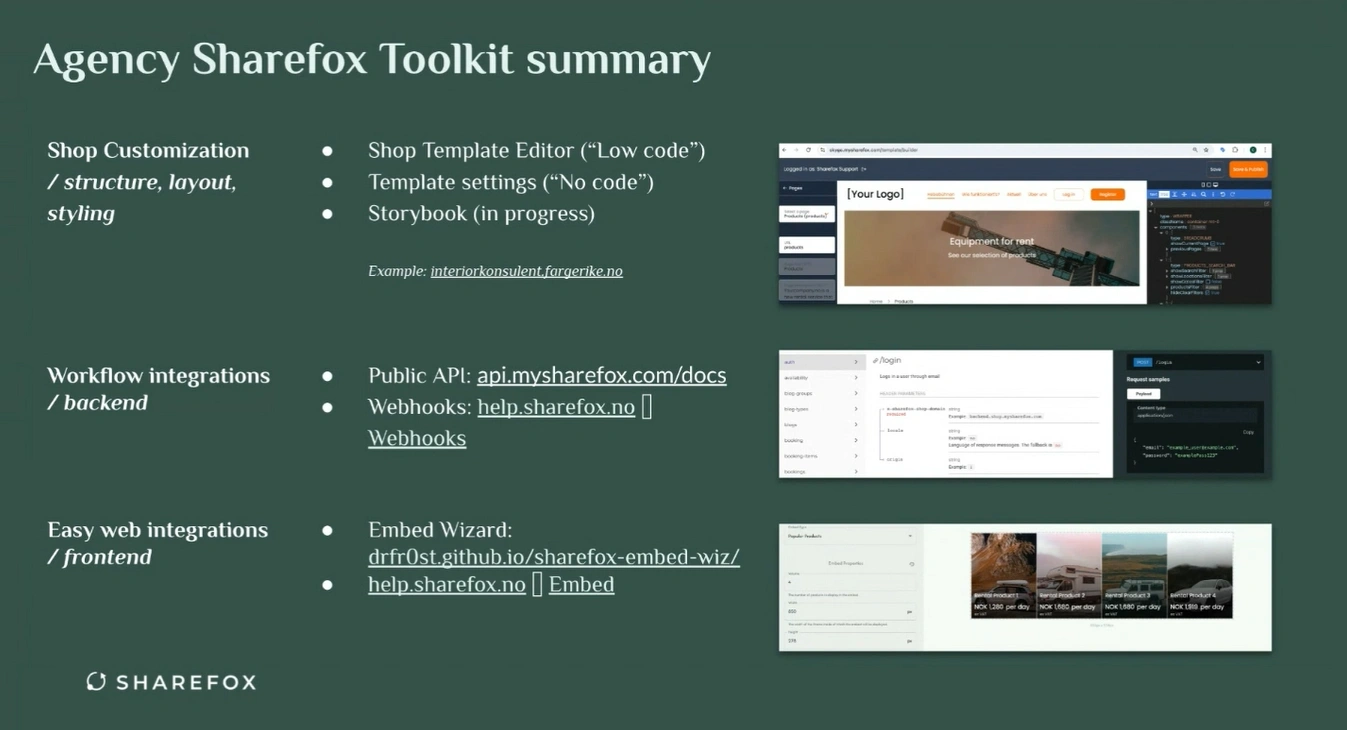
- Configuring rental systems for clients (locations, pricing, payment methods)
- Publishing and managing content through the platform’s editor
- Providing ongoing marketing and SEO support, similar to what Adcomer does
- Building custom integrations with templates, scripting, and the open API, similar to Nitea’s approach
For an agency, the appeal isn’t just the initial build fee — it’s the ongoing relationship. A rental client needs seasonal pricing updates, new locations added, content refreshed for SEO, and the occasional integration tweak. That’s recurring billable work that a static brochure site never generates. Agencies interested in exploring this can book a demo or start a free trial to see the admin side before pitching it to a client, and pair it with a broader marketing strategy once the client’s site is live.
The Bigger Picture
Rental commerce is still young enough that most rental businesses’ websites aren’t connected to a working backend at all — which is exactly the opportunity. Just as agencies that learned e-commerce tooling a decade ago ended up owning the retail-to-online migration, agencies that get comfortable with rental-specific concepts — availability calendars, deposits, access control, multi-location pricing — are positioning themselves for a market that’s only getting started, across categories from vehicle and trailer rental to tool hire, self-storage, and outdoor gear.
Interested in working together? If you’re a digital agency exploring the rental industry, contact the Sharefox team about a partnership, or start a free trial for a client project.


 All in one platform