Skip to main content


Vehicle damage disputes are one of the most expensive — and most avoidable — problems in the rental industry. A scratched bumper or an undocumented dent can turn into a lost customer, a chargeback, or hours of admin time spent going back and forth over who is responsible. The good news: with the right documentation, inspection process, and technology stack, most of these disputes never have to happen at all.
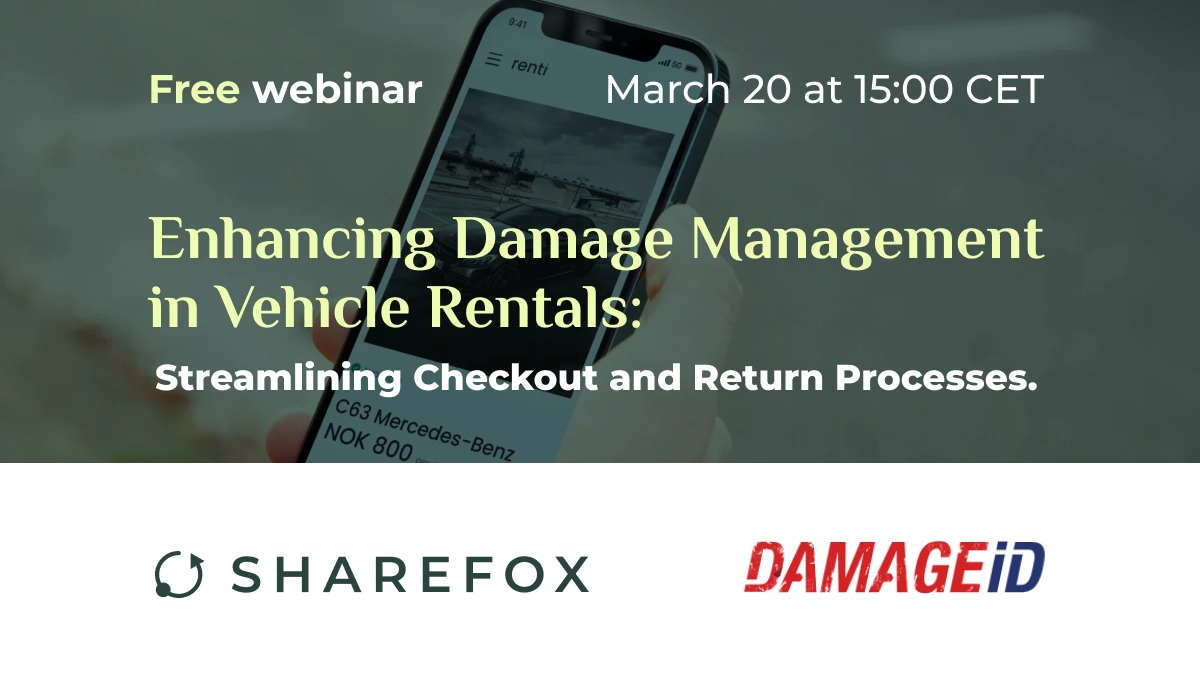
This article breaks down what actually causes vehicle damage disputes, how leading rental businesses are solving the problem with structured inspections and digital tools, and how you can learn directly from two people who deal with this every day: Åsgeir Helland, CEO of Sharefox, and Paula M. Vercollone, CEO of DamageID, in a free live webinar.
“Every rental business already has a damage problem — the question is only whether you can see it before it becomes a dispute.” — a common refrain among rental industry consultants who work with fleet operators on loss prevention.
About the Webinar
- Free webinar — March 20th at 15:00 CET
- Speakers: Åsgeir Helland (CEO, Sharefox) and Paula M. Vercollone (CEO, DamageID)
- Sign up now to secure your spot
What You’ll Learn
- How to manage vehicle damages effectively, from first inspection to final resolution
- Best practices for streamlining rental operations without adding headcount
- How technology reduces disputes by creating an objective, timestamped record
- How structured inspection processes improve customer satisfaction
- Practical steps to strengthen fleet protection and asset management
Why Damage Management Matters for Your Vehicle Rental Business
Handling vehicle damage efficiently isn’t just an operational nice-to-have — it directly affects your bottom line. Inaccurate or inconsistent documentation is one of the leading causes of customer disputes in the rental industry, and disputes are expensive in more ways than one: lost revenue while a vehicle sits idle, staff time spent mediating disagreements, and — if handled poorly — a damaged reputation that outlasts the damaged bumper.
According to the Insurance Information Institute, auto physical damage claims remain one of the largest cost categories for any fleet or rental operation, which is why documentation quality has a direct, measurable impact on loss ratios. A structured approach to damage management helps vehicle rental businesses:
- Minimize financial losses from undetected or under-documented damage
- Enhance the customer experience with transparent, evidence-based policies
- Reduce administrative burden through automated, repeatable processes
Understanding the Different Types and Causes of Damage
Not all damage is created equal, and treating a hairline scratch the same way you’d treat structural damage leads to either wasted admin time or missed costs. Recognizing the distinction between cosmetic damage (scuffs, minor scratches, interior wear) and functional or structural damage (dents affecting panels, mechanical issues, frame damage) is the first step toward accurate assessment and fair billing.
Common causes tend to repeat across fleets of every size:
- Minor parking mishaps and careless driving
- Weather and environmental exposure (hail, road debris, sun damage to interiors)
- Pre-existing damage that goes undocumented at pickup
- Intentional misuse or neglect
The National Highway Traffic Safety Administration tracks broader vehicle safety and incident data that underscores just how much of this is preventable with better visibility at the point of handover — which is exactly where most rental businesses lose the paper trail.
Effective Damage Management Strategies
Implementing Damage Control Protocols
A documented, repeatable protocol is the backbone of any damage management program. It should define exactly what gets checked, when, by whom, and where the evidence is stored — for every single pickup and return, not just the ones where damage is visually obvious. Consistency is what protects you when a dispute actually goes to a “he said, she said” conversation with a customer.
If you’re formalizing this for the first time, an equipment rental agreement template is a useful starting point for making expectations explicit before the vehicle ever leaves the lot.
Training Staff for Damage Management
Even the best software fails if the person doing the inspection doesn’t know what to look for or doesn’t follow the process consistently. Training staff to recognize damage types, apply the same inspection standard every time, and document thoroughly (photos, timestamps, notes) turns your team into your first line of defense against disputes — and into a resource that protects your company’s assets rather than just a bottleneck in the handover process.
Utilizing Technology in Damage Control
This is where most of the recent progress in the industry has happened. Digital inspection checklists, photo/video capture at pickup and return, and AI-assisted damage detection remove the guesswork and the “my word against yours” dynamic that fuels most disputes. Tools like inspection software built for vehicle and car rental fleets create a timestamped, comparable record for every rental — which is the single most effective lever for reducing dispute volume.
Pairing inspection tools with a proper car rental reservation and fleet management system also means damage data doesn’t live in a separate spreadsheet — it’s tied directly to the booking, the customer, and the vehicle history.
Manual vs. Digital Damage Documentation
| Factor | Manual / Paper-Based Process | Digital / AI-Powered Process |
|---|---|---|
| Evidence quality | Handwritten notes, easy to dispute | Timestamped photos/video, hard to dispute |
| Speed at handover | Slower, often skipped when busy | Faster, guided step-by-step checklists |
| Consistency across staff | Varies by individual inspector | Standardized checklist every time |
| Dispute resolution time | Days (locating paperwork, recalling details) | Minutes (pull up the record) |
| Data tied to booking/customer | Rarely, lives in separate files | Automatically linked in the rental system |
| Scalability across locations | Difficult, relies on training consistency | Easy, same process everywhere |
Prevention and Control Measures
Best Practices for Damage Prevention
Prevention beats resolution every time. Regular vehicle inspections, clear damage policies communicated to customers up front, and consistent enforcement of your rental agreement all reduce the incidence — and the cost — of damage before it happens.
Regular Maintenance and Inspections
Scheduled maintenance checks catch small issues (worn brakes, tire wear, minor mechanical faults) before they become expensive repairs or, worse, safety incidents. Building inspections into your regular fleet management cycle — not just at pickup and return — protects both your vehicles and your customers.
Insurance Considerations for Damage Control
Insurance is your safety net, but only if your documentation supports a claim. A thorough review of your policy — and how well your damage records would hold up if a claim were contested — is worth doing before you need it, not after. Our comprehensive guide to rental insurance walks through what most vehicle rental policies do and don’t cover.
Streamline Your Vehicle Rental Operations
Damage management doesn’t happen in isolation — it’s one part of your overall rental workflow. In the webinar, we’ll also cover how the rest of your operation ties in:
- Online booking and payment integration for a seamless customer experience
- Fleet and inventory management for better oversight and utilization
- Self-service rental options to improve accessibility and reduce staffing pressure
- Digital contracts and e-signatures to cut paperwork and reduce disputes over what was actually agreed
- Secure customer verification to reduce fraud and misuse before it becomes a damage claim
If you’re building a broader case for why this matters to your bottom line, it’s worth looking at how profitable a vehicle rental business really is once damage-related losses are factored in — the margin impact is bigger than most operators expect.
For businesses evaluating their overall tech stack, our comparison of vehicle rental software companies and dedicated vehicle rental software page (or the car rental equivalent if you specialize in cars) are good next steps.
Attend the Webinar — Sign Up Today
Don’t miss this opportunity to learn directly from two industry leaders on how to master damage management in vehicle rentals. Register now and take the next step toward a more efficient, more profitable rental business.

 All in one platform