Skip to main content


Every idle piece of equipment on your lot is money you’ve already spent and haven’t earned back yet. That’s the blunt reality of running a rental fleet, and it’s why fleet management isn’t a back-office chore — it’s the difference between a rental business that’s profitable and one that’s just busy.
This guide walks through what fleet management actually means in an equipment rental context, the best practices operators rely on to keep utilization high and downtime low, and where software fits into the picture.
What Fleet Management Means for Rental Businesses
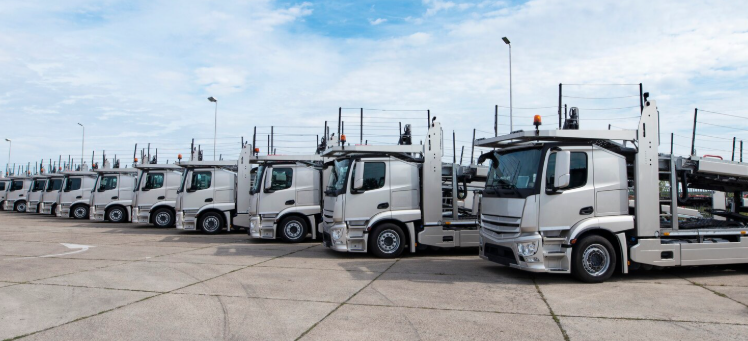
Fleet management is the ongoing oversight of every asset you rent out — from the moment you acquire it to the day you retire it. That covers scheduling, maintenance, compliance, tracking, and pricing, all working together so equipment spends as little time as possible sitting unrented.
In practice, this job falls to a fleet operator or fleet manager, and their day-to-day decisions have an outsized effect on the business. A fleet manager who catches a maintenance issue early avoids a breakdown mid-rental. One who tracks utilization by asset class knows which equipment to expand and which to sell off. That’s the operational leverage good fleet management gives you.
Most of this work is now handled through a fleet and equipment rental management system rather than spreadsheets — a shift that’s largely responsible for why fleet management has become a defined discipline rather than a set of habits passed down informally. A single platform typically combines booking and inventory management, self-service check-in/out, flexible B2B and B2C pricing, and integrations with accounting, payments, and ID verification tools, so the fleet’s status is visible in one place instead of scattered across notebooks and phone calls.
Why Fleet Management Pays Off
Lower operating costs
Manual fleet admin is expensive in ways that don’t show up as a single line item — double-bookings, missed maintenance windows, and hours spent reconciling paper logs all add up. A unified system that handles booking, inventory, and invoicing in one place removes most of that friction, freeing up time that would otherwise go into administrative cleanup.
Higher utilization per asset
Utilization — the share of time an asset is actually earning revenue — is the single number most worth watching in equipment rental. Reducing idle time and speeding up turnaround between rentals is how fleet operators increase revenue without buying more equipment. Good inventory visibility is what makes that possible: you can’t shorten a gap you can’t see.
Fewer safety and compliance incidents
Rental equipment carries real liability, and a fleet manager’s job includes making sure every asset meets safety requirements before it goes out the door. Structured maintenance protocols and documented inspections reduce accident risk and help avoid the kind of compliance penalties that erode margins fast.
As one fleet operations consultant put it: “The businesses that win in equipment rental aren’t the ones with the biggest fleet — they’re the ones that know exactly where every asset is and what condition it’s in, every hour of the day.”
Manual vs. Software-Driven Fleet Management
| Area | Manual / Spreadsheet Approach | Fleet Management Software |
|---|---|---|
| Booking visibility | Updated by hand, prone to double-bookings | Real-time availability across all locations |
| Maintenance tracking | Relies on memory or paper logs | Automated schedules and service alerts |
| Asset location & status | Phone calls and physical checks | GPS/telematics and barcode tracking |
| Pricing | Manually adjusted per customer | Rule-based B2B/B2C pricing engines |
| Reporting | Built manually, often out of date | Live utilization and revenue dashboards |
| Time to onboard a new asset | Hours of setup across systems | Minutes, in one system |
Best Practices for Managing Your Rental Fleet
Put everything on one platform. Consolidating booking, inventory, and invoicing into a single rental booking system is the highest-leverage change most operators can make — it eliminates the manual reconciliation that spreadsheets require and gives every team member the same real-time view of the fleet.
Track assets in real time. GPS and barcode-based tracking give you continuous visibility into where equipment is, whether it’s due back, and whether it’s been damaged. That kind of inventory tracking turns maintenance and loss-prevention from reactive guesswork into a routine process.
Build a maintenance schedule and stick to it. Reactive repairs cost more than planned ones, and a breakdown mid-rental damages customer trust as much as it damages the bottom line. A documented maintenance schedule extends asset lifespan and keeps unplanned downtime rare rather than routine.
Buy for utilization, not just availability. Before adding to the fleet, weigh expected utilization against fuel efficiency and maintenance cost. Equipment that looks like a bargain on price alone can quietly become the least profitable item on the lot if demand for it is thin.
Manage the whole asset lifecycle, not just the rental period. From acquisition through disposal, a deliberate lifecycle approach — timed replacements, tracked depreciation, planned resale — gets more usable life and resale value out of every asset than reacting to failures as they happen.
Invest in training. Fleet managers who understand the software and the data it produces make faster, better calls on pricing, maintenance timing, and fleet composition. That knowledge compounds — it’s usually the difference between a team that reacts to problems and one that prevents them.
This logic isn’t limited to construction and general equipment. Vehicle-heavy operators run the same playbook — see our guide to vehicle rental fleet management for the vehicle-specific version, and if you’re running a construction rental fleet, the maintenance and utilization principles above apply just as directly to heavy machinery.
Where Fleet Management Is Headed
Telematics keeps getting more precise. Real-time GPS and condition data now go beyond “where is it” to “how is it being used” — informing everything from route efficiency to driver behavior and fuel consumption.
AI is taking over the predictive work. Rather than fleet managers spotting patterns manually, AI-driven platforms increasingly flag maintenance needs and fuel-optimization opportunities before they become problems — shifting the fleet manager’s role from monitoring to strategy.
Sustainability is becoming a baseline expectation, not a differentiator. Lower-emission equipment, optimized routing, and circular-economy thinking (equipment rental is inherently a sharing model) are increasingly what customers and regulators expect by default.
None of these trends require ripping out your existing setup. Most start with the integrations already available in a modern rental platform — accounting, payments, and ID verification tools that reduce manual work today while setting up the data foundation these newer capabilities need.
If you’re evaluating what a change like this would look like for your fleet, it’s worth booking a demo to see the tracking and scheduling tools in action.

 All in one platform