Skip to main content


At a glance: BankID is the electronic identification system used by tens of millions of people in Sweden and Norway to log in, pay, and sign documents online. For rental businesses — from car subscription providers to equipment and mobility fleets — integrating BankID into the booking flow means faster onboarding, fewer fraudulent bookings, and legally binding e-signatures on rental agreements, without adding friction for the customer.
BankID has changed how businesses and individuals conduct secure transactions and verify identities online. For rental software providers operating in the Nordics, it has become one of the most requested integrations — and for good reason: it lets a renter prove who they are in seconds, using an app most of them already have on their phone.
This guide explains what BankID is, how it works, why it matters for rental businesses specifically, and what to weigh when deciding whether to add it to your own booking flow.
Understanding BankID
BankID is an electronic identification (e-ID) system that underpins much of the digital infrastructure in Sweden and Norway. It gives users a secure, standardized way to identify themselves and sign documents electronically — whether they’re logging into their bank, filing taxes, or renting a car for the weekend.
What is BankID?
BankID is an electronic identification service that lets individuals securely identify themselves and sign documents digitally. It functions as a personal digital ID: users confirm their identity when logging into online services, making payments, or accessing government services. The Swedish scheme launched in 2003 and is issued through the country’s major banks, including Danske Bank, Handelsbanken, Länsförsäkringar, SEB, and Swedbank.1 Norway operates its own equivalent scheme, BankID Norge, issued by the Norwegian banking sector and used in a similar way across public and private digital services.2
Because BankID sits at the level of national banking infrastructure rather than any single company’s login system, it carries a level of trust that a business could never build on its own with a homegrown verification form.
How BankID works in Sweden and Norway
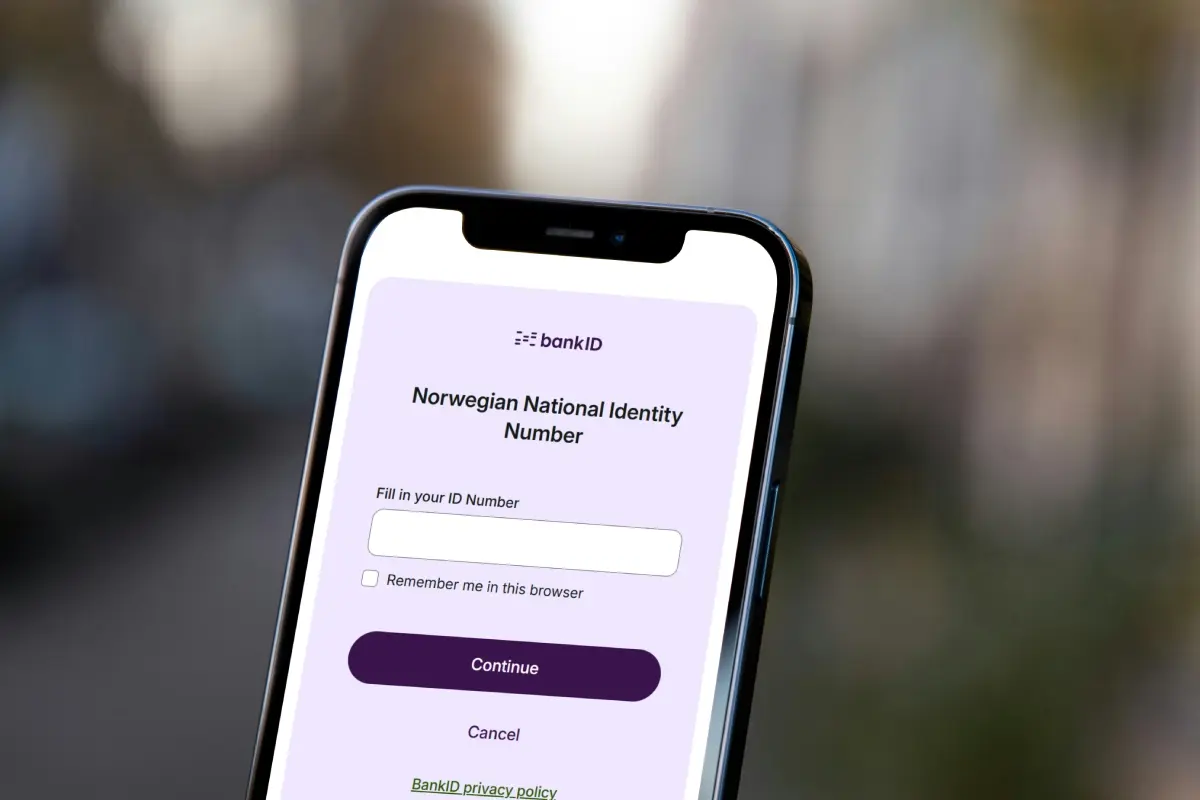
When a user needs to identify themselves or sign a document, they open the BankID app on their phone (or use a BankID installed on their computer) and confirm their identity with a password or biometric check — fingerprint or face ID, depending on the device. The request is routed through encrypted channels between the service provider, BankID’s infrastructure, and the issuing bank, so the rental business never has to store or handle the underlying identity data itself.
For a car rental or vehicle rental operator, this typically slots into the existing booking flow: the customer selects a vehicle, is prompted to verify with BankID at checkout, and the booking (or agreement) is confirmed almost immediately.
Benefits of using BankID for rental businesses
For a rental business, the practical benefits break down into three areas:
- Fraud reduction. Identity verification happens against bank-grade infrastructure rather than a self-reported form, which sharply cuts down on fake bookings, stolen-card usage, and no-shows.
- Faster onboarding. New customers can go from “signed up” to “verified and booked” in under a minute, which matters most for self-service rental models where no staff member is present to check ID manually.
- Legally binding digital signatures. Rental agreements, deposit terms, and damage waivers can be signed electronically at the point of booking — see our related piece on e-signatures and contract signing for how this plays out for vehicle-heavy operations.
Security features of BankID
Authentication processes
BankID relies on multi-factor authentication: something the user has (the app, tied to a registered device) and something they know or are (a password or biometric confirmation). This combination makes casual credential theft far less useful to a bad actor than it would be against a simple username-and-password login.
Privacy measures and data protection
BankID is designed around data minimization — it discloses only what’s needed to confirm identity or authorize a transaction, rather than exposing a full identity profile to every service that requests verification. Personal data handled through the scheme falls under the EU’s General Data Protection Regulation (GDPR) and, for cross-border digital identity, the EU’s eIDAS framework for electronic identification and trust services.3 Businesses integrating BankID still need their own data-handling practices in order — verification confirms who the customer is, it doesn’t replace a privacy policy or a lawful basis for storing booking data.
Comparing BankID to traditional verification methods
| Criteria | Manual ID check (staff-verified) | Self-reported form (name/photo upload) | BankID |
|---|---|---|---|
| Verification speed | Minutes, staff-dependent | Instant submission, slow manual review | Seconds, automated |
| Fraud resistance | Depends on staff training | Low — documents can be faked or reused | High — tied to bank-issued credentials |
| Available outside business hours | No | Yes, but unverified until reviewed | Yes, fully automated |
| Legally binding e-signature | Requires separate process | Rarely built in | Built in |
| Customer effort | Low (someone else does the work) | Medium (upload + wait) | Low (app confirmation) |
| Best suited for | Staffed, in-person handover | Low-risk, low-value rentals | Self-service, unattended, or high-value rentals |
“Fast, trusted identity verification isn’t a nice-to-have for rental businesses anymore — it’s the foundation the rest of the booking flow gets built on.” — Sharefox Product Team
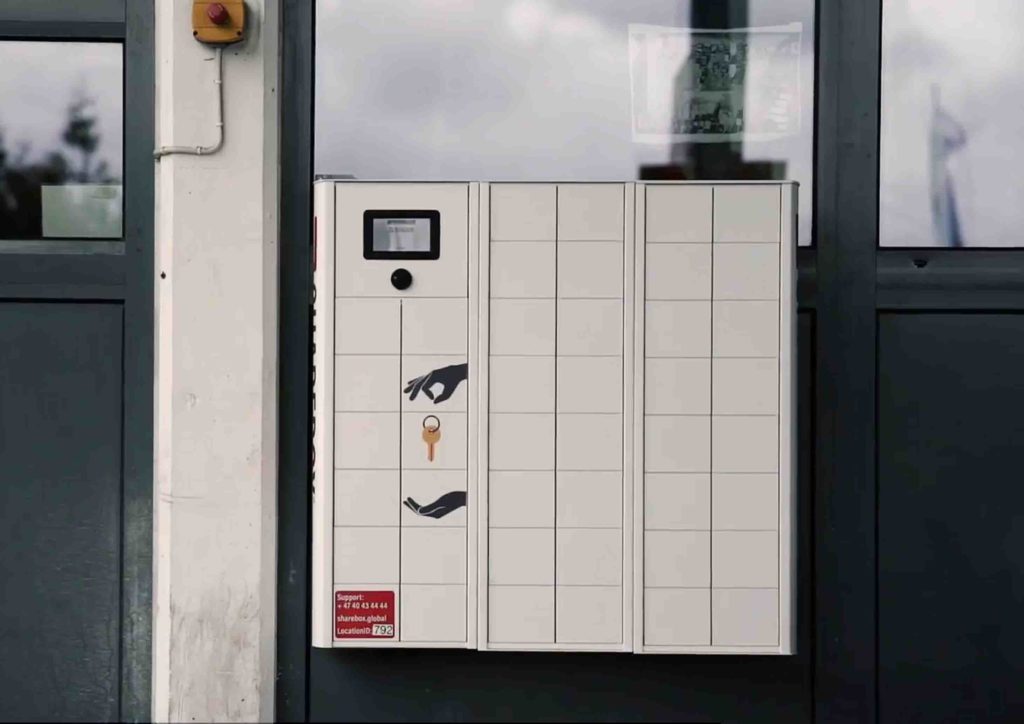
For example, a car-subscription operator running unattended pickup points has no staff member available to check a driving licence in person. Without an automated verification step, every booking carries the same fraud exposure a walk-up rental would — but without anyone there to notice. Slotting BankID (or an equivalent e-ID) into the booking software closes that gap without adding a staffed check-in step.
The BankID app for businesses
Integrating BankID into rental services
Rental businesses generally don’t build BankID support from scratch — it’s added as part of a broader rental management platform integration, alongside payments, insurance checks, and fleet or inventory systems. This keeps identity verification, booking, and signing inside a single flow rather than bouncing the customer between separate tools.
Mobile accessibility and user experience
Because verification happens inside an app the customer already has installed, there’s no new account to create and no document to photograph and upload. That matters most for mobility products — scooters, motorcycles, and short-term car rentals — where a clunky sign-up step is often the reason a booking gets abandoned.
What to check before implementing
Before adding BankID to a booking flow, it’s worth confirming:
- Which of your customer segments are actually BankID-eligible (Swedish or Norwegian residents with an issuing bank account) versus international customers who will need a fallback method.
- Whether your pricing and deposit-handling logic needs to change once verified identity is available at checkout.
- How verification data is logged for dispute resolution, without over-retaining personal data beyond what your privacy policy covers.
Government services and BankID
BankID as public-sector infrastructure
BankID’s role isn’t limited to private businesses. It’s used to log in to tax authorities, healthcare portals, and other government platforms in both Sweden and Norway, which is part of why customer trust in the scheme runs higher than for a typical commercial login system.
The role of banks in issuing BankID
Banks act as the trusted issuers of BankID credentials. In Sweden, this includes Danske Bank, Handelsbanken, Länsförsäkringar, SEB, and Swedbank; in Norway, the equivalent scheme is issued through the national banking sector. This bank-backed model is a large part of why BankID carries more default trust than a business-built verification system could achieve on its own.
Where this is heading
Digital ID schemes across the EU are moving toward broader interoperability under eIDAS 2.0, which aims to let a verified identity from one member state be recognized in others. For rental businesses serving international or cross-border customers, that direction is worth watching — it may eventually reduce the current gap between BankID-eligible customers and everyone else.

 All in one platform