Skip to main content


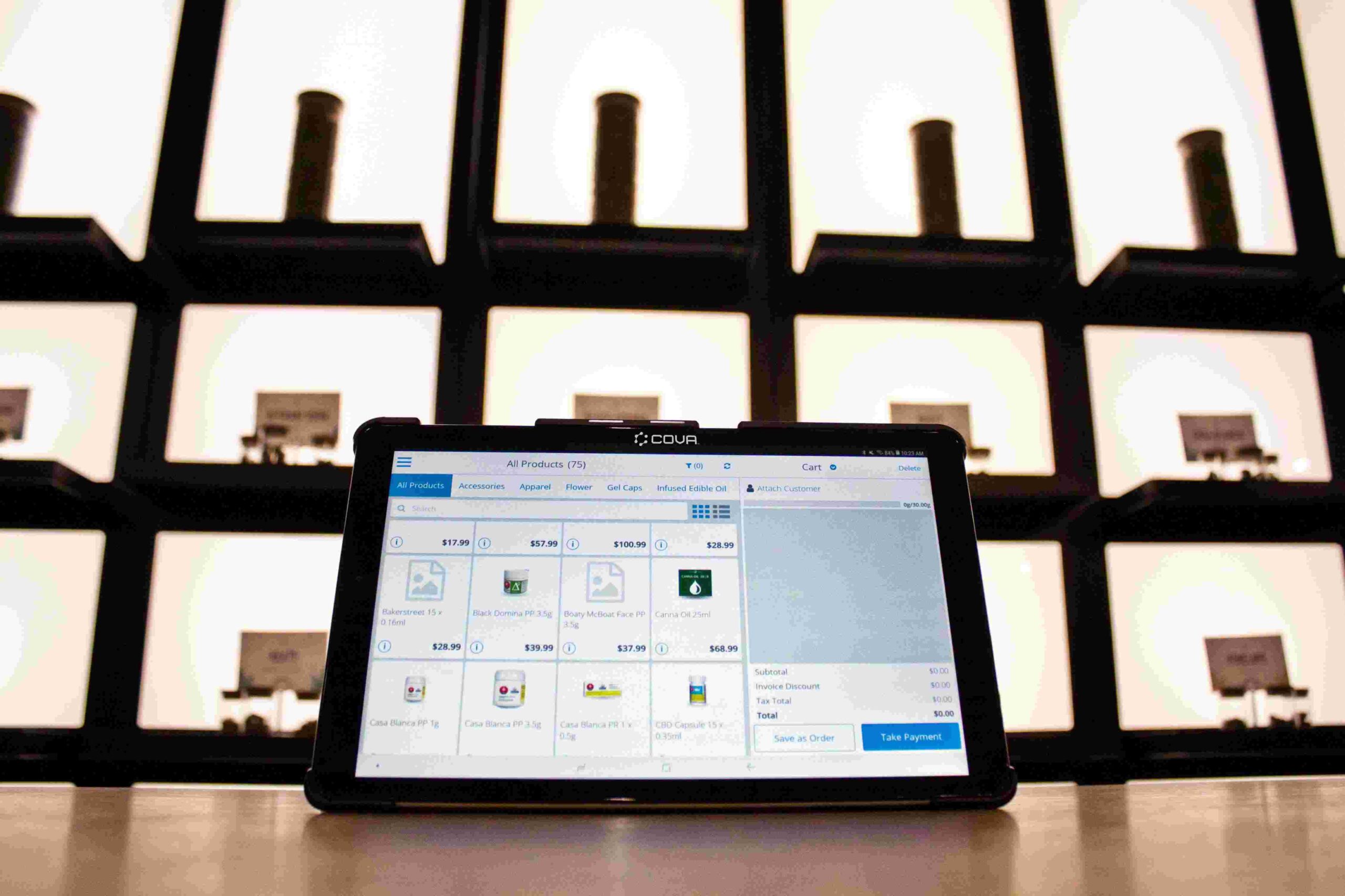
An online inventory system eliminates the need for manual tracking, streamlining operations and boosting efficiency for businesses of all sizes. For rental, mobility, and self-storage operators specifically, it’s often the single change that turns spreadsheet chaos into a business that can actually scale.
Key takeaways
- Manual inventory tracking (spreadsheets, paper logs, whiteboards) doesn’t scale — it creates double bookings, damage disputes, and blind spots on availability.
- An online inventory management system gives real-time visibility into stock across every location, so you always know what’s available, booked, or in maintenance.
- Free tools are a reasonable starting point for very small operations, but most rental and mobility businesses outgrow them once they need multi-location tracking, integrations, or self-service booking.
- The right system should sit at the center of your stack — connected to booking, invoicing, payments, and accounting — not bolted on as a separate tool.
Understanding Inventory Management
What Is Inventory Management?
Inventory management is the process of overseeing and controlling a company’s stock from the moment it’s acquired until it’s sold, rented out, or retired. Investopedia defines it plainly:
“Inventory management is a systematic approach to sourcing, storing, and selling inventory — both raw materials and finished goods.”
For a rental or subscription business, “selling” is really “renting out repeatedly,” which raises the stakes: the same physical item might move through dozens of bookings a year, and every one of those transitions needs to be tracked accurately. This is why Sharefox provides inventory management as a core module alongside booking and invoicing — for rental businesses, inventory management isn’t a side feature, it’s the backbone of the operation.
Why Inventory Tracking Matters for Small Businesses
Effective inventory tracking is crucial for small businesses that want to grow past a certain size without growing their admin headcount at the same rate. A solid system helps rental operators simplify booking, inventory, and invoicing within a single platform, which tends to increase utilization and revenue per asset. Mobility managers, meanwhile, need accurate inventory data just as much as they need a smooth customer experience — the two aren’t separable once a fleet grows past a handful of vehicles.
The U.S. Small Business Administration’s guidance on managing business inventory makes a similar point for businesses generally: inventory that isn’t tracked accurately becomes either dead stock (money sitting idle) or lost sales (customers turned away because nobody could confirm availability). In a rental context, both failure modes show up constantly — unbooked assets gathering dust, or double-bookings that damage trust with a customer standing at the counter.
The Real Cost of Manual Inventory Management
Manual inventory management creates predictable problems as a business grows:
- Fragmented tools. Many rental operators still rely on spreadsheets or disconnected systems, which means double data entry and no single source of truth for what’s actually available.
- No real-time visibility. Without live tracking, operators can’t see bookings, damages, or availability at a glance — someone has to go check, or worse, guess.
- Manual key handling and paper processes. This is a particular pain point for mobility managers, who lose hours every week on handovers that could be automated.
- Seasonal chaos. Busy seasons expose every crack in a manual system at once, right when the business can least afford the disruption.
- Software adoption anxiety. Staff resistance to “yet another system” is real, which is why ease of use matters as much as feature depth.
- Too many disconnected systems. Coordinating CRM, booking, finance, access control, and payments separately is a constant hurdle for operators across verticals — from self-storage facilities to vehicle rental fleets.
Benefits of Inventory Management Software
How Inventory Software Actually Helps
Robust inventory management software transforms day-to-day operations by giving operators a single, accurate picture of stock. For rental businesses, a system like Sharefox combines booking, inventory, and invoicing in one platform, reducing manual admin and cutting down on human error. This also opens the door to genuine self-service: customers can check availability and book online themselves, which — combined with accurate inventory data — tends to increase both utilization and revenue per asset.
Mobility managers see a parallel benefit: automating check-in and check-out with digital tools lets customers book and return vehicles independently, modernizing the brand experience while giving the back office a live, reliable inventory feed instead of an end-of-day reconciliation.
Manual Tracking vs. an Online Inventory System
The table below compares the two approaches across the dimensions that matter most for a growing rental or mobility business.
| Dimension | Manual Tracking (Spreadsheets / Paper) | Online Inventory System |
|---|---|---|
| Visibility | Delayed, requires manual check-ins | Real-time, across all locations |
| Double-booking risk | High — no live availability view | Low — automated availability calendar |
| Multi-location support | Difficult to reconcile | Centralized, synced automatically |
| Staff time required | High (data entry, reconciliation) | Low (automated updates) |
| Error rate | Higher — manual entry mistakes | Lower — system-enforced consistency |
| Integration with billing/payments | Manual matching | Automated, via integrations |
| Scalability | Breaks down past a few dozen SKUs | Scales with the business |
| Customer self-service | Not possible | Enabled via online booking |
Key Features to Look For
The best inventory management tools share a common core: integrated booking and inventory tracking, so every asset across every location is accounted for. Beyond that, look for:
- Self-service check-in/out, often via smart-lock or ID-verification integrations
- Support for subscription, short-term, and long-term rentals in one system
- Multicommerce flexibility for businesses that rent, sell, and subscribe from the same catalog
- Advanced, flexible pricing configurations for daily, weekly, seasonal, or dynamic rates
- Analytics and automation that surface utilization trends, not just current stock counts
- Integrations with accounting software and payment gateways, so inventory data flows straight into your financial records
Choosing the Right System
Selecting the right inventory management system is a strategic decision, especially for a small business transitioning off spreadsheets. Rental operators should prioritize proven, industry-specific platforms rather than generic e-commerce inventory tools — rental commerce has fundamentally different needs around availability windows, returns, and asset condition tracking. Mobility managers will find more confidence in case studies from comparable fleets than in generic feature lists. And digital agencies or integration partners should look for vendors offering robust APIs, reliable support, and transparent pricing — the kind of partnership that holds up once a client’s inventory catalog gets complex.
As the Association for Supply Chain Management (ASCM) puts it in its overview of inventory management practices, the goal is always the same regardless of industry: match supply to demand as precisely as possible, because both overstock and stockouts carry a real cost. Rental businesses simply pay that cost twice — once in idle assets, once in turned-away customers.
Free Inventory Management Options
Is Free Software Enough for a Small Business?
For small businesses on a tight budget, free inventory management software can be a reasonable first step. A free plan won’t match a comprehensive paid solution feature-for-feature, but it can cover the basics: tracking stock, managing vendors, and sometimes integrating with a point-of-sale system. Tools like Zoho Inventory, for example, offer a free tier aimed at businesses just starting to formalize their tracking.
Where Free Tools Fall Short for Rental Businesses
The advantages of free software are real — no upfront cost, basic stock visibility, and enough functionality to stop losing track of what you own. But rental and mobility businesses have needs that most general-purpose free inventory tools weren’t built for: live availability calendars, booking-linked inventory holds, damage and condition tracking, and rental-specific pricing (daily, weekly, seasonal). Free general inventory tools typically top out at simple stock counts — they don’t know what a “booking” is.
When comparing options, look closely at:
- The number of locations/warehouses supported
- Whether there’s a mobile app for on-the-go checks
- Integration options with accounting software or a POS system
- Whether the tool understands rental inventory (reserved, checked-out, in-maintenance) versus simple retail stock (in-stock, sold)
Popular Inventory Management Applications
General-Purpose Tools: Zoho Inventory
Zoho Inventory is a well-regarded general inventory management tool, particularly for small retail and e-commerce businesses. It supports multi-location tracking, real-time stock levels, and vendor management, and it integrates with accounting software and POS systems. It’s a solid choice if your business sells items outright. It is not built for rental-specific workflows like availability calendars, recurring bookings, or asset condition history — which is where purpose-built rental inventory software becomes necessary.
Purpose-Built Tools for Rental, Mobility, and Storage
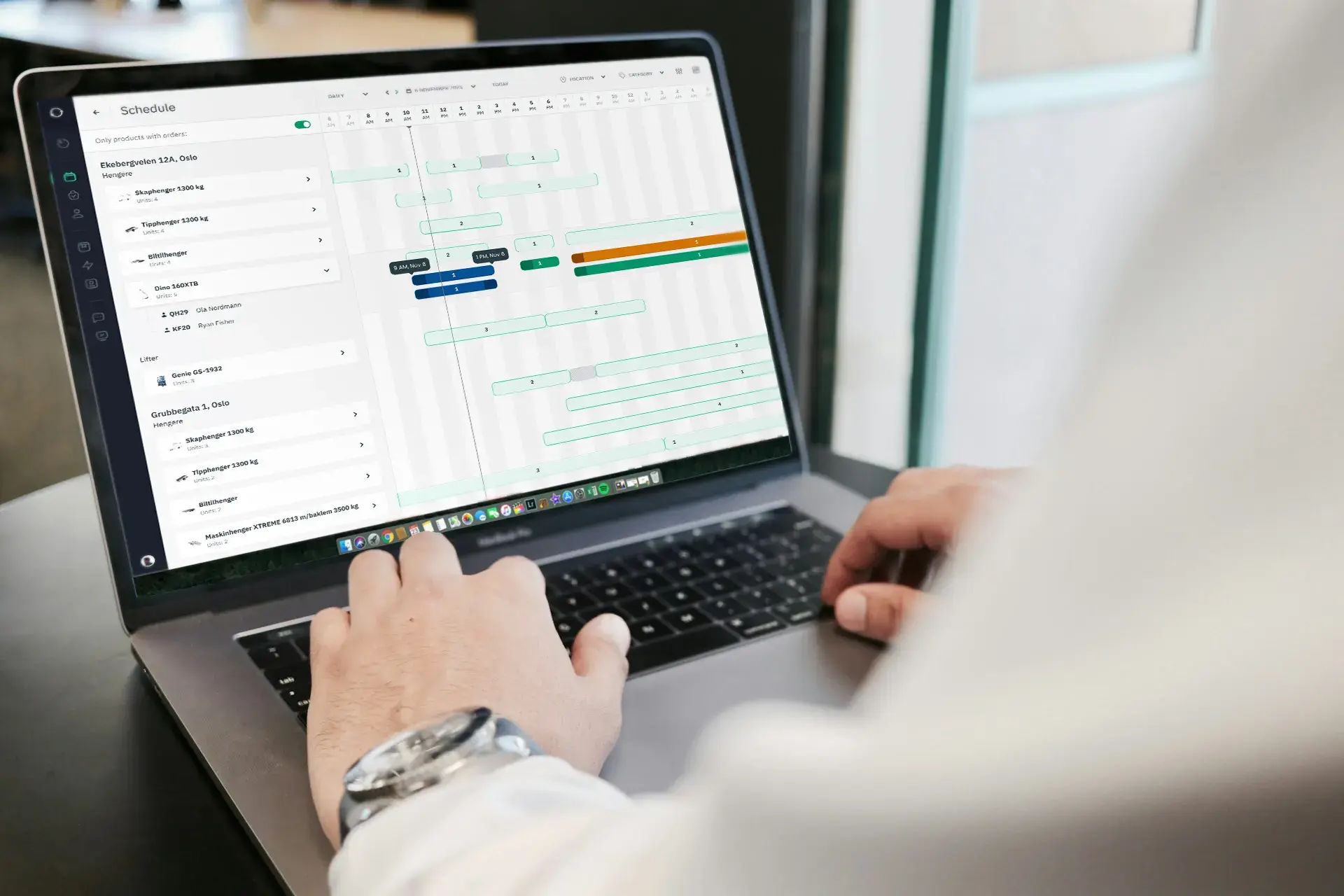
For businesses whose core transaction is a booking rather than a sale, a dedicated rental management system does more than track stock counts — it ties inventory directly to the booking calendar, so an asset can never be double-booked, and it exposes utilization data operators actually act on. This matters across verticals:
- Rental operators get a live availability calendar tied to every SKU
- Mobility managers get automated check-in/out with digital access
- Self-storage managers get unit-level occupancy tracking synced with billing
Coordinating CRM, inventory, access control, and payments in a single platform is consistently the difference between operators who scale smoothly and those who spend their growth stalling out on admin work — the businesses that struggle most usually aren’t the ones with the least inventory, but the ones with the least visibility into the inventory they already have.
Integrating Inventory Tools With the Rest of Your Business
An inventory system that operates in a silo doesn’t solve the underlying problem — it just moves the double data entry somewhere else. Full ecosystem integrations matter because they let inventory data flow automatically into the systems that depend on it:
| User Group | Key Integration Needs | Primary Benefit |
|---|---|---|
| Rental operators | Accounting software, payment gateways | Fewer manual reconciliations, faster cash flow |
| Mobility managers | ID verification, payment processing | Stronger security, faster customer transactions |
| Self-storage & property managers | CRM, access control, payments | One system instead of three disconnected ones |
| Digital agencies & integration partners | APIs, webhook support | Reliable, scalable client implementations |
By enabling smooth data flow between platforms, these integrations keep inventory data consistent across the entire organization — which is ultimately what makes better decision-making possible.
Getting Started
If you’re currently tracking inventory manually, the practical next step isn’t necessarily to buy the most feature-rich platform on the market — it’s to map out where your current process actually breaks down (double bookings? damage disputes? no visibility across locations?) and choose a system that solves that problem first. Sharefox’s rental booking and inventory platform is built specifically around that use case, and you can start a free trial to see how it handles your own catalog before committing.

 All in one platform