Skip to main content


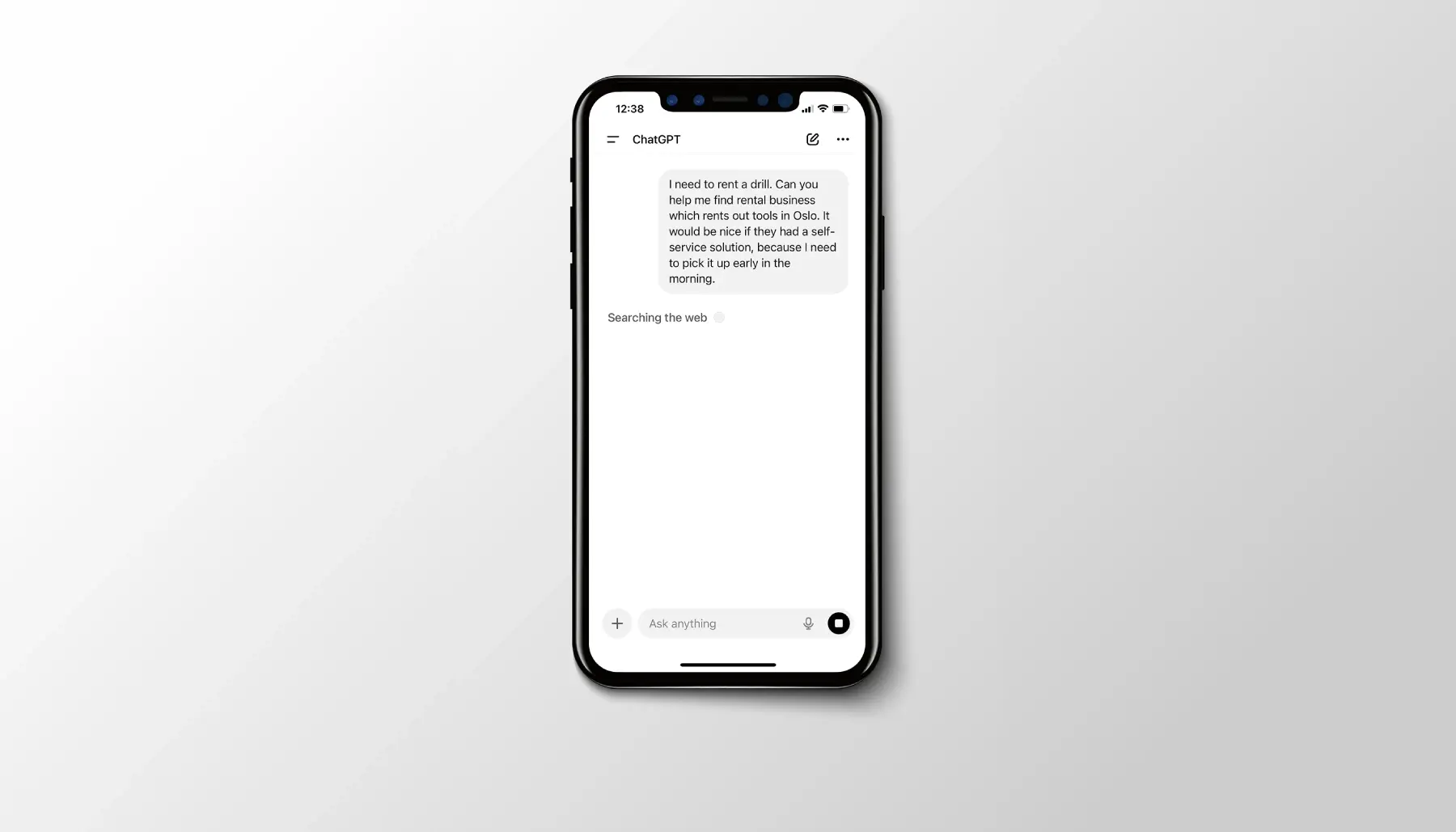
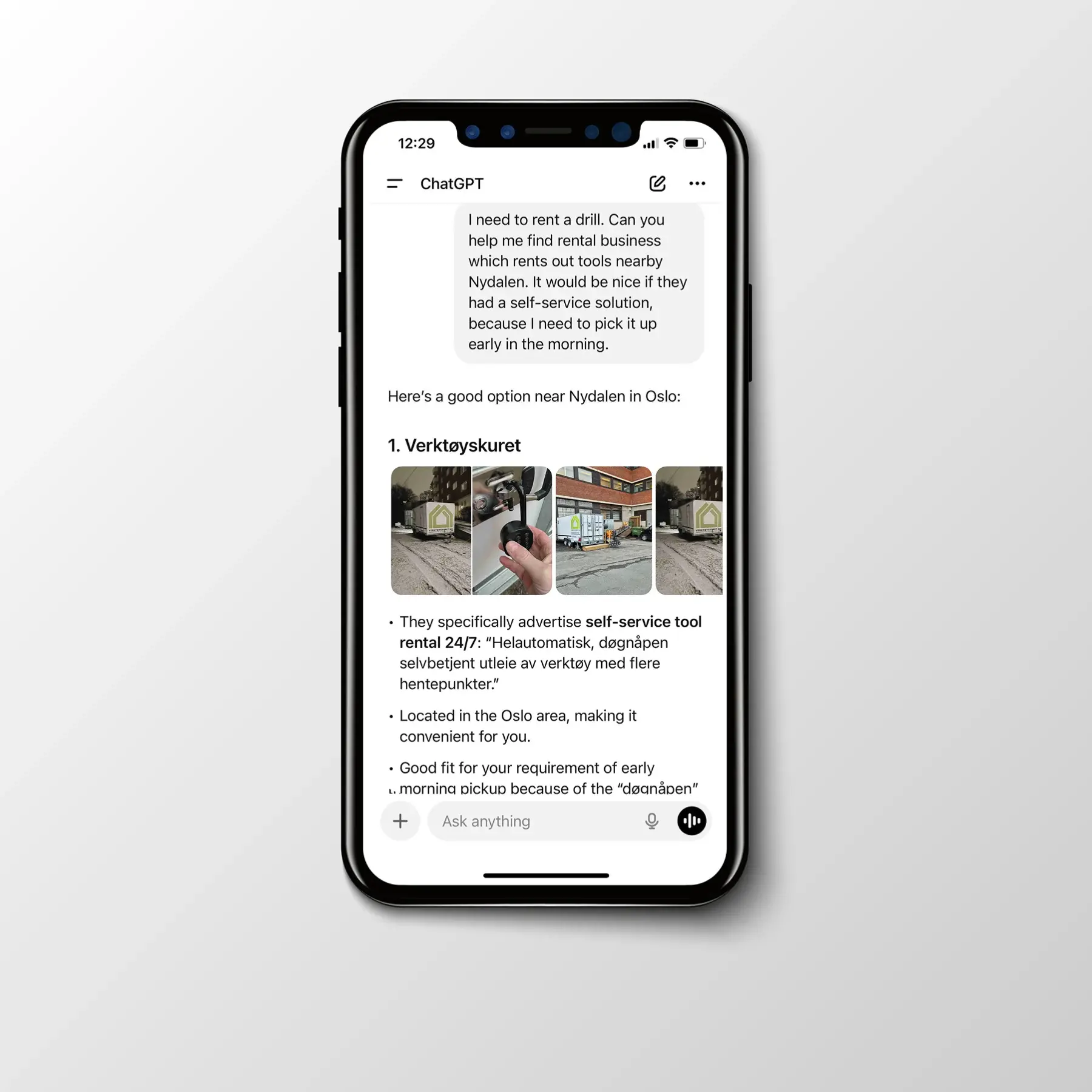
These days, most customers don’t start their search by typing a keyword into Google. They start by asking an AI platform like ChatGPT or Gemini a full question — “Where’s the best place to rent an electric car in Denver, and are there self-service options?” — and expect a direct answer, not a list of ten blue links.
That shift matters for every rental business, whether you rent out cars, tools, event equipment, or self-storage units. At Sharefox, we partnered with Bonzer, a leading SEO agency, to unpack exactly how this is changing marketing for rental businesses — and this guide walks through the practical steps you can take today.
1. Understand How AI Search Differs from Google Search
Traditional search engines match keywords to web pages and hand you a list of results to sort through yourself. AI search engines work differently. Tools like ChatGPT, Gemini, and Perplexity use large language models to interpret the intent behind a question, pull information from multiple sources, and generate a single synthesized answer — often without the user ever clicking through to a website.
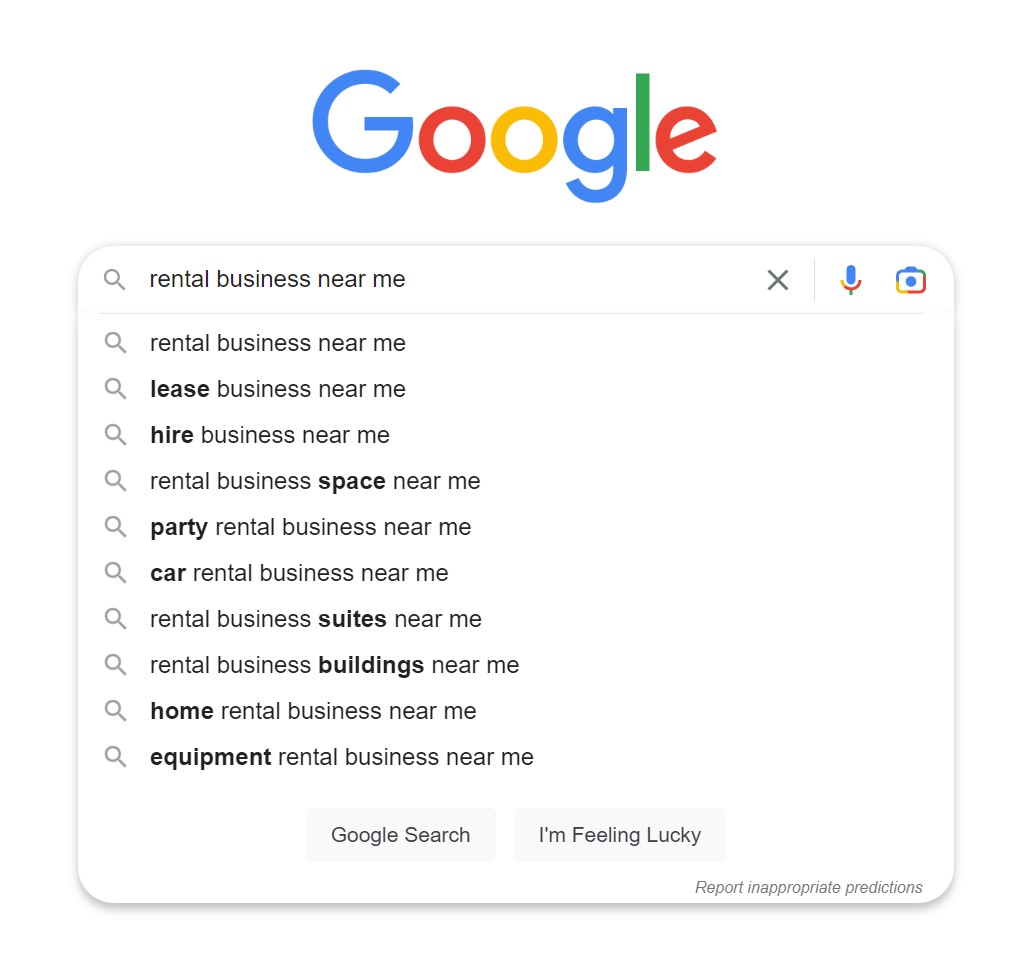
Instead of short keywords like “car rental Denver,” people now type — or speak — full questions:
“Where’s the best place to rent an electric car in Denver, and are there self-service options?”
For your business to be the source an AI model quotes back, your website needs two things: content that’s structured in a way machines can parse, and enough demonstrated experience, expertise, authority, and trust that the AI model considers you a credible source in the first place.
Traditional Search vs. AI Search
| Traditional Search (Google) | AI Search (ChatGPT, Gemini, Perplexity) | |
|---|---|---|
| Input | Short keywords (“car rental Denver”) | Full, conversational questions |
| Output | A ranked list of links | A single synthesized answer, sometimes with follow-up dialogue |
| What gets rewarded | Keyword relevance, backlinks, page speed | Structured, trustworthy, well-sourced content (E-E-A-T signals) |
| User next step | Clicks through and compares options | Often acts on the answer directly, no click required |
| How you win | Rank #1 for the keyword | Be the source the model trusts enough to cite |
2. Build a Strong Foundation: SEO Structure in Sharefox
Before worrying about AI, get your technical foundation right — without it, neither Google, Bing, nor ChatGPT will know exactly what your business offers.
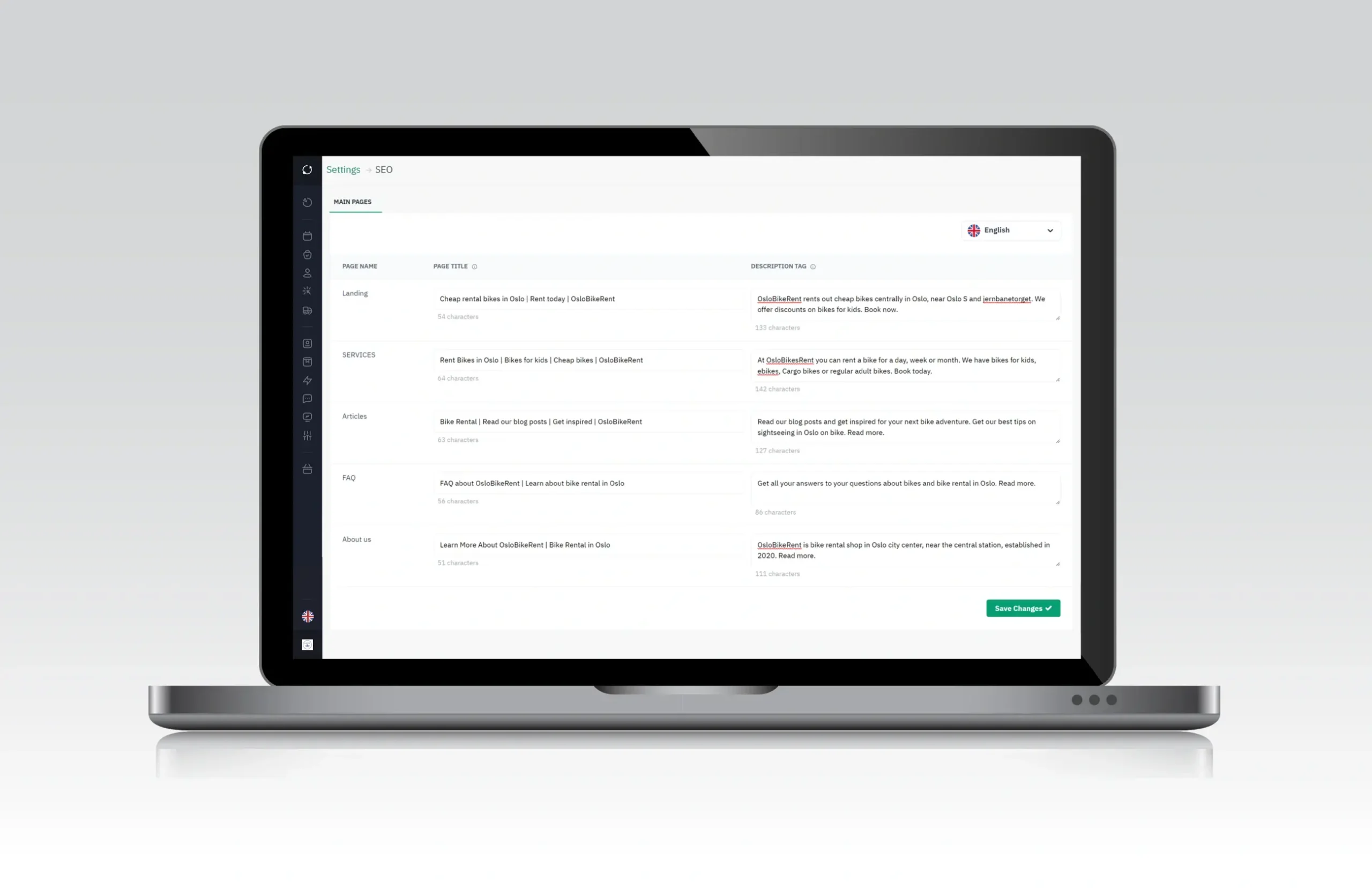
With Sharefox, you already have the tools to set this up at the global, category, and product level:
- Global SEO settings should include a title and meta description with your company name, location, and industry.
- Categories — car rental, self-storage, tool hire, outdoor gear rental — need unique SEO titles and meta descriptions built from the real terms customers search for.
- Product pages should use natural, descriptive language that mirrors how customers actually ask about your offerings.
- Your sitemap should be current. Sharefox generates this automatically, but submitting it to Google Search Console speeds up indexing.
- Publish articles or guides on topics relevant to your services, so both Google and AI models understand what problems your business solves.
If you haven’t set this up yet, our step-by-step guide walks through it: How to Work with SEO in Sharefox.
3. Create Content That AI Understands and Trusts — The E-E-A-T Framework
In the joint Sharefox × Bonzer webinar, the recurring theme was E-E-A-T: Experience, Expertise, Authority, and Trustworthiness. This is the same framework Google uses to evaluate content quality, and AI platforms lean on similar signals when deciding which sources to cite.
“It’s no longer just about who ranks first — it’s about who AI trusts enough to reference back to the customer.” — a key takeaway from Stian Eris (Bonzer) during the Sharefox × Bonzer webinar
Here’s what each pillar looks like in practice for a rental business:
Experience — show that you do this in real life. Publish real customer stories and use cases. Our case study on Opbevaring.nu’s self-storage operation is a good example: it shows a real business running real operations on the platform, not just a company describing features in the abstract.
Expertise — demonstrate industry knowledge. Share practical content that helps customers make decisions — for example, how AI can be used inside day-to-day rental operations, or a guide on choosing the right equipment for a specific job. Content like this builds topical authority and signals to AI models that you’re a relevant expert source, not just a seller.
Authority — build recognition and connections. Earn backlinks from partners, suppliers, or industry organizations. Just as importantly, link related pages internally — between articles, service pages, and product listings — to signal depth. Our own AI search checklist for rental businesses and the deeper dive on what it takes to get recommended by AI search are two examples of that kind of internal depth.
Trustworthiness — be transparent about who you are. Add author names, roles, and contact information. Include short bios and visible company details such as address and registration number. Something as simple as “Written by Sarah Mitchell, Operations Manager at RentSmart Equipment” tells both the reader and the AI model exactly who is behind the information.
Get this right, and your odds of being cited — in both Google’s AI Overviews and conversational AI answers — go up substantially.
Watch the Highlights from Our Webinar: How to Make Your Rental Business Visible in AI Search
4. Write for People — Structure for Machines
Use natural, conversational language. Avoid corporate jargon or robotic phrasing — write like you’re explaining something to a customer standing in front of you.
Instead of “We provide self-service units with digital access,” try “Our customers can unlock their storage unit themselves — no keys needed, just their phone.”
To help both search engines and AI models interpret your content correctly:
- Use H2 and H3 headings to organize information logically.
- Add FAQ sections built from real customer questions — these perform exceptionally well in AI search.
- Implement structured data (schema markup) for products, business hours, and contact details.
This balance keeps your content clear for humans and legible for machines at the same time.
5. Optimize for Local Visibility
For most rental businesses, local search is where the majority of real customer intent lives. Here’s how to signal your service area to both Google and AI systems:
- Create and maintain a Google Business Profile for every branch or location.
- Use location names in URLs and meta descriptions — e.g.,
/car-rental-londonor/self-storage-toronto. - Mention your service area naturally in page text and image captions.
- Earn local backlinks and mentions from nearby partners, suppliers, or chambers of commerce.
For example, a car rental company could publish something like “How to Prepare Your Car for Winter Driving in Canada” — content built around a specific vehicle rental vertical — and send a strong local signal that increases visibility for queries like “car rental Toronto winter.” For a self-storage operator, our guide on local SEO for self-storage facilities covers the same principle in more depth.
6. Keep Content Fresh and Consistent
AI platforms and search engines both prioritize updated, relevant content. Build this into your routine:
- Review and refresh your articles every six months.
- Add new visuals, statistics, or references as they become available.
- Publish 2–3 new articles a month — topics like “How to Clean Upholstery with a Carpet Cleaner,” “What Does Self-Service Storage Cost?”, or “Tips for Transporting Trailers Safely.”
- Keep a separate blog or resource section so educational content doesn’t clutter your booking or product pages. Our broader guide on self-storage marketing and SEO is a good template for structuring this kind of content calendar regardless of your rental niche.
Fresh, regular content signals to AI engines that your business is active, authoritative, and trustworthy — and that’s exactly the signal you want it to pick up on.
 All in one platform