Skip to main content


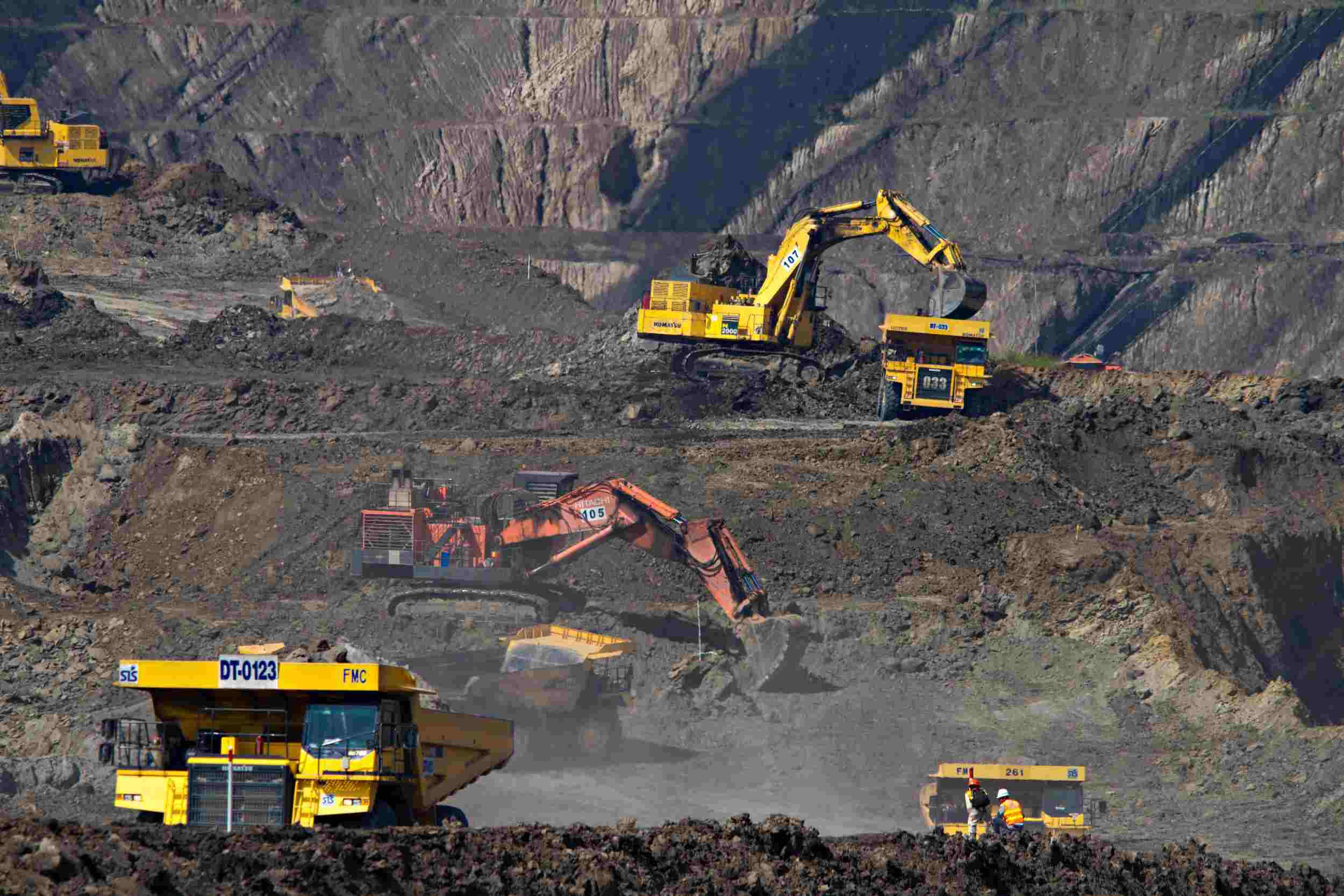
Mining is a capital-intensive, safety-critical industry where a single day of unplanned equipment downtime can cost tens of thousands of dollars in lost production. At the same time, mineral prices and project timelines swing quickly, which makes owning every asset outright a risky long-term bet. That’s why more mining contractors, drilling companies, and mineral processors are turning to equipment hire and digital rental management software to keep fleets flexible, compliant, and fully utilized.
This article looks at where rental software creates the most value in mining operations — from heavy equipment hire and inventory tracking to the safety and compliance workflows that keep sites audit-ready.
“Mines that treat their equipment fleet as a flexible, data-driven resource — rather than a fixed capital asset — consistently outperform on cost per tonne. The winners aren’t necessarily the ones with the biggest fleets; they’re the ones with the best utilization data.” — Operations Director, mid-sized open-pit contracting firm
Why Equipment Hire Makes Sense in Mining
Mining projects rarely run at a constant pace. Exploration, pit development, extraction, and rehabilitation phases each demand different machinery in different volumes. Buying a full fleet to cover peak demand means expensive idle equipment during quieter phases — a problem that equipment rental software and heavy equipment rental software are specifically built to solve.
| Approach | Capital Exposure | Access to Latest Technology | Maintenance Burden | Flexibility to Scale |
|---|---|---|---|---|
| Buying equipment outright | High upfront capex, ties up balance sheet | Fixed at time of purchase; upgrades require new capex | Owner is fully responsible | Slow — resale/purchase cycles take months |
| Renting / hiring equipment | Low upfront cost, converts capex to opex | Continuous access to newer, better-maintained machines | Typically covered by the rental provider | Fast — scale fleet up or down with project phase |
According to McKinsey & Company’s analysis of capital productivity in mining, the sector has historically underperformed on return on capital employed compared to other extractive industries — a gap that asset-light strategies like equipment hire are increasingly used to close.
Types of Mining Equipment Commonly Hired
A digital rental commerce platform gives mining companies a single place to manage the full spectrum of machinery needed across a project’s lifecycle, including:
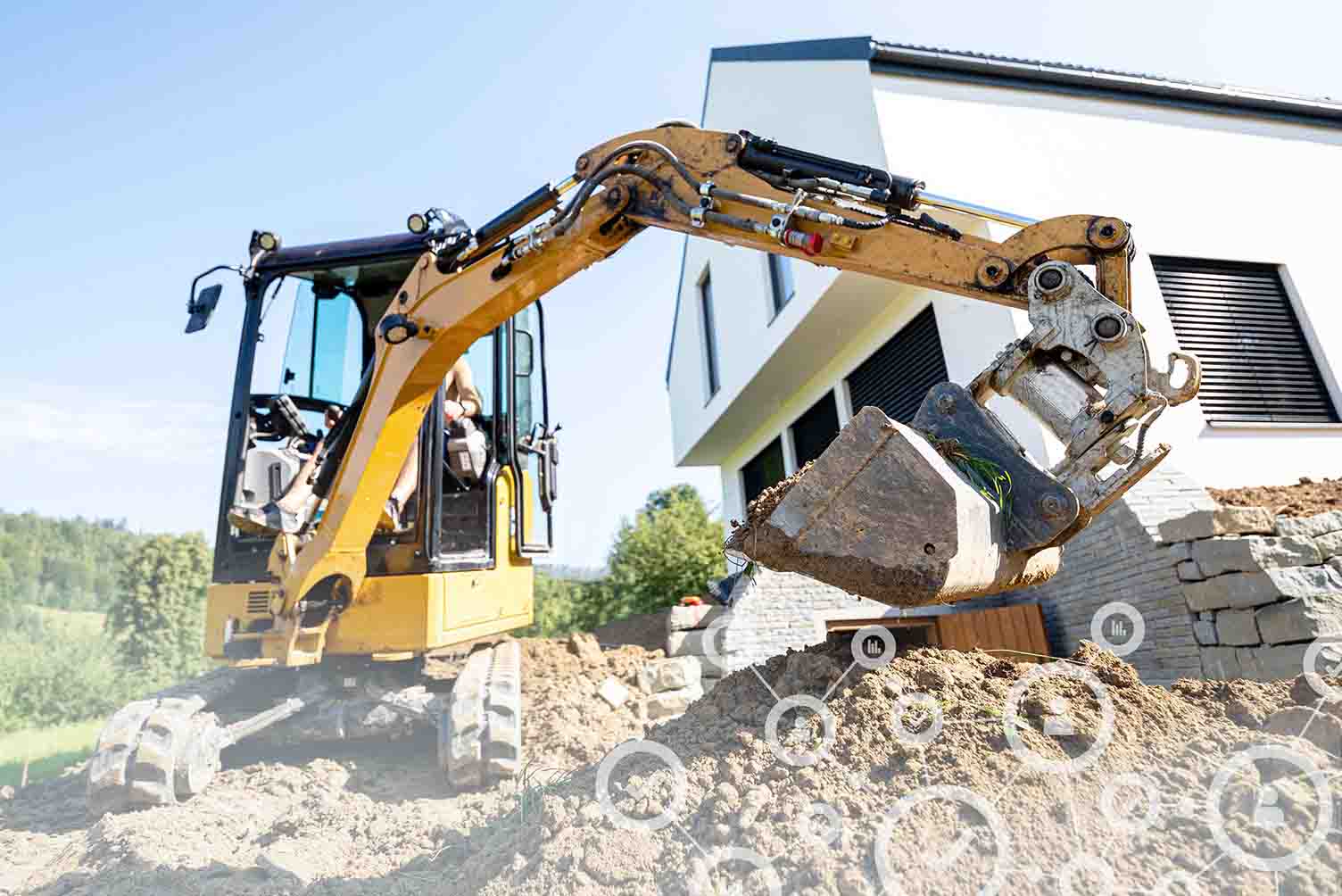
- Excavators and heavy earthmoving equipment for open-pit development
- Haul trucks and articulated dump trucks
- Drilling rigs and blast-hole equipment
- Crushing, screening, and processing plant equipment
- Generators, compactors, and site power/support equipment
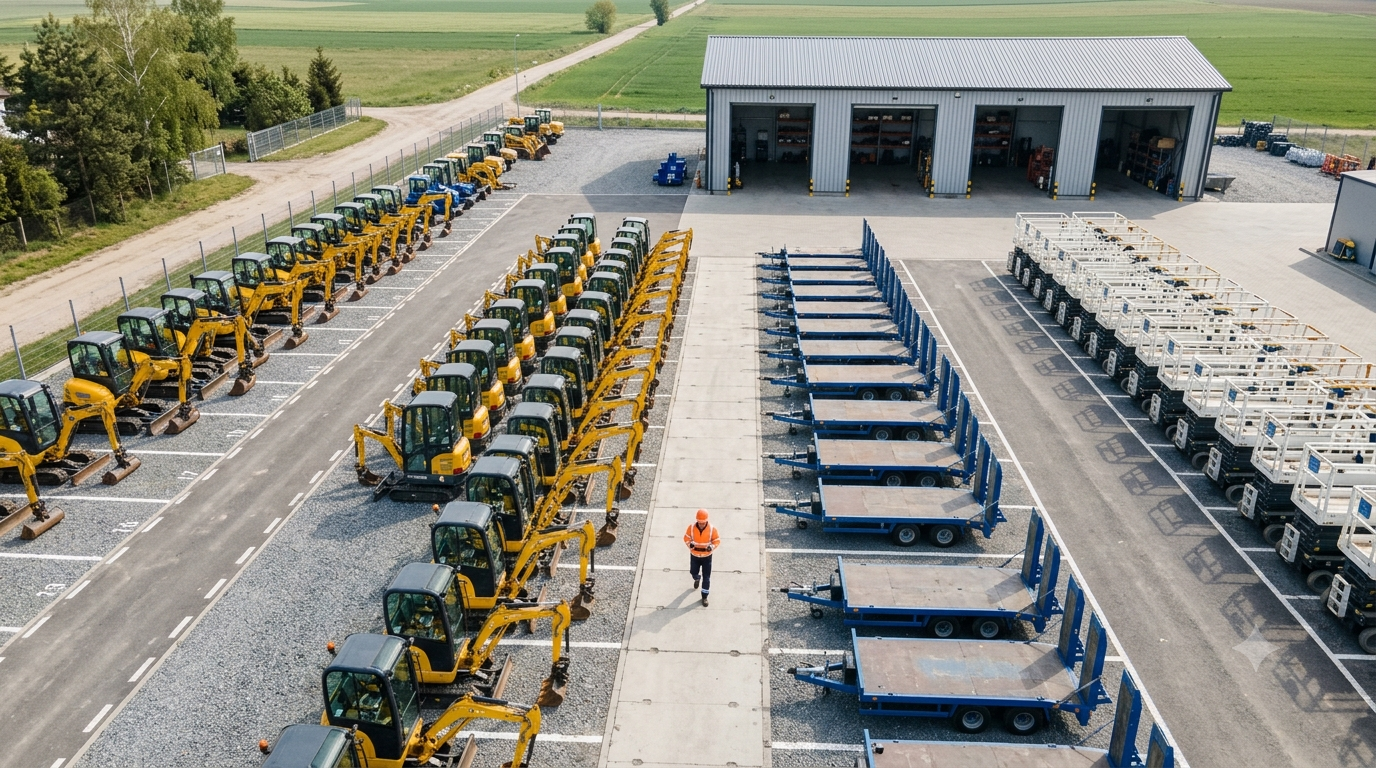
- Trailers and dumpsters for materials movement and waste management
Sharefox’s construction and heavy equipment rental software and dedicated excavator rental software cover most of this equipment category, while the mining equipment rental software page addresses mining-specific fleet needs directly.
How Rental Software Streamlines Equipment Management on Site
Sharefox is a digital rental commerce platform that helps equipment and vehicle rental operators — including those serving mining and heavy industry — run and scale their fleets more efficiently. It supports both B2C and B2B customers in one system, combining self-service booking, flexible pricing, and end-to-end inventory management with invoicing in a single workflow.
For a sector where safety documentation and equipment traceability are non-negotiable, this reduces manual admin, cuts down on human error in asset tracking, and helps operators keep utilization and revenue per asset high.
| Module / Feature | Benefit for Mining Fleet Operators |
|---|---|
| Booking and inventory management | Real-time visibility into which machines are on-site, in transit, or under maintenance |
| Self-service check-in / check-out | Reduces admin overhead for remote or FIFO (fly-in fly-out) sites |
| Flexible rental options | Supports both short project bursts and long-term equipment hire |
| Sales and service bookings | Manages parts, servicing, and consumables alongside equipment hire |
| Advanced pricing configurations | Supports seasonal, project-based, or volume pricing structures |
| Analytics and automation | Surfaces utilization data to inform buy-vs-hire decisions |
| Integrations | Connects accounting, ID verification, and compliance systems into one view |
Compliance, Safety, and Traceability
Mining is one of the most heavily regulated industrial sectors, and equipment provenance matters. Rental platforms that log every booking, inspection, and handover create an audit trail that supports safety compliance — an increasingly important theme as regulators and industry bodies push for stronger operational transparency. The International Council on Mining and Metals (ICMM) publishes safety and performance standards that many rental and hire relationships in the sector are now expected to align with, particularly around equipment maintenance records and incident reporting.
Digital tools that centralize contracts, waivers, and rental agreements make it far easier for site managers to demonstrate compliance during audits than relying on paper records or spreadsheets.
Buy vs. Hire: A Practical Framework for Mining Fleet Decisions
Not every asset belongs in a rental fleet, and not every asset should be purchased outright. A simple framework mining operators can use:
- High utilization, long project life → Buy. Equipment used near-continuously across multiple projects is often cheaper to own long term.
- Seasonal, project-specific, or short-term demand → Hire. Equipment needed for a defined phase (e.g., pit development) is a strong candidate for hire.
- Rapidly evolving technology → Hire. Where equipment technology (emissions standards, automation, telematics) changes quickly, hiring avoids being locked into aging assets.
- Remote or FIFO sites with limited maintenance infrastructure → Hire with service-inclusive contracts. Shifts maintenance risk to the rental provider.
Deloitte’s Tracking the Trends report series has repeatedly flagged capital discipline and fleet flexibility as recurring themes for mining companies navigating volatile commodity cycles — reinforcing why a hybrid buy/hire strategy, supported by good rental software, is becoming the default rather than the exception.
Getting Started
Mining operators exploring rental software should look for a platform that combines fleet visibility, compliance-ready record keeping, and flexible pricing in one place. You can explore Sharefox’s rental software pricing or book a demo to see how the platform handles heavy equipment and mining-specific hire workflows.

 All in one platform