Skip to main content


With tools like Lovable, ChatGPT, or Claude, you can put together a booking site with a calendar and payments in a single afternoon, no coding required. The question that matters comes right after that: who is going to run the system once customers actually start using it?
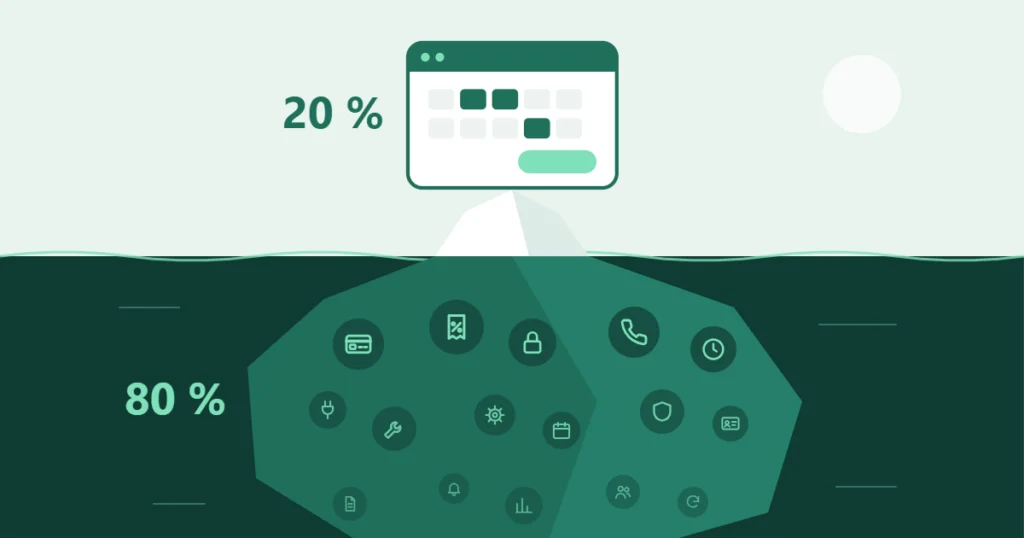
A reasonable rule of thumb is that the build itself is only about 20% of the job. The rest is the unglamorous part that rarely gets mentioned: VAT, payment providers that change their systems, customers who return things late, and someone who answers the phone when everything stops working on a Saturday morning. In this article, we’ll go through what happens after launch, when it’s actually fine to build it yourself, and how you can use AI alongside a rental system.
Can AI build a rental booking system?
AI can produce a working first version of a booking system in hours. You describe what you need, and the tool generates a website, a calendar, product pages, and a basic payment flow.
For testing an idea, that works well — but a first version tends to look finished long before it actually is. The gaps usually only show up once real customers start booking and paying, when the system has to handle everything that wasn’t part of the original description.
What happens after the first version launches?
After launch, the job shifts from building to running the system. This is where most homemade solutions start costing time, because every new situation has to be solved by someone who understands the code.
Payments, deposits, and VAT
A simple payment button is easy to build. Deposits that need to be reserved and released, refunds for cancellations, invoices for business customers, and the correct VAT on every order are harder. If you sell in more than one country, you’re also dealing with a different VAT registration threshold, rate, and filing process in each one — in Norway, for instance, registered businesses must apply the correct VAT rate and file periodic returns with Skatteetaten, and rates are reviewed regularly. Whichever markets you operate in, your local tax authority will have its own version of the same requirements. All of this also has to land correctly in your accounting system, or you end up doing double work every month.
Availability that survives the real world
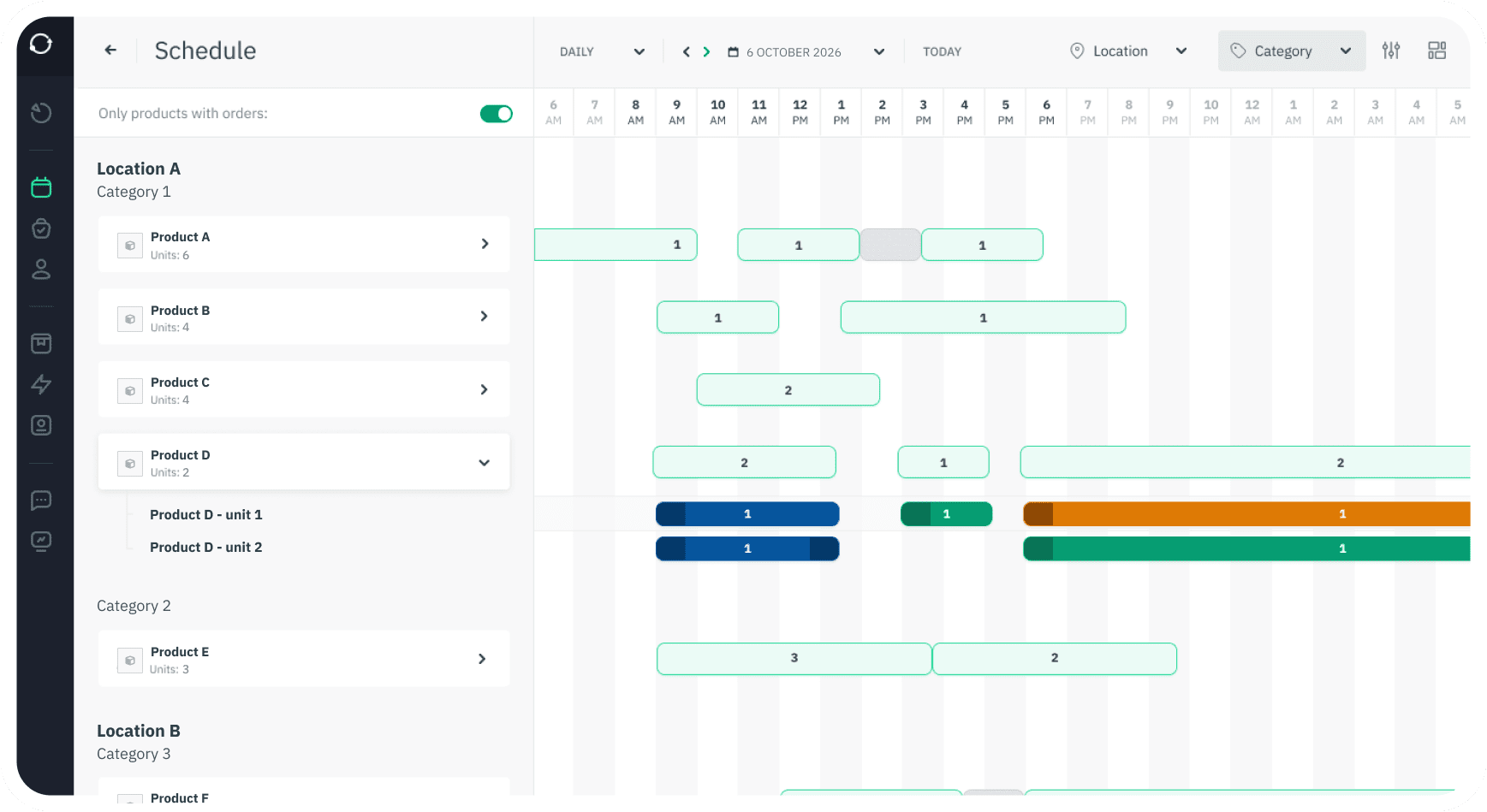
A customer books a trailer for three days and returns it after five. What happens to the next booking? A rental system has to handle late returns, buffer time between rentals, equipment that’s in for service, multi-product bundles, and multiple locations. Each of these is a rule someone has to build and test — usually only after it has already gone wrong once.
“The software has significantly reduced the burden of managing our rentals.” — Per Eirik Espeland, CEO of Verktøyskuret, a self-service tool rental operator in the Oslo area
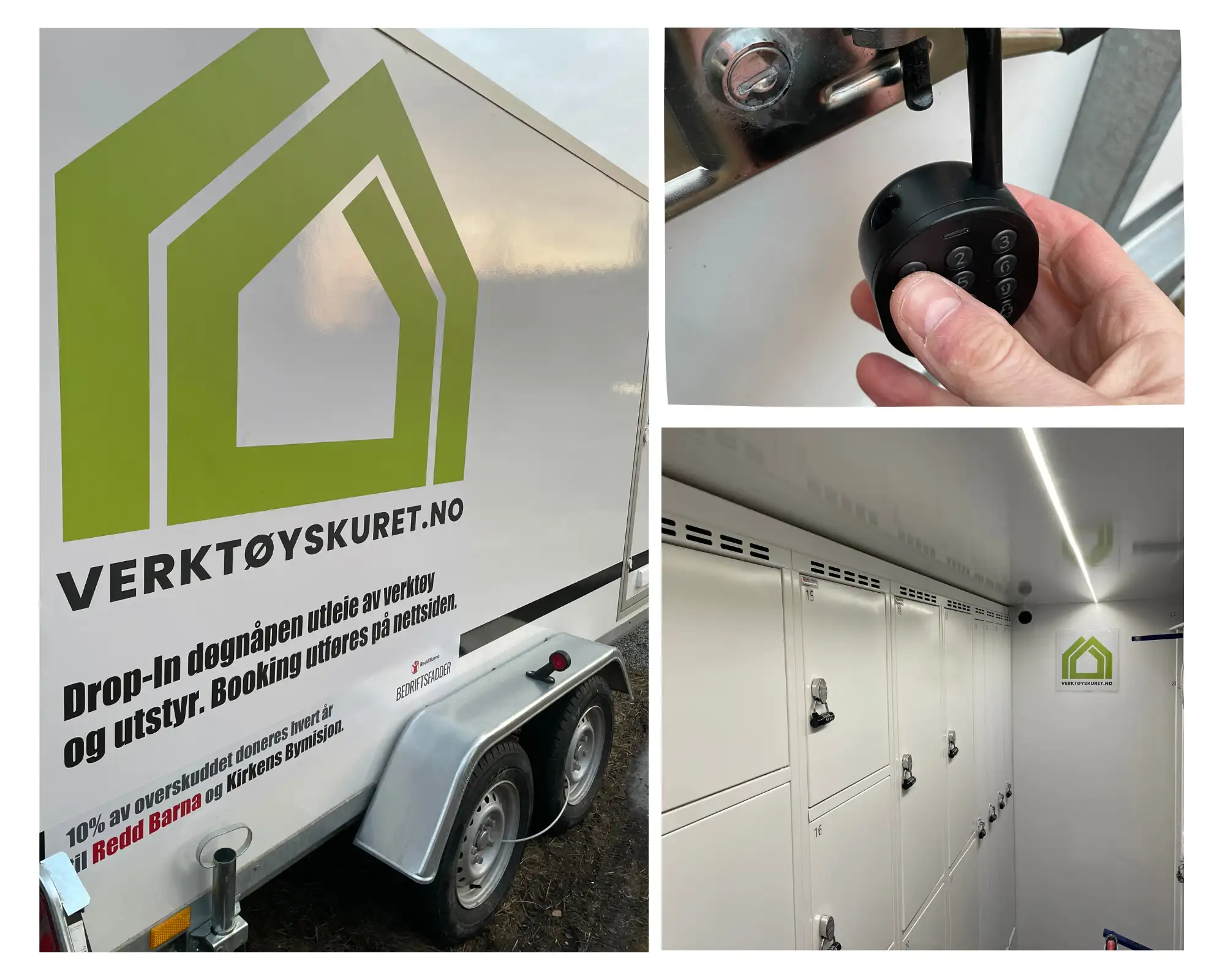
Verktøyskuret, which runs self-service tool rental in the Oslo area, solved this with automation: if equipment isn’t returned on time, the access code is locked, and the customer has to pay a fee to get a new one, so the next customer isn’t left standing in front of an empty locker. That’s the kind of rule an AI-generated first draft is unlikely to include, because nobody thinks to describe it until it has already caused a problem.
Integrations that keep changing
Payment providers, ID-verification services, and accounting systems update their APIs regularly. When a provider changes something on a Thursday, someone has to catch it and fix it before the weekend — and with a system you’ve built yourself, that someone is you.
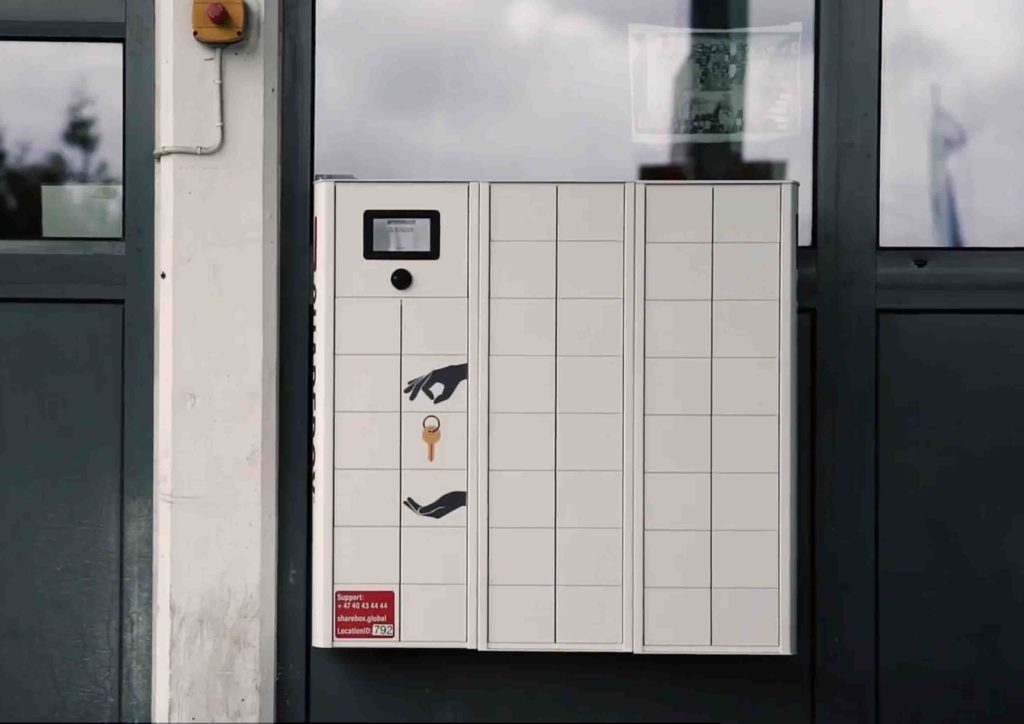
A rental system in production usually runs several integrations at once: payments, ID verification, accounting, email and SMS, and, for self-service rentals, digital locks as well. Each one has to be built and maintained separately, and the more you have, the greater the chance that one of them stops working. Sharefox has over 70 integrations, including more than 45 different lock and access-control systems, and over 100 rental locations currently use self-service. That kind of breadth is hard to achieve in a solution you’ve built yourself, and many vendors won’t grant a homemade system API access at all.
Who answers when it stops at six on a Saturday?
Weekends and peak season are usually when rental businesses see the most traffic — and therefore when failures cost the most. The AI tool that wrote the code won’t help you much when a customer calls because the trailer is locked and the booking has disappeared. Ask yourself who actually picks up that phone, and what one hour of downtime costs you on the busiest day of the year.
Security and data protection
A rental system stores names, addresses, payment information, and often ID verification. If you operate in the EU, the General Data Protection Regulation makes you responsible for storing that data securely and applying security updates on an ongoing basis; operating elsewhere typically means an equivalent local data-protection law instead. Either way, that responsibility sits with you regardless of whether the system was built in-house, with AI assistance, or bought off the shelf. This matters more than it might first appear: independent testing of AI-generated code has found that it introduces security vulnerabilities at a notably higher rate than code written by experienced developers.
What’s the difference between building it yourself and using a rental system?
The difference mostly comes down to who holds the responsibility after launch. The table below shows what you own yourself in each case.
| Area | Build it yourself with AI | Rental system like Sharefox |
|---|---|---|
| First version | Days to weeks | Typically 2 to 4 weeks from kickoff to live |
| Customer-facing website | AI builds it quickly, but you connect booking, payment and stock yourself | Ready-made website where customers book and pay, connected to calendar and stock |
| Availability, buffer time, multiple locations | You find the exceptions one mistake at a time | Built-in real-time calendar and inventory management, support for multiple locations |
| Payments, deposits, VAT | You build it, test it, and carry the risk | Local payment methods (such as Vipps, Swish, and MobilePay in the Nordics, or other regional options elsewhere), invoicing for businesses, and accounting system integration aligned with your local VAT rules |
| Business customers (B2B) | Discounts, contract pricing and invoicing basis have to be built from scratch | Discount structures, per-customer contract terms, and invoicing basis built in |
| Self-service and digital locks | You have to get access to and build each lock integration yourself | Integration with 45+ lock and access-control systems, used by 100+ self-service locations |
| ID verification and contracts | You integrate and maintain it yourself | Digital ID verification and signing (such as BankID and MitID in the Nordics, or other local eID providers elsewhere) |
| Operations, hosting and backups | You set up and monitor it yourself | Included |
| Security and data protection | Your responsibility | Data processing agreement included, and the platform runs on Google Cloud |
| Bug fixes and new features | Down to whoever wrote the code, if they’re still around | Dedicated product team and customer support |
| Cost | Low at first, then time, risk, and lost bookings | Predictable subscription |
Felleskjøpet chose a ready-made rental system when they started renting out tools and machinery in their stores. The goal was to get to market quickly and test the service without a large IT investment with a long delivery time. Since then, they’ve been able to add new product bundles and stores along the way.
What should you think through before building it yourself?
If you can answer these questions well, you’re better equipped to build it yourself. If several of them make you unsure, that’s a sign the operations side will take more time than you expect.
- Who in the business is responsible for the system day to day, and what happens when that person is on holiday?
- What does one hour of downtime cost you on your busiest weekend?
- How do you currently handle double bookings, buffer time, bundles, late returns, and damage?
- How should deposits, refunds, and VAT be handled, and which accounting system should the data go to?
- What does the business look like in two years? More locations, more equipment, more employees using the system?
- How many hours a month do you want to spend on software instead of on customers?
- Who understands the code if the person who made it leaves?
- Where is customer data stored, and who takes care of GDPR and security updates?
When is it enough to build it yourself?
Building it yourself can work for very small and simple rental businesses: one location, few products, low volume, and no online payment. Even then, you should have a plan for who fixes problems and what you do if the system goes down. Internal tools that no vendor offers can also be worth building yourself, as long as bookings and payments don’t run through them.
The picture changes once rental revenue starts flowing through the system. At that point, you should consider a ready-made rental system if one or more of these apply to you:
- You have multiple locations or warehouses
- You have clear peak seasons with many simultaneous bookings
- You take deposits or have to handle damage
- Several employees will be using the system
- You need integration with an accounting system
- You’re planning to grow
Can you use AI alongside a rental system?
For many rental businesses, that’s the best combination. AI works best when it has clean, reliable data to work with — and that’s exactly what a rental system gives you: one overview of bookings, equipment, customers, and payments.
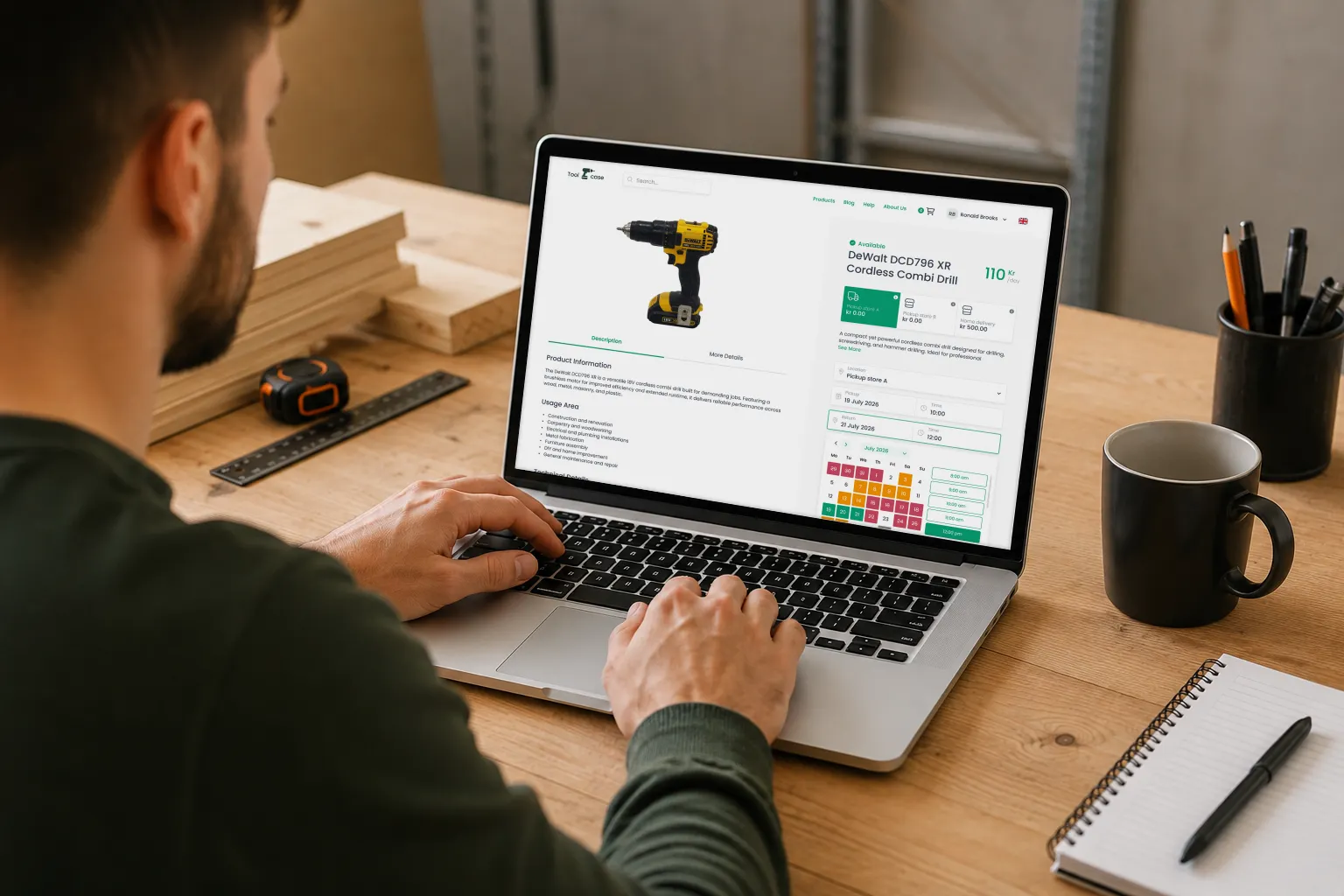
A rental system like Sharefox also includes a ready-made website with booking and payment, so you don’t need to build that yourself either. You can use AI for the rest, for example to:
- Write product descriptions and website copy
- Analyze reports on revenue, occupancy, and seasonal variation
- Draft replies to customer inquiries
- Create images for product pages
What should you do now?
Go through the checklist above and be honest with yourself about ownership and downtime. If you’ve already built a booking site with AI, you can use it to get clear on which features you actually need, and then decide whether to keep building them yourself or move them into a rental system.
If you’d like to see how Sharefox handles booking, payment, and operations for rental businesses, wherever you’re based, you can book a demo. We’re happy to show you how the system fits with what you’ve already built.

 All in one platform