Skip to main content


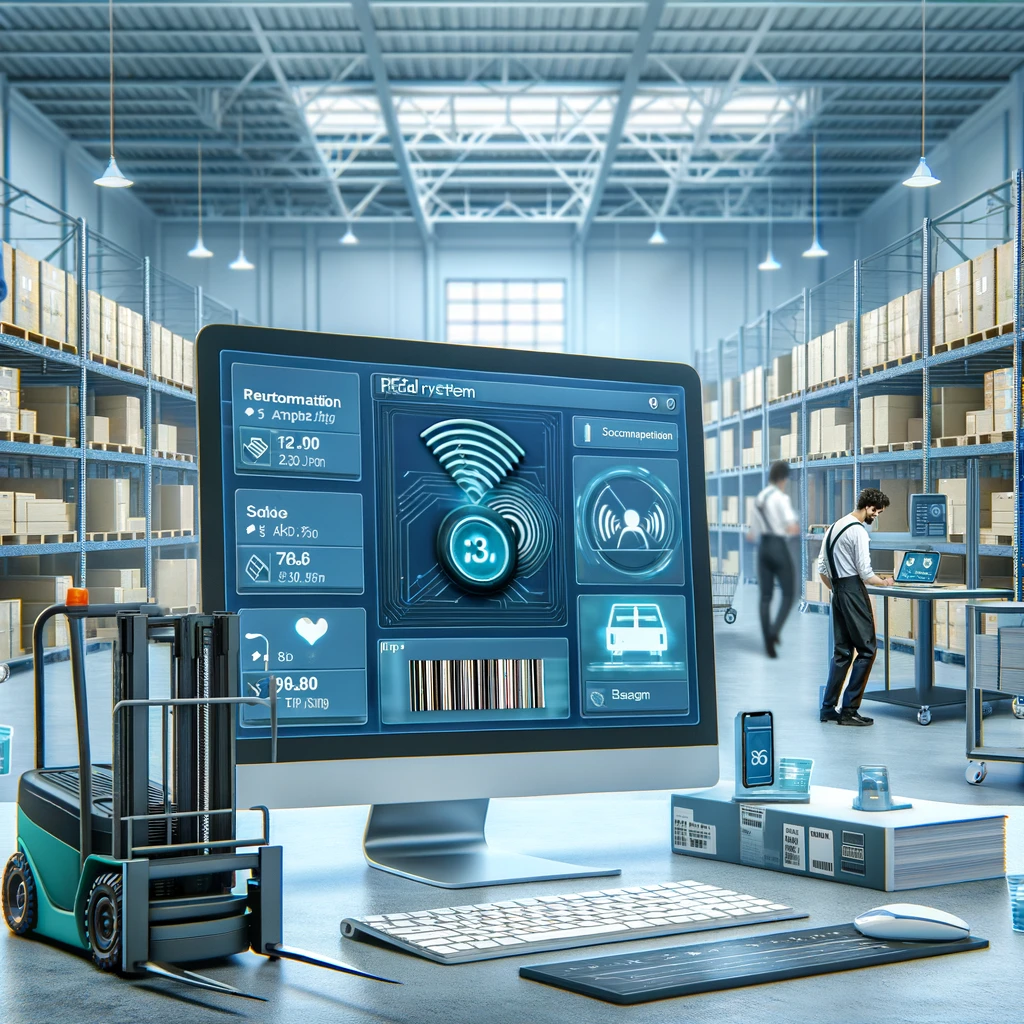
Rental businesses live and die by one question: do you actually know where your equipment is right now? Spreadsheets and barcode logs answer that question slowly. Radio Frequency Identification (RFID) answers it instantly — often for hundreds of items at once, without anyone having to point a scanner at each one individually.
This guide breaks down how RFID actually works, where it earns its keep in equipment rental inventory management, what it costs in trade-offs, and where the technology is heading next.
Understanding RFID Technology
What is RFID?
RFID is a wireless identification method that uses radio waves instead of a scanned barcode. A small tag — containing a chip and antenna — is attached to an asset. A reader nearby picks up the tag’s signal without needing a direct line of sight, and without a person manually aiming a scanner at a barcode. That single difference is what lets an entire container of tools, or a rack of bikes, be inventoried in seconds rather than item by item.
For rental operators specifically, this matters because inventory doesn’t sit still: it goes out the door, comes back late, gets moved between depots, and occasionally goes missing. A technology that can confirm dozens of assets at once — on the way out, on the way back in, or during a stock count — removes a lot of the friction that traditional barcode tracking in rental management still carries.
How RFID tags work
- Passive tags have no internal power source. The reader’s radio signal energizes the tag just long enough for it to transmit its ID back. They’re cheap, small, and the standard choice for most rental inventory.
- Active tags carry their own battery and broadcast on their own schedule. They cost more and need occasional battery replacement, but they offer a much longer read range — useful for large yards, construction sites, or high-value machinery that needs to be located from a distance.
Components of an RFID system
| Component | Role |
|---|---|
| RFID tag | Carries the unique ID attached to the asset. Passive or active, depending on range and budget needs. |
| RFID reader | Emits radio waves and captures the tag’s response. Fixed readers sit at doorways or gates; handheld readers are used for spot checks. |
| Antenna | Extends and shapes the reader’s signal coverage. |
| Host software (e.g. rental management system) | Turns raw tag reads into usable data — checked-out status, location history, maintenance flags. |
That last row is where the value actually gets realized. A tag read that never reaches a system is just a beep. Connected to an inventory rental management system, the same read updates availability, closes out a booking, or triggers a maintenance workflow automatically.
Applications of RFID in the Rental Sector
Asset tracking
Attach a tag to each piece of equipment — from a hand drill to an excavator — and you get a live record of where it is and when it last moved. This is especially valuable for operators managing fleets across multiple depots or job sites, where a lost or misplaced unit isn’t just an inconvenience, it’s lost revenue for however long it sits unaccounted for. Sharefox customers running technical, high-value fleets — Scandinavian Drone is a good example — depend on this kind of asset visibility precisely because their inventory is expensive and easy to lose track of manually.
Inventory management
Where RFID changes the day-to-day most is the stock count. A handheld reader can confirm a large batch of tagged items in roughly the time it takes to barcode-scan a handful. That speed compounds: faster counts mean more frequent counts, which means discrepancies get caught in days instead of months. It’s the difference between an equipment rental inventory management process that runs on real numbers and one that runs on best guesses.
Equipment rental lifecycle
RFID also earns its place across the full rental lifecycle — check-out, check-in, maintenance, storage. Each tag read can automatically log usage hours, flag a unit for preventive maintenance scheduling, or confirm a return without a staff member manually reconciling paperwork. For heavy equipment and construction machinery fleets in particular, tags rated for rugged conditions hold up where a barcode sticker would peel off or scratch away within weeks.
RFID vs. Barcodes vs. Manual Tracking
| Factor | RFID | Barcode | Manual / spreadsheet |
|---|---|---|---|
| Line of sight needed | No | Yes | N/A |
| Items read simultaneously | Dozens at once | One at a time | One at a time |
| Typical read speed (per item) | Near-instant, bulk | 1–3 seconds | Minutes |
| Durability in harsh environments | High (encased tags survive dirt, moisture, impact) | Low–moderate (labels wear, tear, fade) | N/A |
| Upfront cost per item | Higher | Low | None |
| Best fit | High-value, high-turnover, or hard-to-reach inventory | Lower-value items, tight budgets | Very small inventories only |
Most established rental operators don’t pick one exclusively — many run barcodes on low-value consumables and RFID on the assets where speed and shrinkage actually move the P&L.
“The businesses that get the most out of RFID aren’t the ones tagging everything on day one. They’re the ones who start with the 20% of inventory that causes 80% of their reconciliation headaches — usually the expensive, frequently-moved gear — and expand from there.” — Asgeir Helland, Rental Technology Expert, Sharefox
Benefits of Implementing RFID
- Faster operations. Bulk reads at check-out and check-in cut counter time and free staff for customer-facing work instead of manual logging.
- Fewer errors. A unique tag ID removes the ambiguity of manual data entry, which matters most for asset tracking in rental businesses with lookalike SKUs.
- Lower loss and shrinkage. Real-time location data shortens the window in which an item can go missing unnoticed.
- Better maintenance planning. Usage data tied to each tag supports proactive servicing instead of reactive repairs.
Challenges and Limitations
RFID isn’t a drop-in fix, and it’s worth going in with clear eyes:
- Security. Unsecured tag data can, in principle, be read by anyone with a compatible reader in range. This matters most for tags carrying sensitive data (e.g. linked to payment or access systems) and is mitigated with encryption and access controls at the system level, not the tag level alone.
- Environmental interference. Metal and liquids can distort or block radio signals, which can shrink effective read range in certain warehouse layouts or vehicle fleets. A site survey before rollout avoids unpleasant surprises.
- Cost of active tags. Longer range comes at the price of battery maintenance and a higher unit cost — usually only justified for high-value or hard-to-locate assets.
- Standards compliance. UHF, HF, and other frequency bands aren’t interchangeable, and mismatched standards across partners or supply-chain touchpoints can create integration headaches. Confirming standards compatibility early avoids costly rework later.
Future Trends in RFID for Rentals
Expect RFID to keep moving from a nice-to-have into standard infrastructure. Likely near-term developments:
- Tighter integration with predictive maintenance, where usage data from tags feeds directly into service scheduling.
- More durable tag formats built for outdoor, industrial, and marine conditions.
- Deeper API-level integration between RFID hardware and rental platforms — see how this works today via Sharefox’s API and integrations.
- Continued miniaturization, making tagging viable for a wider range of lower-cost items over time.
Getting Started
If you’re weighing whether RFID is worth the investment for your fleet, it helps to run the numbers on your specific inventory first — tag cost, expected reduction in lost items, and staff time saved on counts. Sharefox’s ROI calculator is a reasonable place to start that math before committing to hardware.

 All in one platform