Skip to main content


Self storage automation is reshaping how modern storage facilities operate, manage tenants, and scale efficiently.
As competition increases and customer expectations evolve, manual processes are no longer sustainable for long term growth. Facility owners are moving toward automated systems that simplify daily operations, reduce overhead, and deliver a seamless digital experience for tenants.
At the center of this shift is cloud based facility management. Automation allows storage operators to replace fragmented tools and manual workflows with a connected digital system that controls access, billing, communication, and reporting from one platform.
The result is greater operational efficiency, better control, and a facility that can run smoothly with minimal friction.
What Self Storage Automation Means for Your Facility
Self storage automation refers to the use of digital software, cloud systems, and smart control tools to manage facility operations with minimal manual intervention.
Instead of relying on on site staff to handle every task, automated systems coordinate processes across access, payments, communication, and monitoring.
In practice, automation connects multiple operational layers into a single system:
- Storage software manages unit availability and pricing
- Cloud access systems control gates and doors remotely
- Sensors and monitoring tools track activity and security events
- Digital tenant portals handle onboarding, contracts, and payments
Common examples include online bookings, mobile-based access control, automated billing, and remote monitoring.
Together, these systems create a streamlined operational engine that benefits both operators and tenants.
Key Benefits of Adopting Self Storage Automation
Operational Efficiency Tools
Automation dramatically improves operational efficiency by removing repetitive manual tasks from daily workflows in self-storage facilities.
- Check ins become faster through online onboarding.
- Unit allocation updates in real time.
- Billing runs automatically without staff intervention.
- Access permissions are managed digitally rather than manually.
- Reporting also improves significantly.
- Automated systems generate real time insights into occupancy, revenue, and delinquency.
This allows facility managers to focus on decision making instead of administrative work, reducing errors and operational delays.
Cost Savings and Business Efficiency
One of the most immediate benefits of automation is Link opens in a new tabcost reduction. By minimizing reliance on on site staffing, facilities can operate with leaner teams while maintaining service quality.
Administrative overhead decreases as billing, reminders, and tenant communication are handled automatically.
Automation also reduces revenue leakage.
Link opens in a new tabAutomated payment systems lower delinquency rates and ensure consistent cash flow. Over time, these efficiencies directly improve profitability and business stability.
Enhanced Tenant Experience
Modern tenants expect convenience, speed, and flexibility.
Automation delivers all three.
Tenants can:
- Reserve units online
- Sign contracts digitally
- Access facilities without office dependency
- Manage everything through self service portals
Twenty four seven access improves satisfaction and retention significantly.
Improved Security and Control
Automation strengthens facility security through Link opens in a new tabsmart control systems. Digital locks, automated gate access, and surveillance integration ensure that only authorized tenants can enter specific areas.
Access logs provide detailed records of activity, improving accountability.
Remote monitoring and alerts add another layer of protection.
Facility managers can respond quickly to unusual activity without being physically present, maintaining oversight even across multiple self-storage locations.
Scalability and Growth
Automation enables growth without operational complexity.
You can:
- Expand locations without adding staff proportionally
- Standardize operations across facilities
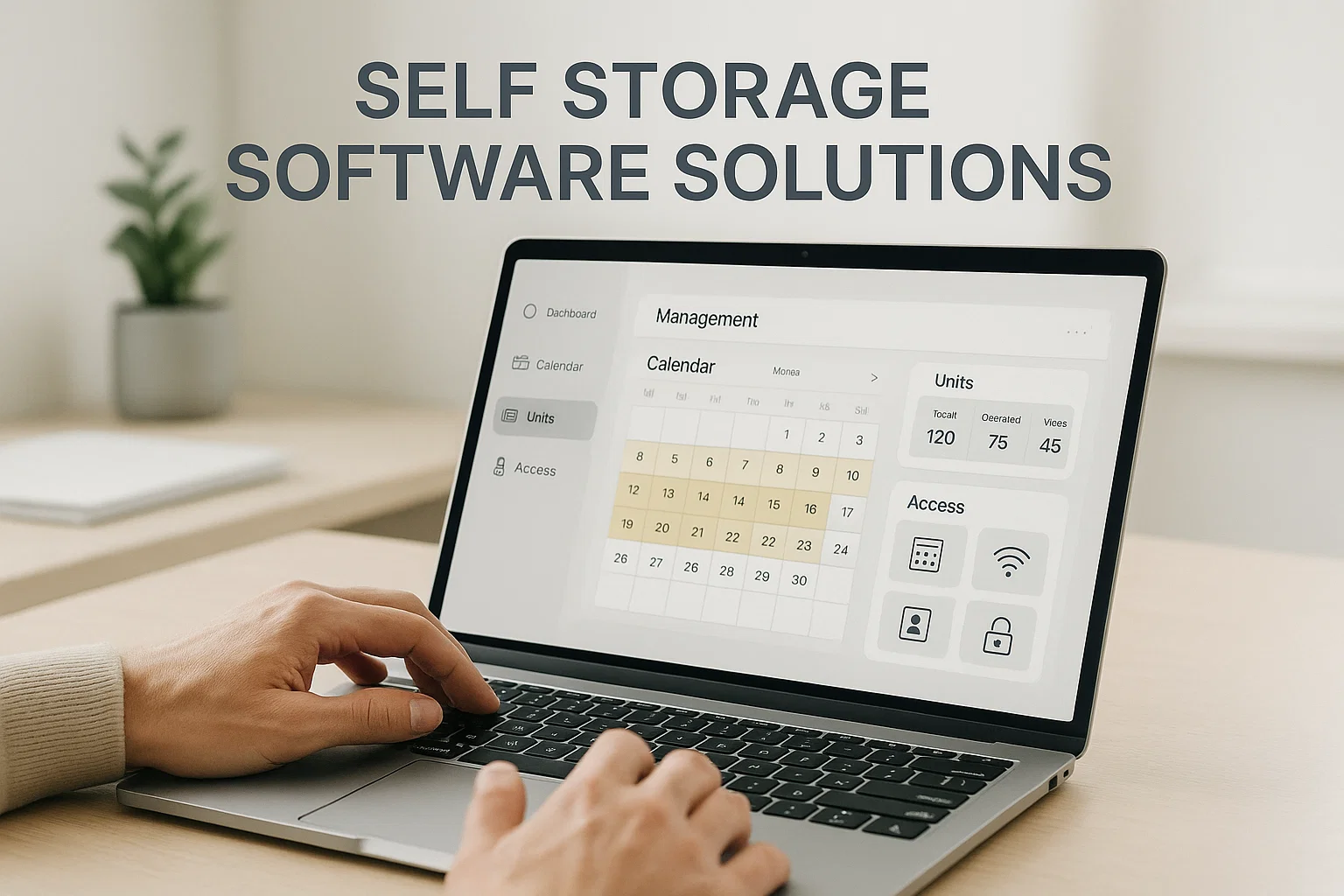
- Manage everything from a centralized dashboard
This is what transforms storage from a location based business into a scalable system.
Must Have Features in Self Storage Automation Systems
Cloud Based Facility Management
Cloud based management is the foundation of effective automation. It enables remote control of operations, Link opens in a new tabreal time data access, and centralized oversight. Facility managers can monitor performance, adjust pricing, and manage tenants from anywhere.
Cloud systems also improve reliability and security through automatic updates and data backups, reducing dependence on local infrastructure.
Online Booking and Digital Onboarding
Online booking tools and kiosks allow prospective tenants to reserve storage units instantly. Digital onboarding removes friction by enabling electronic signatures, identity verification, and immediate access setup. This shortens the rental process and increases conversion rates.
For operators, digital onboarding reduces administrative workload while ensuring accurate data capture from the start.
Automated Billing and Payments
Link opens in a new tabAutomated billing systems handle recurring payments, invoice generation, and reminders without manual input. Tenants benefit from predictable payment schedules and multiple payment options, while operators gain consistent cash flow.
Delinquency management is also improved through automated notices and access restrictions when payments lapse, reducing revenue loss.
Access and Security Automation
Access automation includes gate control, mobile credentials, keypad systems, and integration with digital locks. These tools allow precise control over who can access specific areas and when.
Security automation enhances protection by combining access logs, alerts, and monitoring into a unified control system that reduces risk and improves response times.
Analytics and Reporting Tools
Link opens in a new tabData driven decision making is a key advantage of automation. Reporting tools provide insights into occupancy trends, pricing performance, and operational bottlenecks. With accurate analytics, facility operators can optimize rates, improve utilization, and plan expansions confidently.
How to Implement Self Storage Automation Step-by-Step

Successful automation starts with understanding your current processes.
Step 1: Audit Your Current Operations
Begin by mapping out your existing workflows to enhance your storage management practices. Identify manual tasks that consume time, create bottlenecks, or increase the risk of errors. This audit clarifies which processes benefit most from automation and helps set clear priorities.
Step 2: Choose the Right Automation Tools
Select automation software and hardware that match your facility size, budget, and long term growth plans. Focus on systems that integrate smoothly with each other to avoid operational silos and future limitations.
Step 3: Deploy Automation in Phases
Implement automation gradually to reduce disruption. Start with high impact functions such as billing and access control, then expand into analytics, reporting, and remote monitoring. Provide proper staff training to ensure confident and consistent use.
Step 4: Monitor, Optimize, and Improve
Track system performance after deployment and gather feedback from both staff and tenants. Use this insight to fine tune workflows and continuously optimize operations for long term efficiency and value.
Continuous optimization ensures the automation system delivers long term value.
Traditional vs Automated Operations
Traditional facilities rely on manual oversight, disconnected tools, and constant staff involvement.
Automated facilities operate through streamlined systems that are faster, more accurate, and significantly more scalable.
This is why automation is no longer optional. It is the new standard.
Overcoming Challenges When Automating Your Facility
Automation does come with challenges, particularly during initial implementation in a self-service environment. Integrating new systems with existing infrastructure can require careful planning. Staff may need time and training to adapt to new workflows.
Initial investment costs are another common concern. However, these costs are typically offset by long-term savings and efficiency gains in self-service operations. Choosing scalable systems and implementing automation in phases can reduce financial pressure and operational risk.
Clear communication, proper training, and realistic timelines are key to overcoming these obstacles successfully.
The Future of Self Storage Automation
The next wave of automation includes:
- AI driven pricing and demand forecasting
- IoT based predictive maintenance
- Fully remote facility management
The direction is clear. Storage is becoming a digital first business model.
Why Self Storage Automation Is the Smartest Move for Long Term Growth
Self storage automation is no longer a competitive advantage reserved for large operators. It is a practical necessity for any facility seeking efficiency, scalability, and long term success. By automating facility operations, storage businesses can reduce costs, improve security, and deliver a superior tenant experience.
Facilities that embrace automation today position themselves to adapt, grow, and thrive in an increasingly digital storage market.
Ready to Automate Your Self Storage Facility?
If you are still:
- Handling bookings manually
- Chasing payments every month
- Managing access through disconnected tools
- Relying on staff for routine operations
You are leaving efficiency and revenue on the table.
Sharefox gives you a fully digital, end to end system to run your facility.
- Accept bookings online 24/7
- Automate billing, invoicing, and reminders
- Enable secure, automated access control
- Manage units, tenants, and performance from one dashboard
- Scale across locations without adding complexity or staff
- Upgrade to a Smarter Storage Operation
This is not just about saving time.
It is about building a facility that can grow without friction.
A system where:
- Operations are streamlined
- Payments are consistent
- Tenants manage themselves
- You stay in control from anywhere
That is what modern self storage looks like.
Take the Next Step
Book a live demo and see how Sharefox runs a fully automated facility
Visit our Self Storage Software page and see how we help our clients achieve their dream outcomes.
Modern storage is automated.
The only question is when you make the switch.

 All in one platform