Skip to main content


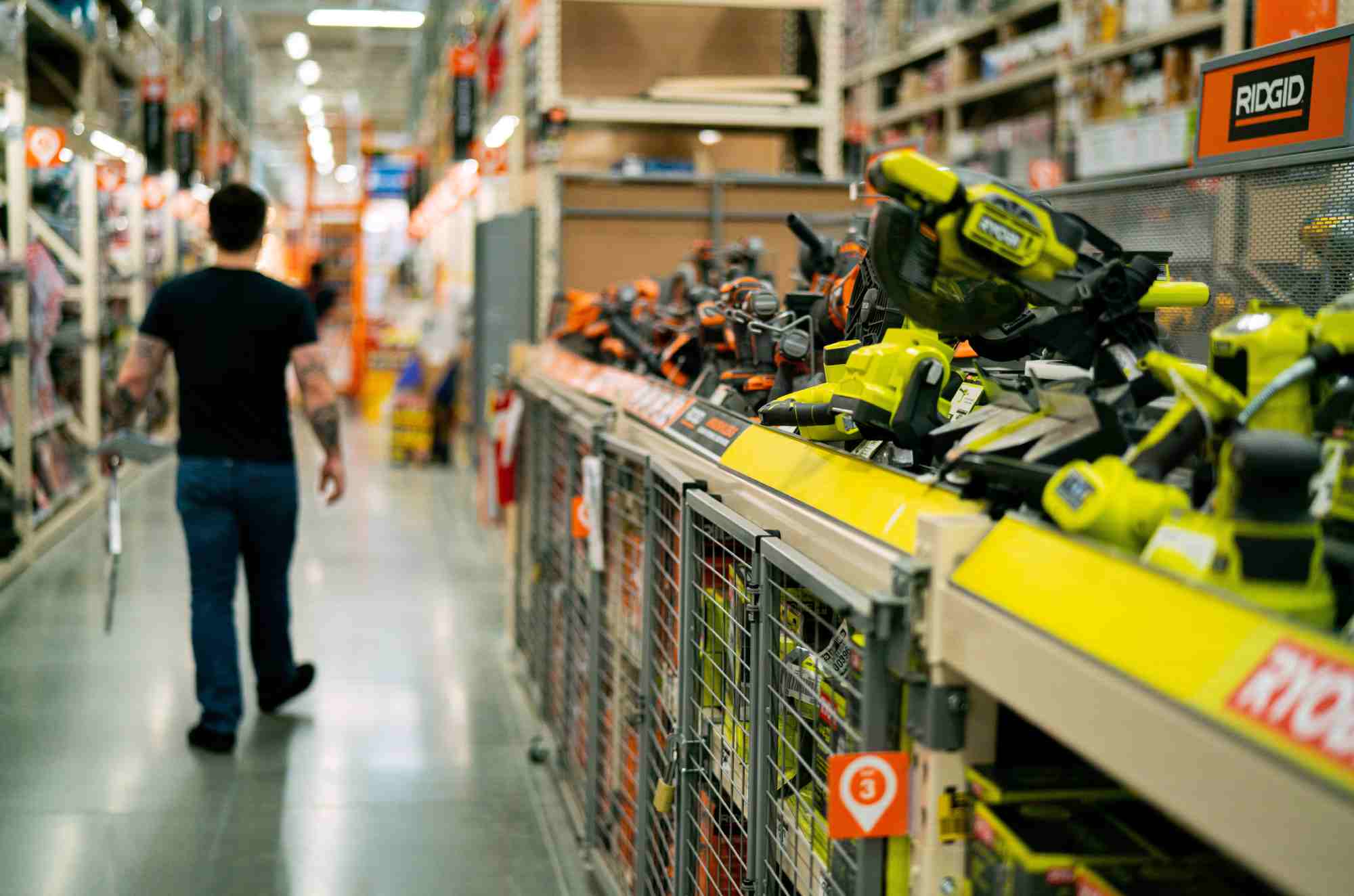
Retail is quietly splitting into two economies: one built on ownership, and one built on access. Rental — once a niche category for tools, tuxedos, and moving vans — is becoming a mainstream retail channel, and it’s forcing every operator, from independent equipment yards to national vehicle fleets, to rethink how they sell.
This shift isn’t hype. According to McKinsey & Company’s research into subscription and access-based consumption, a growing share of consumers now say they’d rather pay for temporary use of a product than own it outright — a trend playing out across cars, outdoor gear, event equipment, and even fashion. For retailers, that means rental is no longer a side hustle. It’s a core go-to-market model that needs the same rigor as any other retail channel: proper inventory and booking management, the right payment and identity infrastructure, and a self-service experience customers actually want to use.
Understanding the Retail Industry
Definition and Meaning of Retail
Retail is, at its core, the sale of goods and services directly to end consumers in relatively small quantities — as opposed to wholesale, where large volumes move between businesses. That definition traditionally covered brick-and-mortar department stores, local shops, and e-commerce. It’s now stretching to cover a third model: temporary access.
Platforms like Sharefox sit inside this expanded definition. Sharefox is a rental commerce platform that gives businesses the booking, inventory, and payment infrastructure to run and scale equipment and vehicle rental operations for both B2C and B2B customers — effectively extending “retail” to cover renting as well as selling.
Current Trends in the Retail Sector
Retail today is defined by two forces pulling in the same direction: omnichannel expectations and margin pressure. Customers expect the same seamless experience whether they’re buying online, in-store, or renting for a weekend. Meanwhile, thinner margins mean retailers can’t afford manual processes or fragmented systems.
That’s pushing more operators toward advanced rental software and automation to stay competitive. Sharefox, for example, positions itself for the SMB and mid-market segment — the operators who need enterprise-grade automation and integrations without enterprise-grade complexity or cost.
The Role of Retailers in the Economy
Retailers remain the final link between manufacturers, wholesalers, and end-users, and they still drive a huge share of consumer spending and employment. What’s changing is who counts as a retailer. Rental operators are increasingly part of that picture:
- SMB to mid-market companies renting out equipment or machinery
- Mobility managers running vehicle and fleet rental programs
- Entrepreneurs building subscription or hybrid rent-sell-subscribe models
“The businesses that will win the next decade of retail aren’t choosing between selling and renting — they’re building systems flexible enough to do both, for the same customer, from the same inventory.” — Sharefox’s rental operations team
Types of Retail Formats
Traditional Retail Stores
Brick-and-mortar stores — department stores, independent shops, specialty outlets — remain the backbone of the retail industry. They offer something digital can’t fully replicate: direct product interaction and human service. But rising digital expectations mean even the most traditional formats are under pressure to add self-service and online booking options.
Online Retail and E-commerce
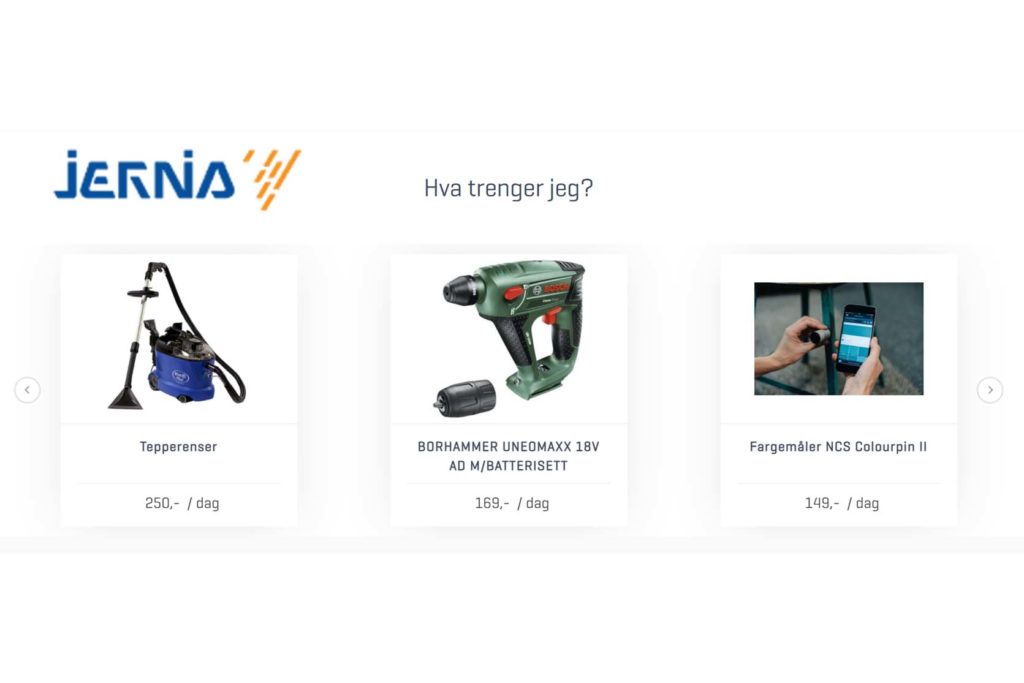
E-commerce reshaped retail by removing geographic and time-of-day limits on shopping. Rental platforms extend that same convenience to access-based commerce. Sharefox’s All-in-One Rental Commerce Platform supports equipment, tools, vehicles, and self-storage rentals side by side — including hybrid models where a business can rent, sell, and subscribe from one catalog.
Emerging Rental Retail Models
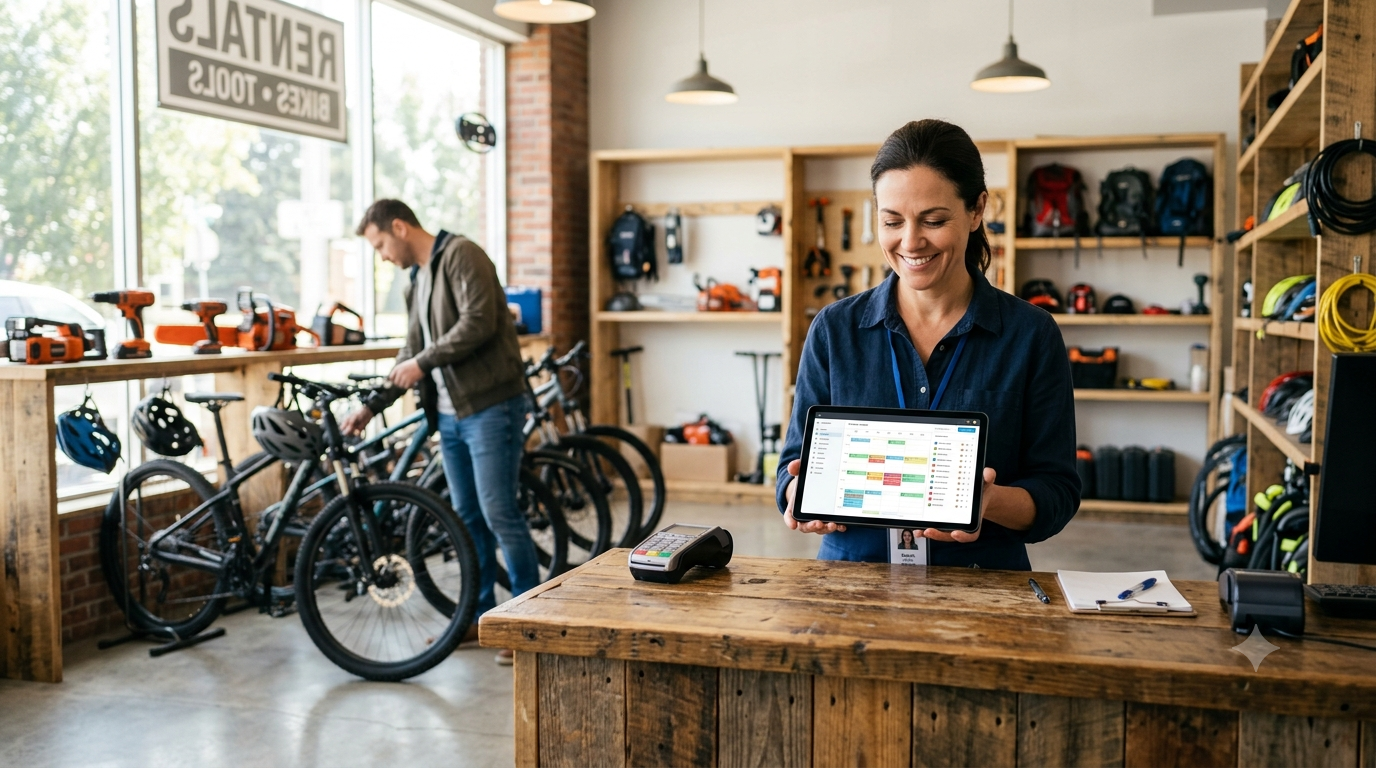
Rental retail formats are evolving fast. Self-service rental — where customers book, check in, and check out entirely on their own via smart locks and digital access — is becoming table stakes rather than a differentiator. So is subscription-based access, which turns a single rental transaction into a recurring relationship. Both models reduce dependence on staffed reception desks while giving customers more control over their own experience.
The Impact of Rental on Retailers
How Rental Changes Profit Margins
Rental shifts the economic logic of retail from “sell it once” to “monetize it repeatedly.” The lever that matters most isn’t unit sales — it’s utilization: how many hours or days an asset is actively earning revenue versus sitting idle. Reducing manual admin and human error through proper rental management systems is one of the most direct ways to lift utilization without buying more inventory.
Benefits of Rental for Retailers
The operational case for rental software is straightforward. A unified system for booking, inventory, and invoicing — paired with integrated payments and accounting — cuts the friction that typically slows down turnaround between rentals. For self-storage operators specifically, automating access and lock systems removes much of the need for on-site staff altogether, which matters when expanding to new locations on a tight budget.
Challenges for Retailers Adopting Rental Models
Rental isn’t friction-free to adopt. Common pain points include:
- Fragmented tools that don’t talk to each other, creating blind spots on bookings, damages, and availability
- Staff resistance to new software, especially in teams that have run on paper and spreadsheets for years
- Mobility managers juggling separate CRM, booking, and finance systems alongside manual key handling
- Property managers coordinating CRM, access control, and payments while trying to keep touchpoints minimal
These are solvable problems, but they require software built to scale across multiple locations without adding headcount.
Supply Chain Considerations
Integrating Rental into Existing Supply Chains
Rental adds a layer of complexity that traditional retail supply chains weren’t built for: assets have to come back, get inspected, and go out again — repeatedly. Ecosystem integrations for accounting, payments, and identity verification (Sharefox connects with systems like Visma, Nets, and Criipto) let operators keep financial control without building custom infrastructure from scratch.
Logistics of Rental Products
Managing rental logistics means tracking not just where an asset is, but its condition and availability at any given moment. Booking and inventory management, paired with self-service check-in/out tools like Sharebox and Inlet, automate much of that tracking and reduce the manual touchpoints that used to require a staffed desk.
Managing Inventory for Rental Retail
Consolidating inventory into a single system — rather than spreadsheets per location — is what makes scaling to multiple sites realistic. Retailers get one view of what’s booked, what’s available, and what needs maintenance, which is the foundation for reliable ROI and utilization tracking as the fleet or catalog grows.
Retail Analysis and Future Outlook
Market Predictions
Analysts broadly expect continued blurring between traditional retail formats and access-based models. Retailers who build rental and subscription options into their core offering — rather than bolting them on — are best positioned for the growth ahead, particularly as sustainability concerns push more consumers toward “use, don’t own” thinking. Sector-specific examples, like the shift toward car subscription models, show how quickly this is moving from experiment to expectation.
Consumer Behavior Trends
Today’s rental customer wants the booking-to-return journey to feel as easy as online shopping: clear pricing, instant availability, and no phone calls required. That preference for frictionless, self-directed experiences is one of the biggest reasons self-service and digital check-in/out tools have gone from “nice to have” to a baseline expectation.
Strategic Recommendations for Retailers
For retailers evaluating a move into rental, a few priorities stand out:
- Automate check-in/out before you scale locations, not after
- Build ID verification and secure payments into the booking flow from day one
- Reduce dependence on physical staff for routine transactions
- Treat subscriptions and long-term agreements as a distinct revenue line, not an edge case
Operators who’ve already made this shift — including businesses profiled in Sharefox’s customer case studies — show what’s possible when booking, inventory, and payments run on one platform instead of five.
Rental vs. Traditional Retail: A Side-by-Side Comparison
| Dimension | Traditional Retail (Ownership Sale) | Rental Retail (Access Model) |
|---|---|---|
| Revenue pattern | One-time transaction per unit sold | Recurring revenue per asset, repeated over its lifetime |
| Key success metric | Units sold, gross margin per sale | Utilization rate, revenue per asset per period |
| Customer relationship | Often ends at checkout | Ongoing — booking, return, re-booking, potential subscription |
| Inventory complexity | Track stock in/out | Track availability, condition, maintenance, and location in real time |
| Staffing needs | Sales floor staff | Can be minimized via self-service check-in/out |
| Scalability across sites | Requires stocking every location | Can scale with centralized inventory + digital access |
| Sustainability profile | Single use per unit produced | Multiple uses per unit, lower per-use resource footprint |
 All in one platform