Skip to main content


Trailers are one of the few rental assets that pay for themselves in under two years and keep earning for a decade after that. That combination — low depreciation, high utilization, minimal moving parts — is exactly why so many rental operators treat trailers as their most dependable revenue line, not their most exciting one.
But “dependable” isn’t the same as “automatically profitable.” Two operators with an identical fleet of five utility trailers can post very different year-end numbers, and the gap almost always comes down to three things: what you paid for the trailers, how you price them, and how often they’re actually out the gate earning money. This guide breaks down each of those levers so you can put a realistic number on your own trailer rental business — not just a hopeful one.
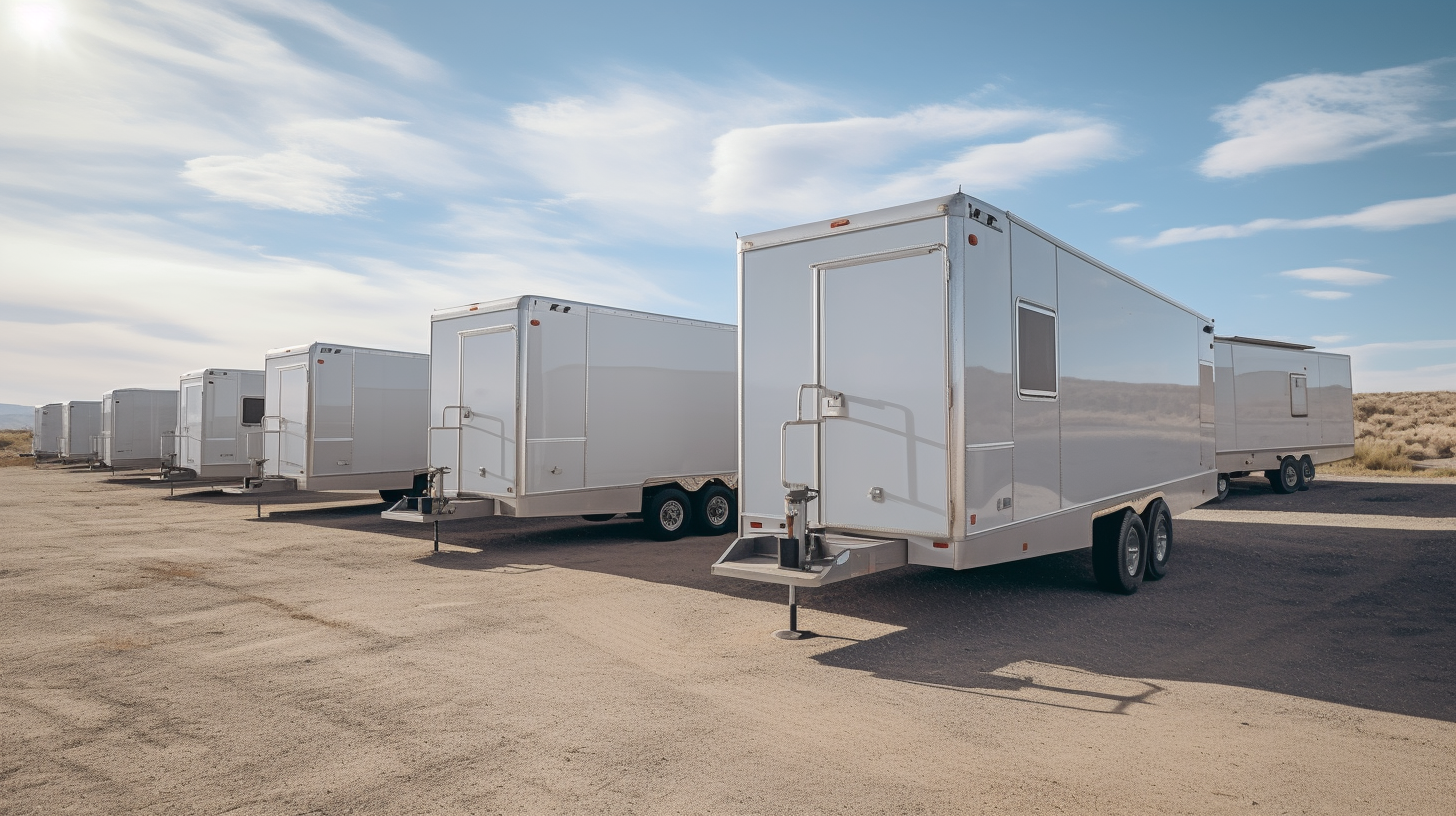
Understanding the Trailer Rental Industry
Why Demand for Trailer Rentals Keeps Growing
A trailer rental software business exists to solve a simple problem: most people and businesses need a trailer only occasionally, but owning one means paying for storage, insurance, maintenance, and depreciation year-round. Renting shifts that cost to the moments it’s actually needed — which is exactly why demand has kept climbing alongside the boom in DIY home projects, small construction crews, and businesses that would rather rent logistics capacity than tie up capital in it.
That demand isn’t evenly spread, though. Understanding which trailer types are driving it is the first real input into a profitability estimate.
Types of Trailers Available for Rent
| Trailer Type | Common Uses | Relative Daily Rate | Relative Demand |
|---|---|---|---|
| Utility Trailers | General hauling, landscaping, moving | Lower | High — broadest customer base |
| Dump Trailers | Construction debris, waste removal | Highest | High — commercial + DIY renovators |
| Cargo Trailers | Secure/enclosed transport | Low–moderate | Moderate |
| Flatbed Trailers | Heavy or oversized loads | Moderate | Moderate — often commercial accounts |
| Equipment Trailers | Machinery transport | Moderate–high | Moderate to high — pairs well with construction rental fleets |
*Rates vary significantly by region, trailer size/capacity, and season — use this table to compare trailer types relative to each other, then price against your own local market.
A diversified fleet across a few of these categories is usually smarter than going deep on one type, because it spreads seasonal risk: dump and equipment trailers track construction cycles, while utility trailers see steadier, more DIY-driven demand year-round. If you’re weighing which trailers to add first, our breakdown of the best trailers for a rental fleet and this guide to renting out dump trailers specifically go deeper on the trade-offs.
Current Trends Shaping Profitability
Two trends matter most right now. First, digital booking has become table stakes — renters expect to check availability and reserve a trailer online, the same way they’d book anything else, and operators still running phone-and-notepad systems are losing bookings to competitors who aren’t. Second, utilization tracking has become a genuine profit lever rather than a nice-to-have: knowing exactly which trailers are idle and why lets you fix the gap between “fleet you own” and “fleet you’re actually renting out.”
“The rental businesses that scale profitably aren’t the ones with the biggest fleets — they’re the ones with the highest utilization rates on the fleet they already have.”
That’s the core tension in trailer rental economics: buying more trailers is easy, but the return only shows up if each one is out on rent often enough to cover its cost of ownership. Which brings us to the real question.
So, How Profitable Is a Trailer Rental Business, Really?
There’s no single number — margins depend heavily on fleet mix, region, and how well the operation is run — but a few benchmarks are useful for grounding expectations:
- Trailers depreciate slowly relative to most rental equipment, which means the asset itself has a long earning life, often 8–12 years, before major reinvestment is needed.
- Utilization is the swing factor. A trailer sitting idle 60% of the time and one rented out 40% of the time have very different unit economics even at identical rates — the U.S. Small Business Administration’s guidance on service-business planning consistently flags utilization as the metric new operators most often underestimate.
- Net margins for well-run rental operations (across equipment categories broadly, not trailers alone) commonly land in the high-teens to low-30% range once insurance, maintenance, storage, and software costs are accounted for — trailers, with their lower maintenance burden, tend to sit toward the healthier end of that range.
The honest takeaway: a trailer rental business is structurally well-positioned to be profitable, but that potential is realized through pricing discipline and utilization management, not by the asset class alone. If you’re building out the numbers for your own plan, our guide to creating a rental business plan walks through the full financial model.
Steps to Start a Trailer Rental Business
Creating a Business Plan
A trailer rental business plan needs to go further than “buy trailers, rent them out.” It should model startup capital against realistic utilization (not best-case), map seasonal demand for your specific trailer mix, and set a pricing floor that covers depreciation, insurance, and storage before profit even enters the picture. This is also the point to size up your local market — competitor rates, nearby construction activity, and population density all shape what’s achievable.
Register Your Business and Get Insured
Registering the business and securing the right licenses is table-stakes work, but insurance deserves more attention than it usually gets. Trailer rental carries liability exposure that a generic small-business policy often doesn’t fully cover — hitch failures, road incidents, and damage disputes are all real scenarios. Our insurance guide for rental businesses covers the coverage types worth pricing out before you sign your first rental agreement.
Building the Fleet
Fleet composition is where a lot of the profitability decision actually gets made. Buying five identical utility trailers is simpler to manage, but a mixed fleet — utility, dump, and one or two equipment trailers — tends to capture more of the local market and smooths out seasonal dips. Whatever mix you choose, a booking system built for fleet management matters more than most first-time operators expect, because double-bookings and maintenance blind spots are two of the fastest ways to erode margin.
Marketing Strategy for Trailer Rentals
A trailer rental business lives or dies on local visibility. Most renters search with intent — “trailer rental near me,” “dump trailer rental [city]” — so a Google Business Profile, location-specific landing pages, and consistent reviews do more heavy lifting than broad brand advertising ever will. Highlighting the cost savings of renting versus owning is also a consistently effective angle, since it’s the exact reason most customers are shopping in the first place.
Leveraging Online Booking
A trailer sitting idle because a customer couldn’t reach anyone after hours is a direct hit to utilization — and utilization, as established above, is the number that actually drives profit. An online booking flow that lets customers check availability and reserve a trailer at 9pm on a Sunday captures demand a phone-only operation simply misses. If you haven’t already, it’s worth trying Sharefox’s free trial to see what that looks like end-to-end.
Building Customer Relationships
Repeat renters and word-of-mouth referrals cost nothing to acquire, which makes them disproportionately valuable to margin. Transparent rental agreements, clear damage policies, and fast turnaround on returns are what turn a one-time renter into a repeat one — and repeat renters are cheaper to serve than the acquisition-heavy first-time customer.
Streamlining Operations to Protect Margin
Fleet Management Tools
Every hour a trailer spends unaccounted-for — in transit, being cleaned, awaiting a minor repair — is an hour it’s not earning. Rental management software that tracks real-time location and maintenance status closes that gap and is one of the more measurable ways to lift the utilization rate discussed earlier.
Optimizing the Rental Process
From inquiry to return, every extra step in the process is friction that either delays a booking or invites the customer to check a competitor instead. Streamlined booking, automated invoicing, and clear digital contracts all shrink that friction — which is really just another way of protecting utilization.
Estimating Your Own Numbers
Before committing capital, it’s worth running your specific fleet plan and rate assumptions through a proper model rather than relying on industry averages. Sharefox’s ROI calculator is a quick way to stress-test a fleet size and rate combination against realistic utilization scenarios.
Result:
Summary
Total Invested:
Total Revenue:
Net profit:



 All in one platform