Skip to main content



The rental industry is entering one of the biggest shifts it has seen in a decade. AI, IoT, and cloud-based platforms are moving from “nice to have” to the default way rental businesses operate — and the companies that adopt them early are pulling ahead on efficiency, margin, and customer loyalty.
This isn’t theoretical. We work daily with equipment rental companies, mobility fleets, and self-storage operators who are living through this shift, and the pattern is consistent: the businesses still running on spreadsheets and disconnected tools are losing ground to those running on a single, connected rental management system.
Overview of the Rental Industry
Current State of Rental Businesses
Many rental businesses today are stuck balancing growth, operational efficiency, and customer service — often with tools that were never built to do all three at once. A large share still rely on spreadsheets or legacy systems, which creates duplicate work and blind spots on the things that matter most: bookings, damages, and equipment availability.
| Business Area | Challenges Faced |
|---|---|
| General Rental Operations | No real-time visibility over bookings, damages, or availability; operational chaos during peak season; staff resistance to new software |
| Mobility Management | Delivering a smooth customer experience while managing compliance across locations |
| Self-Storage Management | Scaling to new sites while keeping operations lean; manual key handling; too many disconnected systems |
Why Technology Matters More Than Ever
Technology isn’t a side project for rental businesses anymore — it’s core infrastructure. Modern rental software, automation, and integrations now handle the work that used to require a full front-desk team: check-in and check-out, billing, access control, and customer communication. A single equipment rental software platform can now do the job of five disconnected tools, freeing staff to focus on customers instead of admin.
What to Expect in the Near Future
The direction of travel is clear: rental businesses are moving toward fully digital, self-service operations. Customers will increasingly book and return vehicles without ever speaking to staff. Self-storage operators will open new sites with a fraction of the administrative overhead that used to be required. The businesses that get ahead of this shift now will be the ones setting the pace in their category.
Key Technology Trends in the Rental Industry
Artificial Intelligence and Machine Learning
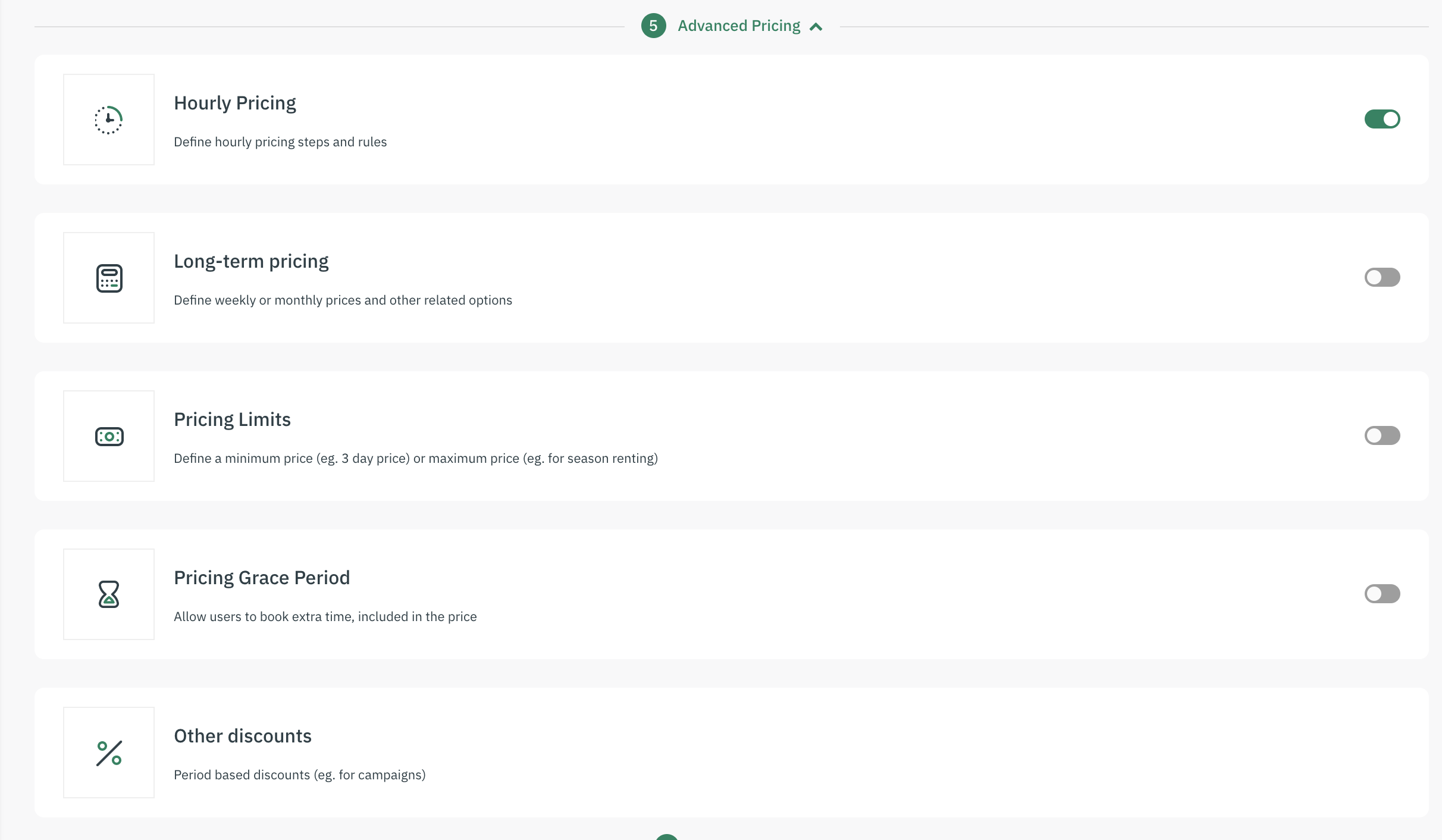
AI and machine learning are reshaping how rental businesses forecast demand, price assets, and manage inventory — turning gut-feel decisions into data-backed ones.
Demand Forecasting
More accurate planning around seasonal peaks
Dynamic Pricing
Higher revenue per asset without manual repricing
Predictive Maintenance
Fewer breakdowns, less unplanned downtime
Inventory Management
Better utilization across the entire fleet
The impact goes beyond pricing. In predictive maintenance specifically, machine learning models can flag equipment likely to fail before it does, letting operators schedule maintenance proactively instead of reactively. That single shift — from reactive to predictive — is one of the clearest ways AI is already changing how rental businesses operate day to day.
“The subscription and access-over-ownership shift isn’t a niche trend anymore — it’s becoming one of the primary ways people expect to use vehicles and equipment.” — paraphrased from McKinsey & Company’s analysis of the growing shift toward flexible, subscription-based mobility models.
Cloud-Based Rental Solutions
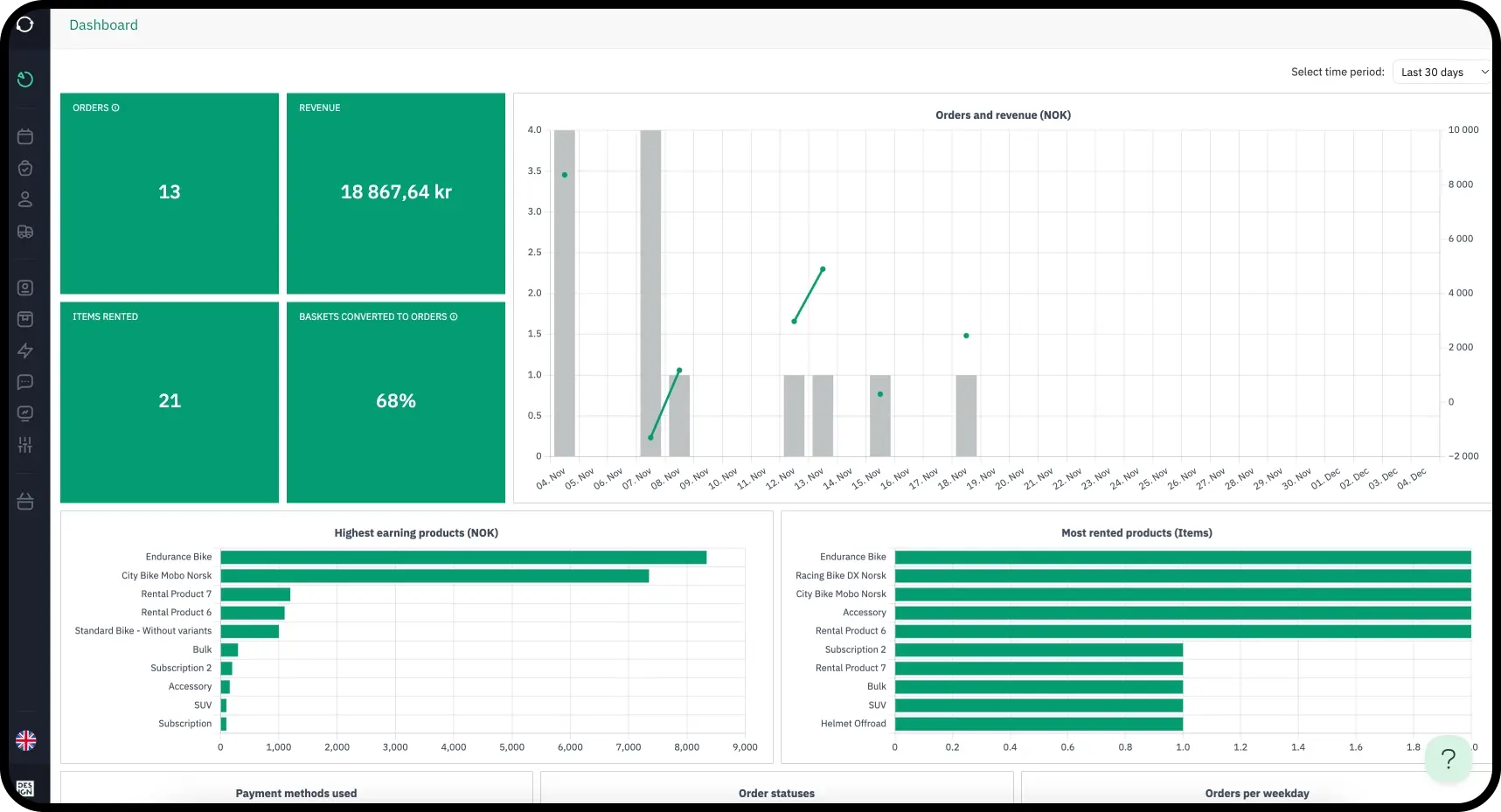
Cloud-based platforms are what make the rest of this possible. Instead of juggling separate tools for bookings, payments, and inventory, an all-in-one rental commerce platform lets operators run everything — equipment, tools, vehicles, or self-storage — from one place, accessible from anywhere.
| Rental Types Supported | Key Platform Capabilities |
|---|---|
| Equipment, tools, vehicles, self-storage | Self-service booking for customers, advanced pricing rules, built-in analytics |
Cloud systems also make it far easier to plug in accounting and payment providers, cutting the manual reconciliation work that used to eat up a bookkeeper’s week. And because most modern platforms support hybrid commerce — rental, sales, and subscriptions in one system — operators aren’t locked into a single revenue model as customer expectations evolve. Sharefox’s own subscription rental software is a good example of this hybrid approach in practice.
Internet of Things (IoT) Applications
IoT is what turns a rental asset from a static line item into a live data source. Sensors can report location, usage, and condition in real time, which means operators catch problems — a vehicle idling somewhere it shouldn’t be, a unit running hot — before they become expensive.
The clearest win here is self-service check-in/out. For vehicle rentals, IoT-connected access systems let customers unlock and return a car without a staff member present. For self-storage, the same technology controls gates and unit locks remotely, cutting the need for on-site staff almost entirely. Sharefox’s integrations with hardware partners like Sharebox and Inlet are built specifically to support this kind of self-storage automation at scale.
How Technology Is Transforming the Equipment Rental Industry
Predictive Maintenance and Asset Management
Predictive maintenance is arguably the single highest-ROI technology trend for equipment-heavy rental businesses. By combining usage data with maintenance history, operators can spot the early warning signs of failure and intervene before a piece of equipment goes down mid-rental — protecting both uptime and the customer relationship.
Paired with a proper asset management system, this also means booking, tracking, and invoicing all live in one place instead of three. That consolidation alone tends to be the difference between an operator who knows their utilization rate and one who’s guessing.
Enhancing Customer Experience Through Rental Technology
Modern rental technology gives customers something they increasingly expect: control. Self-service booking, ID verification, and payment — all handled online — cut wait times and remove friction from the rental process. For mobility operators, this kind of self-service automation and digitalization is now a baseline expectation, not a differentiator.
The same logic applies to self-storage: letting customers book, pay, and access a unit entirely online means facilities can offer 24/7 availability without 24/7 staffing — a combination that used to be nearly impossible to deliver profitably.
Streamlining Operations in Equipment Rental Businesses
Bringing booking, inventory, contracts, and payments into a single platform is what actually removes manual admin — not just automating one step in isolation. Automated check-in/out reduces idle time between rentals, which directly increases how many times an asset can turn over in a season. Combined with fleet management best practices, this is where rental operators tend to see the clearest bottom-line impact.
Subscription and long-term agreement management is another area worth flagging: as more customers ask for flexible, ongoing access instead of one-off rentals, having software that can handle both models without extra manual work becomes a real competitive advantage.
Staying Ahead in the Rental Technology Landscape
Identifying the Right Technology for Your Business
Not every rental business needs the same stack. Mobility managers running multiple locations need tools that scale across sites. Self-storage operators prioritize automation and 24/7 self-service. Digital agencies serving rental clients look for a trustworthy tech partner with a solid API and integrations layer they can build on top of.
What all three have in common is the need for a single system that ties booking, inventory, and invoicing together — rather than software that solves one problem while creating three new ones.
Strategies for Adopting New Technologies
The biggest blocker to technology adoption in rental businesses usually isn’t the software — it’s the team using it. Choosing user-friendly tools with a short learning curve matters more than choosing the tool with the longest feature list. Staff who trust the system will use it; staff who find it confusing will quietly go back to spreadsheets.
A practical rollout tends to work best when it’s staged: automate check-in/out first, then billing and communication, then pricing and reporting. This gives staff time to build confidence at each step instead of relearning the entire operation at once.
Future Trends to Watch in Rental Operations
Looking ahead, three trends are worth watching closely: AI-assisted dynamic pricing becoming standard rather than exceptional, IoT-enabled asset tracking extending beyond vehicles into tools and equipment, and subscription-style access models continuing to grow alongside traditional one-off rentals. Rental businesses that build flexible, connected systems now will be far better positioned to adapt as these trends mature.


 All in one platform