Skip to main content


Equipment-as-a-Service (EAAS) is changing how businesses get access to the machinery, vehicles, and physical assets they depend on. Instead of buying equipment outright, companies pay to use it — on terms that look more like a subscription than a purchase order. For rental operators, fleet managers, and self-storage businesses, this shift isn’t just a financing trick; it’s a different way of running the entire business.
In this guide, we break down what EAAS actually means, how it works in practice, what it costs, and how operators across industries are using it to grow. We’ve built this on our experience powering rental and subscription commerce for operators through our all-in-one rental software platform, along with third-party research on where the model is headed.

What Is Equipment-as-a-Service?
Equipment-as-a-Service is a service business model where customers pay for the use of equipment rather than owning it. Instead of a single capital purchase, the customer gets ongoing access — through a lease, a subscription, or a pay-per-use arrangement — while the provider (or an intermediary rental operator) retains ownership and responsibility for maintenance, upgrades, and lifecycle management.
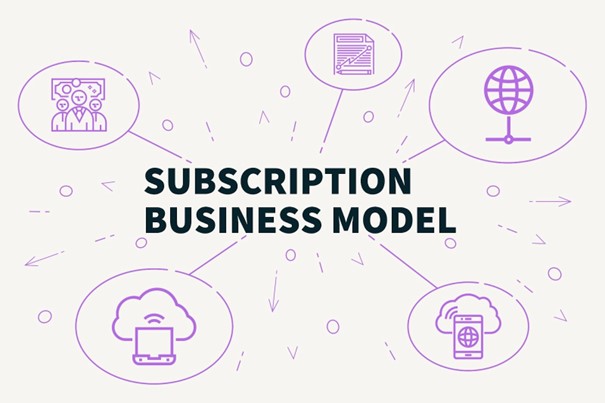
It’s the same logic that turned software into SaaS: access over ownership, recurring revenue over one-off sales, and a provider who is financially motivated to keep the asset running well, because uptime is now part of what they’re being paid for.
For operators running the equipment on the other side of that relationship — rental companies, mobility fleets, self-storage sites — EAAS depends on having the right operational backbone. That typically means rental booking software to handle scheduling and availability, an inventory and asset management system to track condition and location, and billing that can handle recurring charges, not just one-time transactions.
How EAAS Works Day to Day
In practice, EAAS combines several operational pieces into one flow:
- Self-service booking so customers can reserve and pay without a phone call
- Dynamic and tiered pricing that reflects usage, duration, or output
- Recurring billing for subscription or lease-style contracts, handled through subscription management software
- Integrations with accounting, payments, and identity verification systems
- Self-service check-in/out, often via smart locks or access-control hardware
This is the same infrastructure that supports short-term rentals, long-term contracts, and hybrid arrangements side by side — which is what lets a single operator serve a customer renting for a weekend and another paying monthly for the same asset class.
“Equipment-as-a-Service isn’t about giving up control of your fleet — it’s about giving up the parts of ownership that never created value in the first place: the depreciation risk, the maintenance guesswork, and the capital sitting idle in the yard.” — Fleet operations lead at a regional equipment rental company
Why Businesses Are Moving to EAAS
Financial Benefits
The clearest financial benefit of EAAS is converting capital expenditure (CapEx) into predictable operating expenditure (OpEx). That shift frees up cash that would otherwise be locked into depreciating machinery, and it gives finance teams a cost line that’s easier to forecast.
For rental operators, this typically shows up as higher utilization and revenue per asset, since the pricing model is built around actual use rather than a flat sale. Self-storage operators see a similar effect through consistent recurring revenue, which is far easier to plan around than one-off transactions. Getting this right usually starts with the pricing structure itself — the terms of a lease or pay-per-use contract determine most of the downstream cash flow benefit.
Operational Efficiency
A unified system for booking, inventory, and invoicing removes a lot of the manual admin that eats into margins. Automation reduces human error, shortens turnaround between rentals, and cuts down on idle time — all of which matter more under an EAAS model, where uptime is effectively part of the product.
Mobility and fleet managers get the most value from automating check-in and check-out digitally, while self-storage operators lean on 24/7 self-service access to reduce dependence on on-site staff.
Flexibility and Scalability
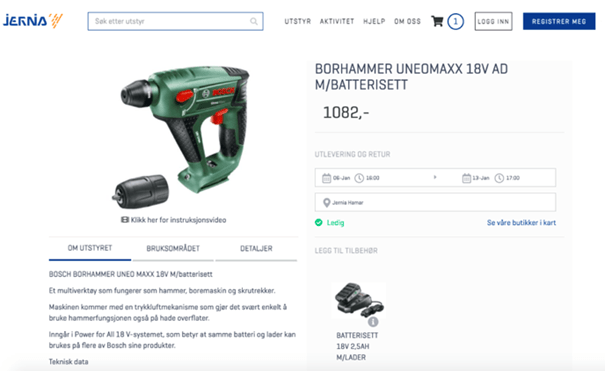
EAAS also supports hybrid commercial models — renting, selling, and subscribing under one system — which matters as businesses look to serve more customer types without duplicating their tech stack. A rental operator might run short-term hires alongside a car subscription product, or a heavy equipment provider might combine one-off hires with long-term managed contracts through a single equipment rental platform.
For growing operators, this flexibility is often what makes expansion into new locations or verticals administratively manageable, rather than a full re-platforming project each time.
EAAS Pricing Models
There are two dominant pricing structures inside an EAAS contract, and the right choice depends heavily on how predictable the customer’s usage is.
| Model | How It Works | Best Suited For |
|---|---|---|
| Lease model | Fixed recurring payment for a set period | Customers who want predictable OpEx and simplified budgeting |
| Pay-per-use model | Charges tied to actual usage — hours, cycles, or output | Customers with variable or seasonal usage patterns |
Choosing between them comes down to the customer’s usage patterns, liquidity, and appetite for risk. A construction firm running equipment near-continuously may prefer the predictability of a lease; a seasonal operator might prefer paying only for the hours a machine is actually earning revenue. Getting this calibration right is a core part of building an equipment rental pricing strategy that protects margin without pricing out customers.
EAAS Across Industries
EAAS isn’t confined to one sector — it shows up differently depending on what’s being rented and who’s renting it.
Small vs. Large Operators
Smaller and mid-market operators use EAAS to compete with larger players without matching their balance sheets — access to equipment without the upfront capital outlay is often the difference between growing into a new vertical or staying put. Larger enterprises tend to use the same model for more complex fleet-based service management, predictive maintenance programs, and consolidating multiple revenue streams under one system.
Customization
The strongest EAAS setups support hybrid commerce — renting, selling, and subscribing — from the same platform, so the business model can evolve without a system migration. That includes managing spare parts, scheduling preventive maintenance, and adjusting contract terms as customer needs change.
Bringing EAAS Into Your Business
Adopting EAAS usually starts with digitizing the customer-facing side: self-service booking, transparent pricing, and a checkout experience that doesn’t require a phone call. Mobility fleets often pair this with a broader digital rebrand, while self-storage operators focus on automation and round-the-clock access as the core differentiator.
Case studies matter here more than most content types, because they show a model working under real operating conditions rather than in theory. Businesses considering EAAS are usually better served by looking at how a comparable operator handled the transition — the pricing decisions they made, the systems they integrated, and what broke along the way — than by reading feature lists.
Where EAAS Is Heading
A few trends are shaping how EAAS will keep developing:
- Predictive maintenance and analytics — using usage data to anticipate service needs before they cause downtime
- Expansion of hybrid commerce — renting, selling, and subscribing blending further into single customer journeys
- Tighter integration with payments and identity — reducing friction at the point of both onboarding and renewal
None of this replaces the fundamentals: a business still needs solid rental inventory management, reliable billing, and a pricing model matched to how customers actually use the equipment. The technology layer just makes those fundamentals easier to run at scale.


 All in one platform