Skip to main content


Businesses that keep products and materials in circulation — instead of selling once and moving on — are growing faster than their “take-make-dispose” competitors. That’s not a slogan; it’s a shift in how equipment, vehicles, tools, and space get used. If your business rents, subscribes, refurbishes, or shares assets in any way, you’re already closer to a circular business model than a purely linear one, and that puts you in a strong position to capture the growth ahead.
Below are four concrete reasons the circular economy is an underused growth lever, what the shift actually looks like in practice, and how rental and subscription-based business models fit into it.
What Is a Circular Economy, Exactly?
A circular economy is an economic model built to eliminate waste, keep products and materials in use at their highest value for as long as possible, and regenerate natural systems rather than depleting them. It replaces the traditional linear economy — extract, manufacture, sell, discard — with a loop: design for durability and reuse, keep assets circulating through rental, resale, repair, or subscription, and recover materials at end of life.
The Ellen MacArthur Foundation, the organization most credited with mainstreaming the concept, frames it around three principles:
- Eliminate waste and pollution by design — building products to last and to be reused, not discarded.
- Circulate products and materials at their highest value — through reuse, rental, repair, refurbishment, and recycling.
- Regenerate nature — reducing the pressure a business puts on finite resources and ecosystems.
Here’s how that compares with the linear model most businesses still default to:
| Dimension | Linear Economy | Circular Economy |
|---|---|---|
| Core logic | Take → make → use → dispose | Design → use → recover → reuse (loop) |
| Revenue model | One-time sale per unit | Recurring revenue: rental, subscription, resale |
| Resource use | Continuous extraction of new raw materials | Materials and assets kept in circulation |
| Customer relationship | Single transaction | Ongoing relationship across the asset’s life |
| Waste output | High — products discarded at end of first use | Minimized by design — waste treated as a design flaw |
| Resilience to supply shocks | Low — depends on constant new-material supply | Higher — existing assets absorb demand spikes |
For businesses already offering rental or asset-sharing services, most of the “circular” column already describes how they operate day to day — which is exactly why the opportunity is underused rather than out of reach.
Reason 1: It Unlocks New, Recurring Revenue Streams
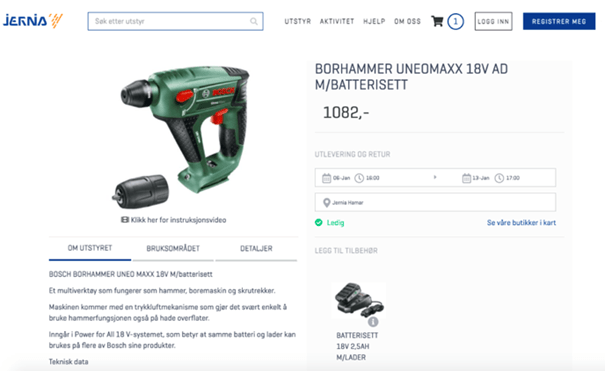
Circular business models replace a single sale with an ongoing relationship. Product-as-a-service, rental, and subscription pricing let a business monetize the same asset repeatedly instead of once. A single piece of equipment rented out dozens of times over its life generates far more revenue per unit than one sold and forgotten — and it builds a predictable, recurring income stream instead of one-off transactions.
This is precisely the model that subscription-based rental software is built to support, and it’s why sectors like car subscriptions have expanded well beyond traditional car rental. Instead of competing purely on price per unit sold, businesses compete on utilization, service quality, and convenience — all of which scale better than one-time sales.
Reason 2: It Builds Resilience and Cuts Costs
Circular businesses are structurally less exposed to raw-material price swings and supply chain disruption, because value is extracted from assets already in circulation rather than a constant stream of new inventory. Keeping products in use longer — through better inventory and asset tracking, timely maintenance, and refurbishment — also reduces the capital tied up in constantly replacing stock.
That resilience compounds over time: a business that can flex fleet or inventory utilization up or down in response to demand is far better positioned to absorb a downturn than one dependent on continuous new production and one-time sales.
Reason 3: It Strengthens Brand Reputation With a Changing Customer Base
Consumer and B2B buyer expectations have shifted. Access and usage increasingly matter more than ownership, and sustainability credentials influence purchasing decisions across both segments. Businesses that visibly design out waste — through repair programs, rental options, or transparent material sourcing — earn trust that a purely transactional, sell-and-forget model doesn’t.
This reputational effect isn’t abstract. It shows up in customer retention and word-of-mouth: businesses built around the sharing economy tend to build stronger repeat-usage habits than one-time sellers, because the relationship continues well past the first transaction.
Reason 4: Regulation and Market Demand Are Both Moving in the Same Direction
Extended producer responsibility rules, right-to-repair legislation, and packaging/waste regulations are pushing more industries toward circular practices — not as a future possibility, but as a present compliance reality in a growing number of markets. At the same time, demand-side pressure is rising: buyers actively look for rental, refurbished, or subscription alternatives before defaulting to a new purchase.
Businesses that adapt ahead of regulation, rather than in response to it, typically face lower compliance costs and capture demand earlier than competitors still operating a purely linear model.
“In the rental and asset-sharing world, circularity isn’t a marketing angle — it’s the operating model. Every piece of equipment that goes out, comes back, gets checked, and goes out again is circular economy in practice. The businesses that formalize that loop — with better tracking, maintenance scheduling, and subscription pricing — are the ones turning it into a genuine growth lever instead of just an operational habit.”— Åsgeir Helland, rental industry expert at Sharefox
What the Ellen MacArthur Foundation’s Research Shows
The Ellen MacArthur Foundation’s ongoing research and case-study work is one of the most cited bodies of evidence for the circular economy’s commercial viability, not just its environmental case. Their published case studies span multiple sectors and consistently point to the same pattern: companies that redesign around reuse, repair, and product-as-a-service report reduced material costs, stronger customer retention, and new revenue lines that a linear model doesn’t offer.
Their strategic guidance for businesses generally comes down to three moves: design products and services for durability and reuse from the outset, prioritize business models that keep assets circulating (rental, subscription, refurbishment), and treat waste reduction as a design constraint rather than an afterthought.
Circular Business Models Worth Exploring
If you’re weighing where to start, the most accessible entry points for most businesses are:
- Rental and asset-sharing — turning owned equipment, vehicles, or space into a recurring-revenue service via online booking and reservations.
- Subscription and product-as-a-service — charging for access and usage instead of one-time ownership.
- Refurbishment and resale — recovering value from returned or used assets instead of writing them off.
- Repair and maintenance-as-a-service — extending asset life and creating an additional service revenue line.
For a broader look at how these models apply across industries, our list of rental business ideas is a useful starting point, and our piece on what life-cycle analysis shows about renting versus buying goes deeper into the environmental case specifically. If your business already touches physical assets in any way — equipment, vehicles, tools, dumpsters, or space — see how rental models are already reducing waste in adjacent sectors.
Final Thoughts
The circular economy isn’t a distant trend — it’s an operating model already proven across sectors, and one that rewards businesses that formalize it rather than practice it by accident. New revenue streams, lower cost exposure, stronger brand trust, and regulatory alignment are four concrete reasons to treat it as a growth strategy rather than a sustainability side project. For a deeper dive into how the model works end to end, see our full guide to the circular economy, or browse more coverage in our circular economy category.
 All in one platform