Skip to main content


“Troubled times create opportunities for the rental industry” — that’s the sentiment that ran through this year’s rental conference from start to finish, and honestly, we couldn’t have put it better ourselves.
The conference is organized by the Norwegian Rental Association, a national branch of the European Rental Association (ERA), the trade body representing companies that rent out machinery and equipment across Europe. After a few years of pandemic-related cancellations, this year’s event at Gardermoen drew record attendance. Nearly every major machinery and equipment rental company, construction firm, and Norwegian representative of equipment manufacturers showed up — a clear sign of how much the industry values getting back in the same room together.
This is a sector defined by cyclical swings. When construction and infrastructure spending shifts, rental turnover and fleet utilization move with it — often faster than the broader economy reacts. That’s exactly why this year’s discussions felt so relevant: are we past the worst of it, or should we brace for more turbulence?
Below are the four biggest takeaways from the conference floor, along with what they mean if you run — or manage equipment for — a construction rental business.
1. Are We Over the Hump, or Should We Brace for a Storm?
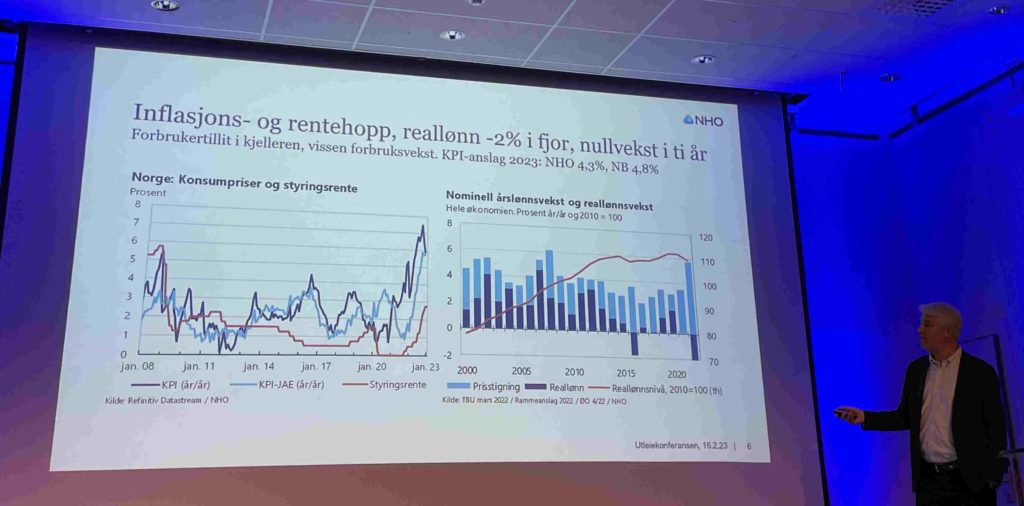
The state of the national economy was the recurring undercurrent of nearly every session. Øystein Dørum, Director of Economics at NHO (the Confederation of Norwegian Enterprise), gave a widely discussed macro-level presentation on the Norwegian economy. His core message: despite several indicators pointing toward tougher times, growth in Norway has remained surprisingly resilient. He was somewhat more cautious about the road ahead, but stressed — fairly — that reasonable people disagree on whether the glass is half full or half empty.
Several other speakers picked up that thread and argued that economic uncertainty is not purely a threat to the rental industry — it’s also a catalyst. Renting equipment with low running costs shifts large investments and financial risk away from the customer, which is exactly the kind of proposition that becomes more attractive, not less, when the economy gets shaky.
At the same time, many industry players flagged reduced construction activity as a genuine risk. But that risk cuts both ways: contractors and construction companies that previously preferred to own their fleets outright are increasingly turning to rental instead of tying up capital in depreciating machinery. That shift — from ownership to access — is one of the clearest structural tailwinds for equipment rental software providers and the businesses that use them.
“In uncertain times, the businesses that stay lean — and let someone else carry the depreciation risk — are usually the ones still standing when the market turns,” is roughly how more than one speaker framed it from the stage. It’s a sentiment we hear constantly from the operators we work with at Sharefox.
2. The Rental Industry Already Has Serious Scale — and Room to Grow
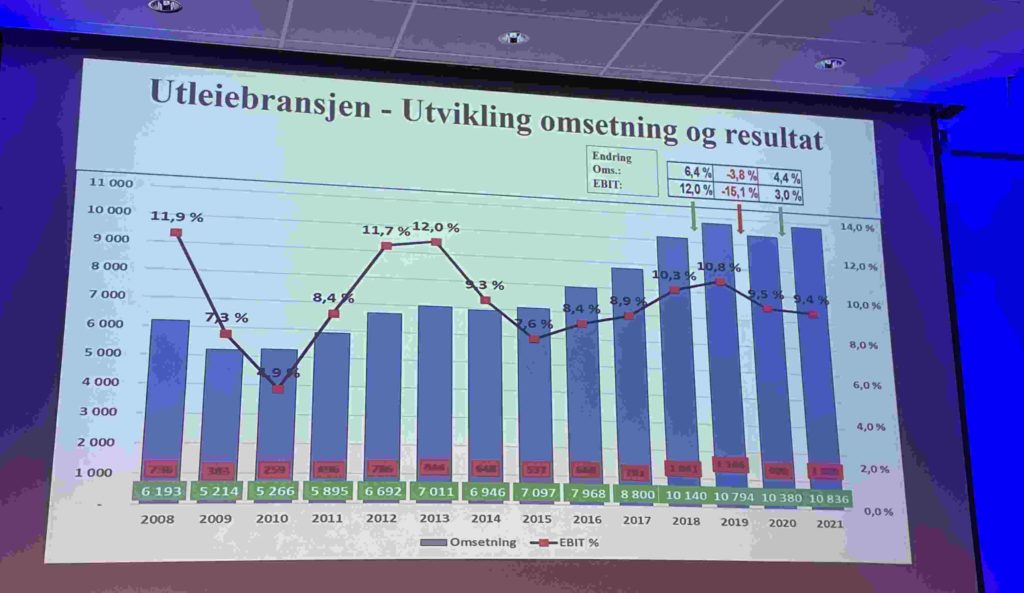
Odd Arne Gansmo from UCO (Utleie av Cranes & Offshore, a Norwegian equipment-rental data provider) presented detailed industry figures during his session. According to his data, the Norwegian machinery and equipment rental industry generated a turnover of roughly NOK 10.8 billion in 2021, with healthy margins across the segment.
That number is notable for two reasons. First, it demonstrates just how large the core machinery and equipment rental market already is. Second — and this is the part that gets less attention — those figures don’t include most smaller rental companies, or the growing number of adjacent, niche rental businesses (think tools, trailers, event equipment, or specialty gear) that operate outside the traditional “heavy machinery” category.
At Sharefox, we see this play out constantly across the businesses that use our rental booking software: niche rental categories are consistently among the fastest-growing segments, precisely because they’re easy for customers to access online and efficient for operators to run with the right technology.
| Rental Segment (Norway) | Included in the NOK 10.8bn Industry Figure? | Primary Growth Driver |
|---|---|---|
| Heavy machinery & construction equipment | Yes | Contractors shifting from ownership to rental |
| Mid-size equipment (generators, compactors, lifts) | Partially | Project-based, short-term demand |
| Tools & small equipment rental | Largely excluded | Digital booking, self-service checkout |
| Niche & specialty rental (event, outdoor, storage) | Excluded | Online accessibility, subscription-style models |
The takeaway for operators: the official statistics likely understate the true size of the addressable rental market — which is good news if you’re positioned to capture demand outside the traditional heavy-equipment core, whether through tool rental software or a broader inventory management system that scales across categories.
3. Troubled Times Are Accelerating Digitalization
A theme that ran through nearly every stand and stage session: turbulence is speeding up the industry’s digital transformation, not slowing it down. Good technology infrastructure has quietly gone from “nice to have” to a baseline requirement for meeting customer expectations and operating efficiently under margin pressure.
On the exhibition floor, this showed up concretely — from track-and-trace technology built directly into equipment, to training and certification platforms with product updates from providers like DigitQuip. Several speakers made the same point from different angles: a genuinely integrated rental operation needs rental management software that can talk to the rest of the business’s infrastructure — accounting, fleet maintenance, customer communication — rather than existing as a standalone booking tool.
That’s consistent with what we see when rental businesses digitize step by step, starting with online reservations and booking, then layering in real-time asset tracking and automated pricing and rate management as the operation matures.
4. The Green Transition Is Happening Step by Step — and This Might Be the Most Important Point
If there was one theme conference organizers clearly wanted attendees to leave thinking about, it was this one.
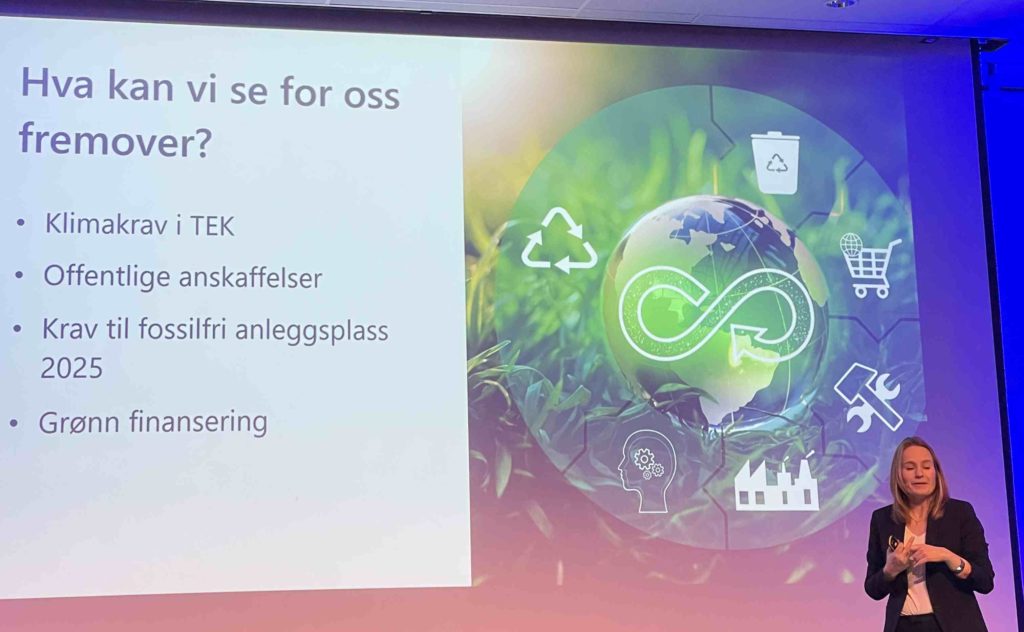
Several presenters shared concrete examples of zero-emission projects already underway, including early-stage fossil-free machinery and equipment. But the deeper argument — the one worth sitting with — is structural: in a rental economy, the same piece of equipment gets used by many different people instead of sitting idle in one company’s yard. That shared-use model is, by design, more resource-efficient than a world where every contractor owns their own full fleet.
The conference’s own framing (echoed by ERA’s broader sustainability positioning across the sector) was that the green transition offers a genuine growth lever for rental companies — but only if they can keep up with the pace of change. Rental businesses face real pressure from three directions at once: new low-emission technology, shifting customer expectations, and increasingly strict emissions regulation across the EU and Norway specifically.
None of that is going away, which means rental companies that treat sustainability and digitalization as connected — not separate — initiatives will be the ones positioned to grow through the transition rather than get squeezed by it. This is a theme we return to often in our own Academy resources and in guides on running a more efficient rental operation.
Quick Comparison: What “Troubled Times” Change for Rental Businesses
| Pressure Point | Effect on Ownership Model | Effect on Rental Model |
|---|---|---|
| Rising interest rates / cost of capital | Larger upfront investment becomes riskier | Lower running costs become more attractive |
| Reduced construction activity | Idle owned equipment still costs money | Fleets can flex up or down with demand |
| Stricter emissions regulation | Owners must upgrade their own fleet alone | Shared/rented fleets spread compliance cost |
| Customer expectations for speed & convenience | Slower to adapt without digital tools | Digital booking and self-service meet demand directly |
Our Take
Reading between the lines of this year’s sessions, the consensus among industry players was consistent: despite the uncertainty ahead, there’s real opportunity for rental companies willing to move faster on digitalization and sustainability. The businesses that treat this moment as a reason to sit tight are, in our view, the ones most at risk of falling behind — while the ones that invest now in flexible rental pricing, better booking systems, and cleaner fleets are the ones setting themselves up for the next cycle.

 All in one platform