Skip to main content



The pandemic didn’t just change where customers rent — it changed what they expect from the process. Contactless check-in, 24/7 self-service, and digital-first bookings went from “nice to have” to the baseline within a couple of years. For rental and self-storage operators, this shift permanently redefined what a good customer experience looks like, and businesses that haven’t adapted are already feeling it in churn and support tickets.
This article breaks down what customer experience (CX) really means today, how it differs from customer service, and what practical steps Rental Operators, Mobility Managers, and Self-Storage Property Managers can take to close the gap between what customers expect and what they actually get.
Understanding Customer Experience
Definition of Customer Experience
Customer experience encompasses the entirety of a customer’s perception and feelings resulting from every interaction they have with a brand, product, or service — not just a single transaction. It spans the full journey, from initial awareness to post-purchase support. A rental platform’s vision of a superior, efficient rental experience only means something if that clarity and low friction actually show up at every step: browsing availability, booking, paying, picking up, and returning.
A great customer experience is central to growth, especially for personas like the Mobility Manager or the Self-Storage Property Manager, where margins are often won or lost on operational efficiency rather than price alone.
Importance of Customer Experience
Customer loyalty is hard-won in a competitive rental market, and CX is one of the few levers a business fully controls. A positive customer experience directly contributes to satisfaction, fosters loyalty, and increases customer lifetime value. For a Mobility Manager, CX is a strategic imperative; for a Self-Storage Manager, it’s central to occupancy and retention. Maintaining satisfaction with minimal staff touchpoints is the specific challenge of this era — which is why self-service rental technology has become the default answer rather than an add-on.
Customer Experience vs. Customer Service
These terms are often used interchangeably, but they aren’t the same thing.
| Customer Service | Customer Experience | |
|---|---|---|
| Scope | A single interaction or support request | The entire journey across every touchpoint |
| Nature | Reactive — triggered when a customer needs help | Proactive — designed in advance |
| Owner | Usually a support team | Product, marketing, operations, and support together |
| Example | Answering a call about a late return | The booking flow, pricing clarity, check-in, and the call, combined |
| Success metric | Resolution time, first-contact resolution | NPS, CSAT, CES, retention, lifetime value |
Customer service is one component of customer experience — the part that kicks in when something needs fixing. Customer experience is the sum of every interaction, good or bad, whether or not the customer ever contacts support at all.
Customer Experience Management Strategies
Key Strategies for Improving Customer Experience
Rental businesses improve CX primarily by removing friction and manual work from the process. Automating booking, invoicing, and inventory management inside a single system reduces the human error that tends to generate the worst customer complaints — double bookings, invoicing mistakes, and unavailable inventory.
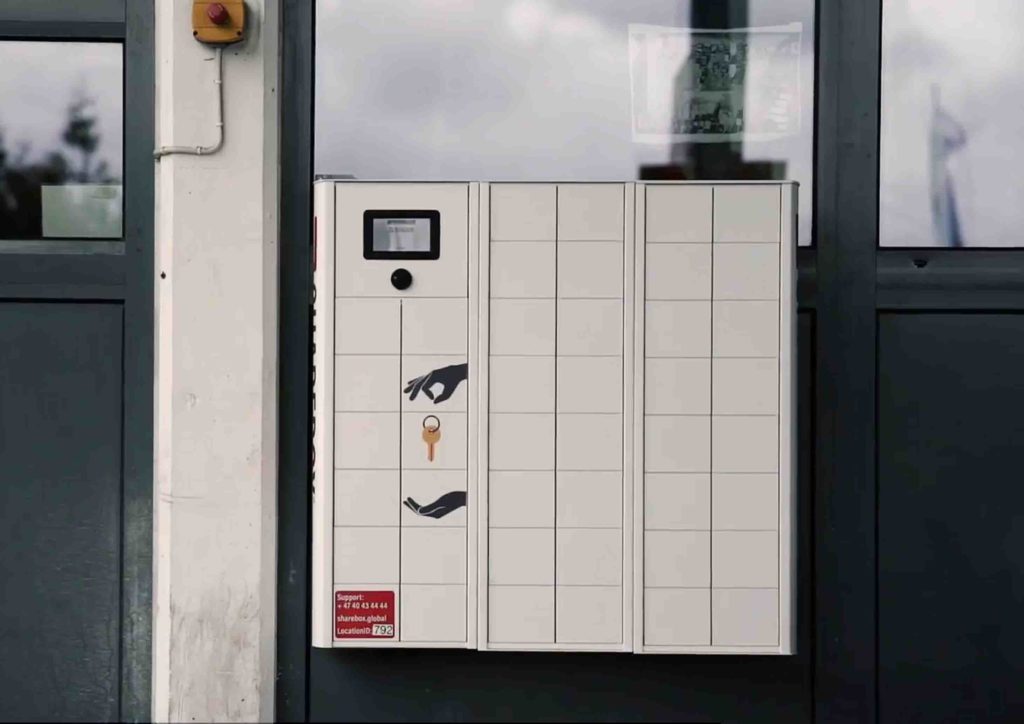
Enabling online self-service allows customers to manage rentals independently, which builds a sense of control and convenience rather than dependence on staff availability. For a Mobility Manager, this typically means automating check-in and check-out so customers can pick up and return vehicles without waiting for someone to hand over keys. For a Self-Storage Manager, it means online booking and payment for units alongside automated access and lock systems, cutting dependence on physical reception.
Measuring Customer Experience Effectively
Improving CX requires measuring it consistently, not just reacting to complaints. The standard toolkit:
- Net Promoter Score (NPS) — likelihood a customer recommends you
- Customer Satisfaction Score (CSAT) — happiness with a specific interaction
- Customer Effort Score (CES) — how much work a task took the customer
Mapping the customer journey against these scores helps identify exactly where a positive experience turns into friction — and where a bad experience can still be recovered.
Implementing CX Strategies in Business
Implementing CX strategy at scale usually means consolidating tools rather than adding more of them. A rental management system covering both B2C and B2B customers — with self-service booking, flexible pricing, and integrations for accounting and ID verification — removes the fragmentation that causes most operational CX failures. Booking and inventory management, self-service check-in/out, and multi-commerce flexibility (rent, sell, subscribe) all need to work from one source of truth, or the customer notices the seams.
The Customer Journey in a Post-Pandemic World
Mapping the Customer Journey
Mapping the customer journey means tracing every interaction from discovery to post-rental support. This lets a business pinpoint exactly where to intervene — a confusing pricing page, a clunky ID-verification step, a support gap after hours — and prioritize fixes that actually move satisfaction and loyalty metrics, rather than guessing.
Touchpoints That Impact Customer Experience
Self-service booking is now the single highest-leverage touchpoint for both B2C and B2B rental customers. Integrated accounting, payments, and ID verification streamline the transaction itself, while self-service check-in/out — often via smart-lock hardware integrations — lets customers book and return equipment or vehicles independently, at any hour.
“The businesses that came out of the pandemic ahead weren’t the ones with the biggest marketing budgets — they were the ones that made it possible for a customer to get what they needed late at night or on a weekend without calling anyone.” — Common refrain among self-storage and mobility rental operators adapting to 24/7 self-service demand
Enhancing the Customer Journey for Better Experience
For a Rental Operator, enabling online self-service is the priority for modernizing the brand end to end. A Mobility Manager focuses on frictionless, independent bookings and returns. A Self-Storage Manager leans on automation and 24/7 self-service so customers can handle everything without calling in. All three are solving the same underlying problem: how do you deliver a consistently good experience with fewer staff touchpoints, not more?
Identifying and Addressing Bad Customer Experience
Signs of Bad Customer Experience
For a Rental Operator, fragmented tools and duplicated work are the clearest warning signs — along with a lack of visibility over bookings, damages, or availability that causes chaos during busy seasons. A Mobility Manager juggling multiple systems, manual key handling, and paper processes faces constant pressure around downtime and errors. A Self-Storage Manager coordinating several disconnected systems sees the same inefficiency show up as tenant complaints and missed payments.
Managing and Recovering From Poor Experiences
Recovering from a bad customer experience depends on how quickly and clearly a business responds. Swift resolution and transparent communication can turn a negative interaction into a trust-building one — but only if the underlying operational cause (usually a systems or visibility gap) actually gets fixed, not just the individual complaint.
Turning Bad Experiences Into Opportunities
Every piece of negative feedback is data. Analyzed systematically rather than case by case, it tends to reveal the same two or three root causes — usually manual processes or fragmented tooling — repeating across many individual complaints. Fixing the root cause converts a recurring source of bad experience into a durable improvement.

The Role of Customer Satisfaction in CX
Link Between Satisfaction and Experience
Customer experience is the full picture; customer satisfaction is a measurement of how happy customers were with a specific slice of it. For a Self-Storage Manager, maintaining satisfaction with minimal touchpoints is the core challenge — which is exactly why digital self-service tools carry so much weight in the overall CX strategy.
Strategies to Boost Customer Satisfaction
Boosting satisfaction means addressing customer needs proactively: streamlined processes, intuitive digital tools, and responsive support when it’s actually needed. Enabling online self-service for accounts and transactions is consistently one of the highest-impact changes a rental business can make, according to industry research on the topic (see sources below).
Measuring Customer Satisfaction Effectively
NPS, CSAT, and CES remain the standard measurement trio. Regular surveys and structured feedback analysis across multiple touchpoints in the customer journey give a far more reliable picture than anecdotal complaints alone — and they let a business track whether its CX investments are actually working.
Creating a Great Customer Experience
Elements of a Great Customer Experience
A great customer experience simplifies and empowers the customer. Enabling online self-service, providing a frictionless booking-to-return flow, and offering 24/7 self-service access all contribute to the same outcome: fewer barriers between the customer and what they came for.
Examples of Businesses With Best-in-Class CX
Businesses that consistently deliver standout CX tend to share one trait: they anticipate needs rather than reacting to them. Ride-sharing apps offer a frictionless experience from booking to payment. Major online retailers pair personalized recommendations with effortless returns. In rental specifically, operators using self-service check-in/out with smart-lock integrations are applying the same principle to physical assets.
Future Trends in Customer Experience
Personalization at scale, predictive analytics, and AI-assisted support are becoming standard expectations rather than differentiators. Real-time analysis of customer feedback and behavior data will increasingly separate operators who can act on emerging pain points from those who only notice them after they’ve cost a customer relationship.

 All in one platform