Skip to main content


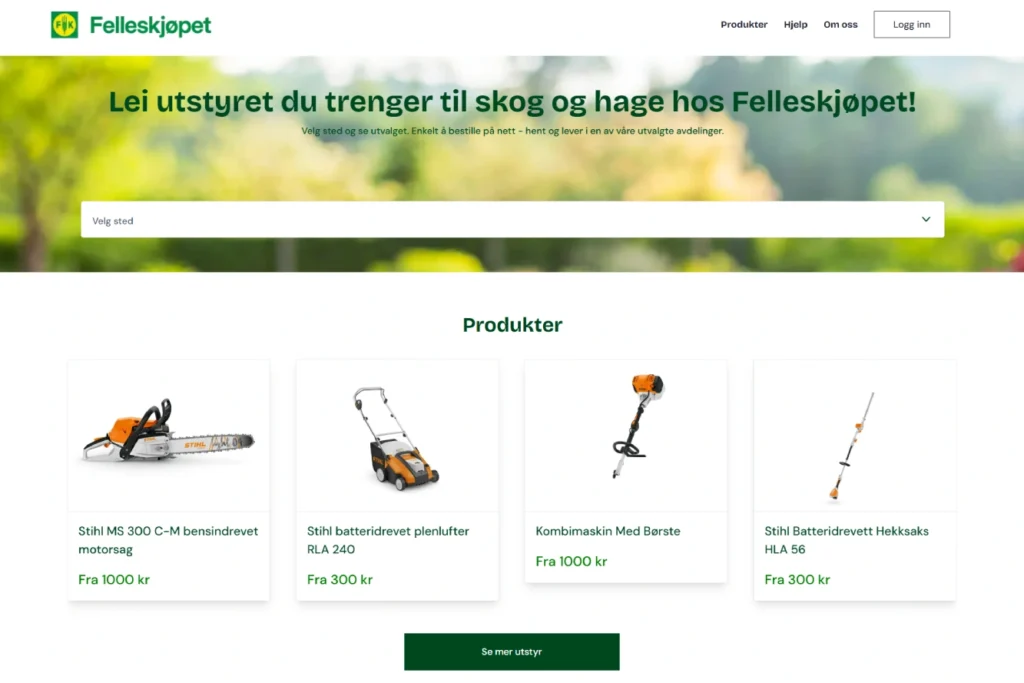
Felleskjøpet, the Norwegian agricultural cooperative, has expanded its tool and equipment rental service from a single pilot store to ten branches stretching from Halden in the south to Steinkjer in the north. The rollout follows a pilot in Trondheim where customer satisfaction was high enough to justify a chain-wide expansion — and it shows what it actually takes to turn a single-store rental trial into a repeatable, multi-location service.
Equipment You Only Need Once a Year
Most people only need a chainsaw, a lawn aerator, or a dirty-water pump a few times a year — which makes owning one hard to justify. Buy it, and it spends the other 360 days in a shed, or at the cabin exactly when you need it at home.
A tool used once a year is a tool worth renting, not owning. This is the logic Felleskjøpet is building on: give the customer the equipment when the need shows up, skip the cost and storage of ownership, and give them a reason to stop by the store. It fits naturally with the mix of customers Felleskjøpet already serves — people who farm, people with a cabin, and people maintaining a garden.
It’s also backed by a wider pattern. Underused consumer equipment is a well-documented inefficiency: estimates popularised by the Ellen MacArthur Foundation put the average power drill’s lifetime use at only around 13 minutes, despite each one requiring several kilograms of raw material to manufacture. Rental and the broader circular economy exist precisely to close that gap between ownership and actual use.
From One Branch to Ten
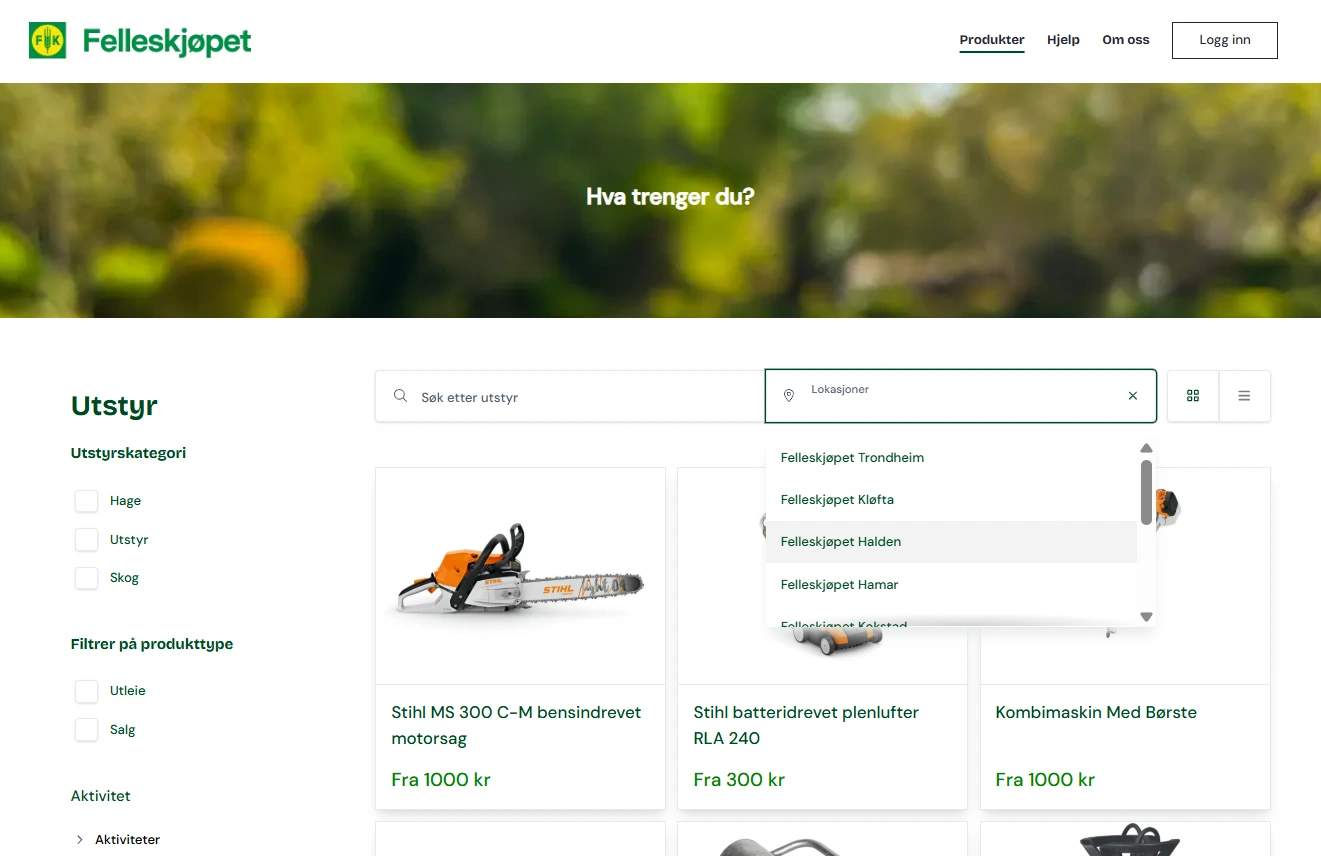
The rental program began as a pilot at Felleskjøpet’s Trondheim store. Customer feedback was strong enough, and the results solid enough, that Felleskjøpet expanded the service to ten branches: Trondheim, Kløfta, Halden, Hamar, Kokstad, Skien, Steinkjer, Ålesund, Drammen, and Fredrikstad.
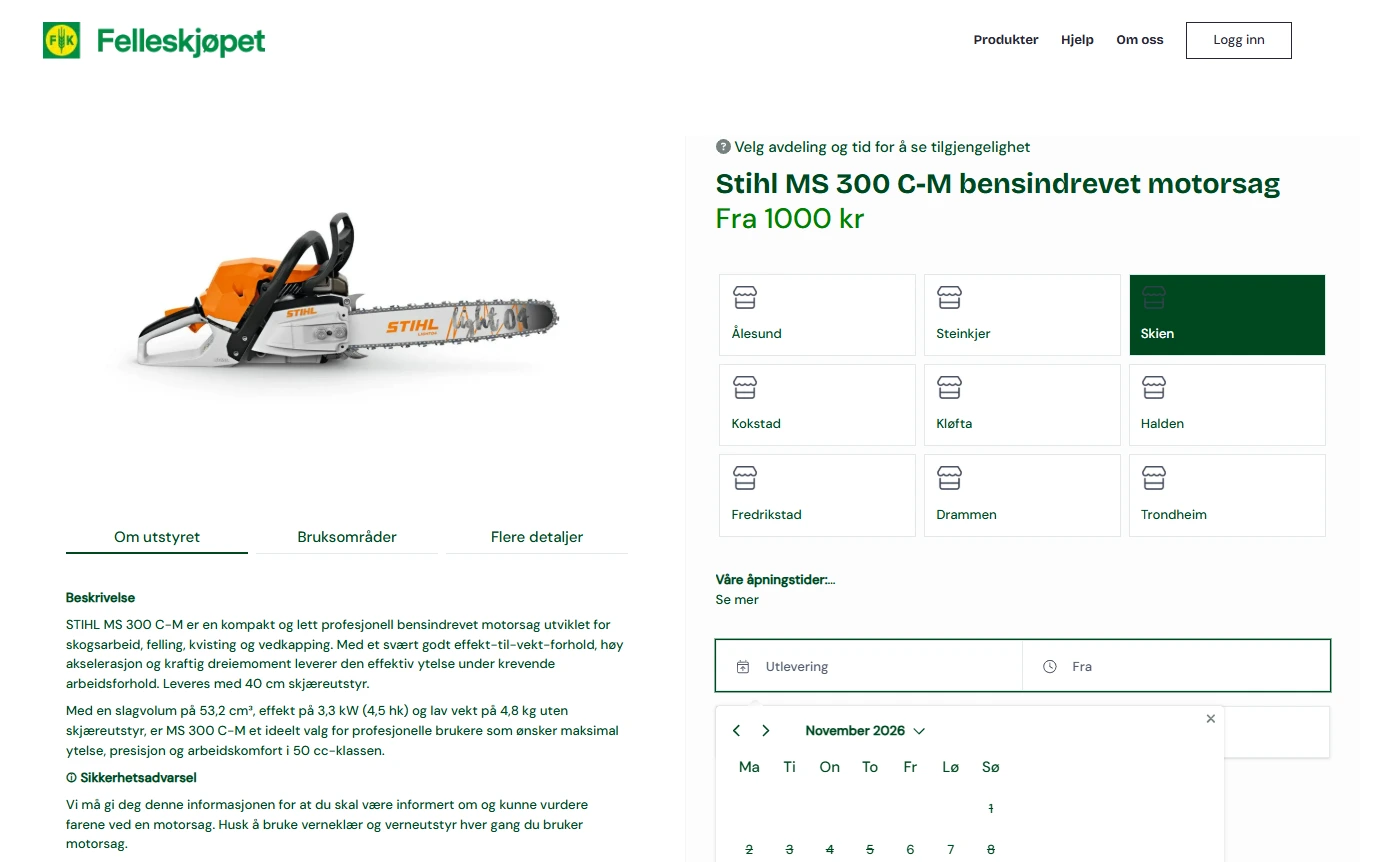
For the customer, the process is simple: choose a branch on Felleskjøpet’s rental site, check what’s available, book online, and pick the item up in store. A staff member shows how to use and maintain the equipment at handover. When the job is done, the customer returns it to the same branch. The selection varies store to store, but typically includes chainsaws, lawn aerators, composting shredders, hedge trimmers, and dirty-water pumps; some branches also rent out post drivers, pressure washers, and safety gear.
Bookings can be made any time, including after the store has closed for the day — but pickup still happens face-to-face, which matters to customers who want a quick safety walkthrough before taking home a chainsaw or a composting shredder.
What Scaling a Rental Pilot Across a Chain Actually Takes
Running rental out of one store can work with a binder and a phone. Running it across ten stores is a different problem: the customer needs the same experience no matter which branch they book from, and staff can’t spend the day manually tracking what’s out and what’s coming back.
That’s the gap a dedicated booking and rental system is built to close. Customers see live availability and book online; staff see what needs to go out today and what’s due back — across every branch, from one dashboard. The same problem shows up in any retail chain or equipment rental business trying to go from a single proof-of-concept location to several: a multi-location setup changes what the software needs to do, not just how much of it you need.
A single pilot and a chain-wide rollout aren’t the same operation — they’re different scales of the same problem. The table below shows where the requirements actually diverge.
| Dimension | Single-store pilot | Chain-wide rollout |
|---|---|---|
| Booking method | Phone, walk-in, or a shared spreadsheet | Online booking with live availability per branch |
| Inventory visibility | One person usually knows what’s out | Real-time inventory tracking across every location |
| Customer experience | Can vary by staff member on shift | Needs to be consistent, branch to branch |
| Staff workload | Manageable informally | Requires a shared system so no branch improvises its own process |
| Typical rollout time with a dedicated system | — | 2–4 weeks per the Felleskjøpet rollout |
This pattern also shows up in fleet and asset management for equipment rental more broadly: the tooling that’s fine for a pilot rarely survives contact with a tenth location.
There’s also a retail argument for doing this well, beyond the rental revenue itself. Research from EY points out that more rental, resale, and repair services are showing up inside stores as a deliberate way for retailers to diversify revenue and drive foot traffic and loyalty. A customer picking up a lawn aerator on a Saturday morning is, after all, a customer standing in the store.
Åsgeir Helland, CEO of Sharefox, put it this way about the Felleskjøpet rollout:
“Felleskjøpet treated rental as a service to their customers from day one. The person picking up a lawn aerator on a Saturday morning is also a customer in the store.”
How Renting at Felleskjøpet Works
Next time you need equipment for a single job — or the one you own is at the cabin when you need it at home — the process looks like this:
- Choose a branch on Felleskjøpet’s rental site and see what’s available there.
- Check availability for the dates you need, since selection varies by store.
- Book online, any time, even outside store hours.
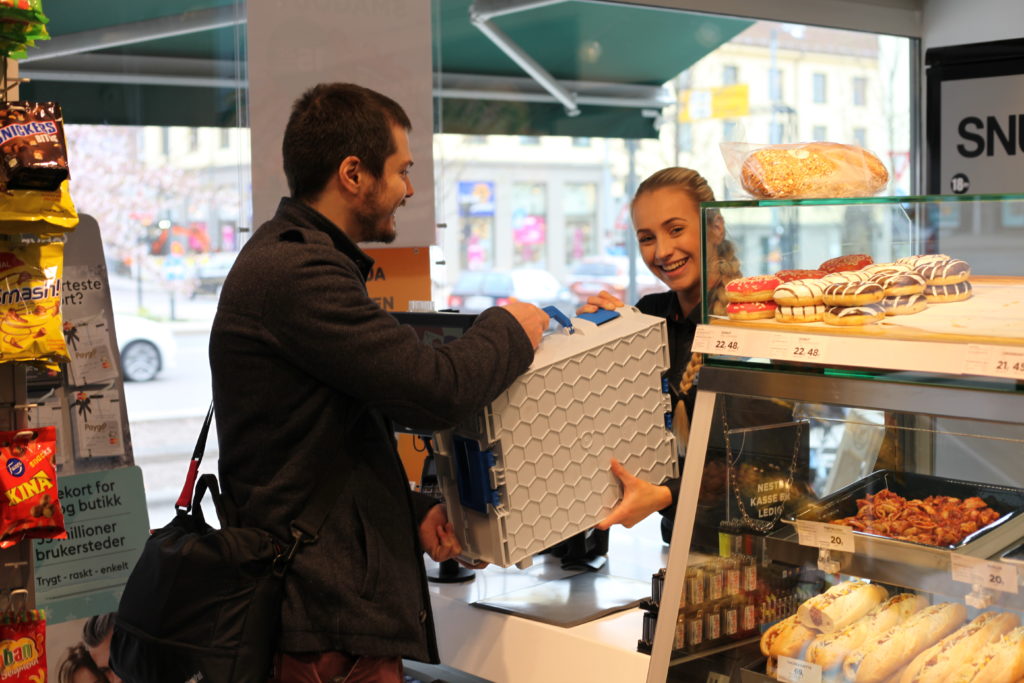
- Pick up in store, where staff show you how to use and maintain the equipment.
- Return it to the same branch once the job is done.
Summary
Felleskjøpet’s rollout is a case study in a simple idea done properly: start small, prove it works, then scale the operation — not just the equipment — before adding a second, fifth, or tenth location. If you’re weighing whether rental could work inside your own chain, book a demo to see how a multi-location booking and inventory setup would look for your stores.

 All in one platform