Skip to main content


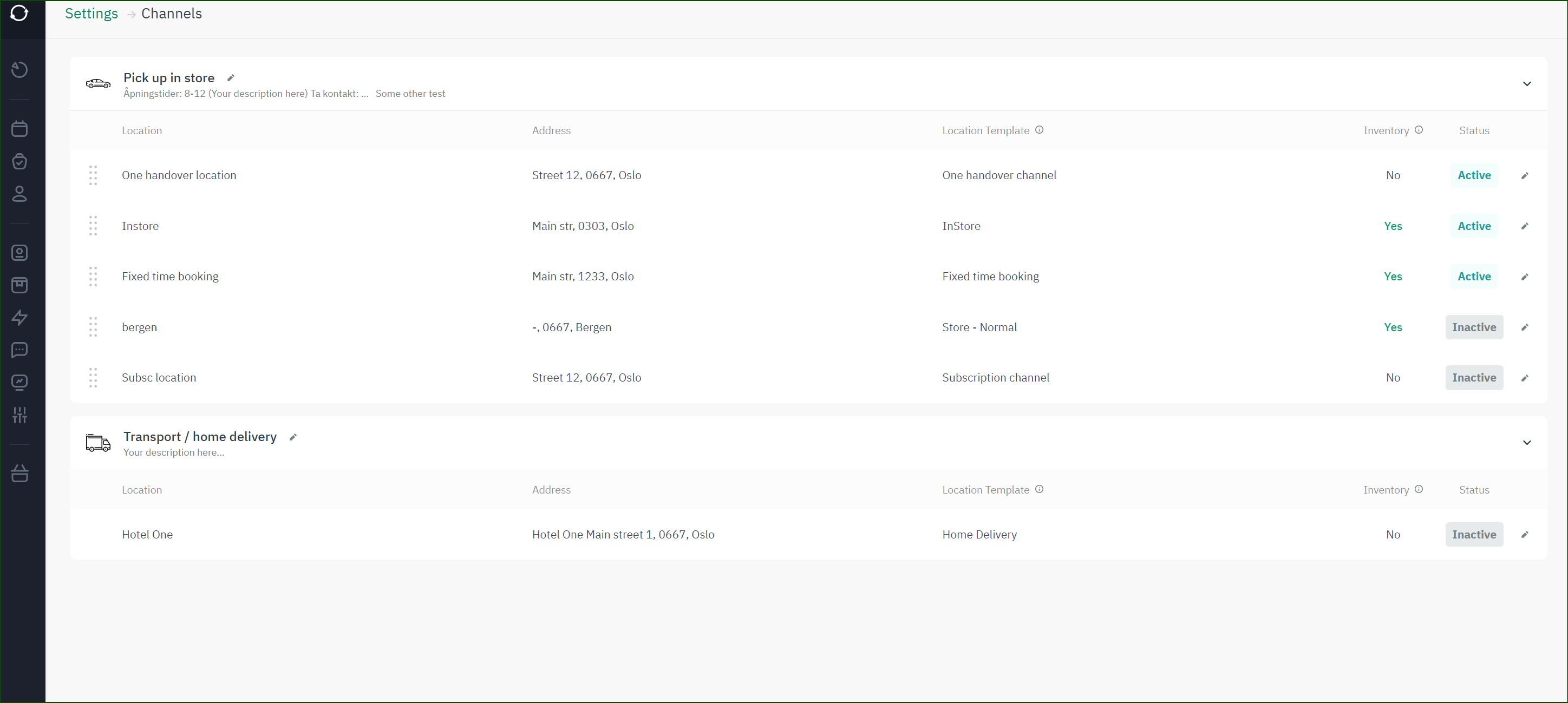
Expanding your online rental store to include multiple physical locations can be a game-changer for growth and market reach. It can also multiply your admin workload overnight if the underlying systems aren’t built for it. This guide walks you through the essentials of managing a multi-location rental operation, so you can scale with a consistent, seamless experience for both your team and your customers.
We’ll cover what multi-location management actually involves, the software features that matter most, marketing strategies for reaching customers across every branch, and how to keep inventory under control no matter how many sites you run. Along the way, we’ll point to deeper resources — including our own rental booking software guides and independent industry research — so you can go as deep as you need to.
“The businesses that scale smoothly across locations are rarely the ones with the most sites — they’re the ones that centralized their data before they opened site number two.” — Asgeir Helland, Rental Operations Expert, Sharefox
Understanding Multi-Location Management
What is Multi-Location Management?
Multi-location management refers to the comprehensive oversight and coordination of business operations spread across multiple physical locations. For an online rental store, this means effectively managing inventory, bookings, customer interactions, and staff across various branches to maintain a consistent brand identity and customer experience.
A robust digital rental commerce platform, like Sharefox, is designed to centralize these operations, enabling businesses to run and scale equipment and vehicle rental operations efficiently across multiple locations — from self-service booking to flexible pricing and full ecosystem integrations for both B2C and B2B customers.
Challenges of Multi-Location Operations
Managing multiple business locations introduces a unique set of challenges, particularly for mobility and property managers. These professionals often grapple with coordinating multiple disparate systems — CRM, booking, and finance — leading to inefficiencies and potential errors. Manual key handling and paper-based processes further complicate operations, increasing the risk of downtime and reducing overall turnaround speed.
According to the American Rental Association, operational efficiency and technology adoption are among the top factors separating rental businesses that scale successfully from those that stall after opening a second or third location. The pressure to reduce errors while supporting multiple locations necessitates scalable tools that can streamline operations and enhance visibility across every location, ensuring customer satisfaction with minimal touchpoints.
Key Benefits of Using Multi-Location Management
Implementing effective multi-location management software delivers substantial benefits, simplifying complex operations and boosting profitability. This approach enables online self-service for customers, improving convenience and increasing utilization and revenue per asset across multiple locations.
| User Type | Key Benefits and Features |
|---|---|
| Rental Operators | Centralize booking, inventory management, and invoicing into one system, significantly reducing manual administration and human error. |
| Mobility Managers | Automate check-in/out processes with digital tools, empower customers to book and return vehicles independently, integrate ID verification and payments, thereby increasing turnaround speed and reducing idle time. See how this plays out in practice in our vehicle rental fleet management guide. |
| Self-Storage or Property Managers | Allows for online booking and payment for units, automates access and lock systems, reduces dependence on physical reception, and facilitates rapid expansion into new sites with minimal administrative overhead. |
Choosing the Right Multi-Location Management Software
Features to Look for in Management Software
When selecting the right multi-location management software, it is crucial to look for features that empower your business and simplify operations across multiple locations. The platform should offer flexibility for various rental models, including subscription, short-term, and long-term rentals, alongside comprehensive sales and service bookings.
MultiCommerce capabilities are vital for hybrid models that allow you to rent, sell, or subscribe across every location — explore how this works on our subscription rental software page. Moreover, advanced pricing configuration and powerful analytics and automation for operations are indispensable for maintaining visibility and optimizing performance across all your business locations.
| Key Functional Module | Benefit / Example Integration |
|---|---|
| Booking and Inventory Management | Centralize reservations and asset tracking efficiently. |
| Self-service Check-in/out | Enhance customer experience with integrations like Sharebox or Inlet. |
| Essential Integrations | Streamline processes with systems like Visma, Nets, Criipto, accounting, and ID verification tools via the Sharefox API. |
Single-Site vs. Multi-Location Tooling: What Changes
Not every feature that works for a single storefront survives the jump to five, ten, or fifty locations. The table below compares how typical requirements shift once you add locations.
| Requirement | Single Location | Multi-Location |
|---|---|---|
| Inventory visibility | One stockroom, easy to track manually or in a spreadsheet | Needs a centralized, real-time view across every site to prevent double-booking |
| Pricing | Can be set once and rarely revisited | Often needs location- or region-specific rules, still managed from one dashboard |
| Staffing & check-in | Front desk handles walk-ins directly | Self-service and remote check-in reduce the need for staff at every site |
| Reporting | Simple, single P&L | Consolidated analytics across locations, with the ability to drill into one site |
| Customer experience | Consistent by default (one team, one place) | Requires deliberate design to keep booking flow and branding consistent everywhere |
| Expansion effort | N/A | Should be near-zero incremental admin per new site if the platform is built for it |
Best Practices for Implementing Management Software
Implementing multi-location management software effectively requires adherence to best practices to ensure a seamless transition and maximize benefits across multiple locations. To achieve this, it’s important to:
- Clearly define your business goals and how the software will help achieve them, ensuring alignment with your overall brand strategy.
- Prioritize comprehensive staff training at every location to foster user adoption and proficiency, empowering your local teams to leverage the platform fully — our Sharefox Academy has step-by-step onboarding guides for this.
- Establish clear data migration strategies to centralize information accurately and maintain consistency across all individual locations.
- Regularly review the software’s performance, utilizing its analytics capabilities to identify areas for improvement and forecast future needs, ensuring the solution continues to meet the evolving demands of your multi-location business.
Before committing, it’s worth running the numbers on what centralization could save you — try our ROI calculator to estimate the impact for your own operation.
Simplifying Operations with Technology
Leveraging technology to simplify operations is at the heart of effective multi-location management. The right multi-location management software helps businesses streamline complex processes, from inventory management to customer relationship management, across multiple physical locations.
By centralizing data and automating tasks, you can reduce manual errors and free up valuable time for your local teams to focus on delivering an exceptional customer experience. Technology empowers you to maintain consistent brand identity and service quality across every location, providing real-time visibility into performance and enabling data-driven decision-making. This strategic approach ensures that managing multiple locations becomes an advantage, not a challenge, driving efficiency and growth for your entire operation.
Effective Multi-Location Marketing Strategies
Importance of Multi-Location Marketing
For self-storage or property managers, a robust multi-location marketing strategy is crucial for sustained growth and enhancing the customer experience. Focusing on digital presence allows businesses to reach a wider audience and provide a seamless booking process across multiple locations.
By centralizing marketing efforts, you can ensure a consistent brand identity and message across every location, fostering trust and recognition among potential customers. Our guide on local SEO for self-storage breaks down how to do this location by location without diluting your brand.
Using a Multi-Location Marketing Platform
To truly empower your rental company to grow and operate smoothly across multiple locations, a sophisticated marketing approach — backed by the right platform — is indispensable. It provides a central hub to manage multiple campaigns, ensuring consistent branding and messaging across all business locations, while simplifying the complexities of managing multiple digital touchpoints for both internal teams and integration partners.
Streamlining Marketing Efforts Across Multiple Locations
Streamlining marketing efforts across multiple locations is vital for maintaining a consistent brand image and maximizing outreach. This approach allows for the easy deployment of location-specific promotions and content, ensuring relevance and engagement for customers visiting individual locations. It simplifies the process of managing multiple marketing channels, providing the visibility needed to optimize spending and improve return on investment across every location.
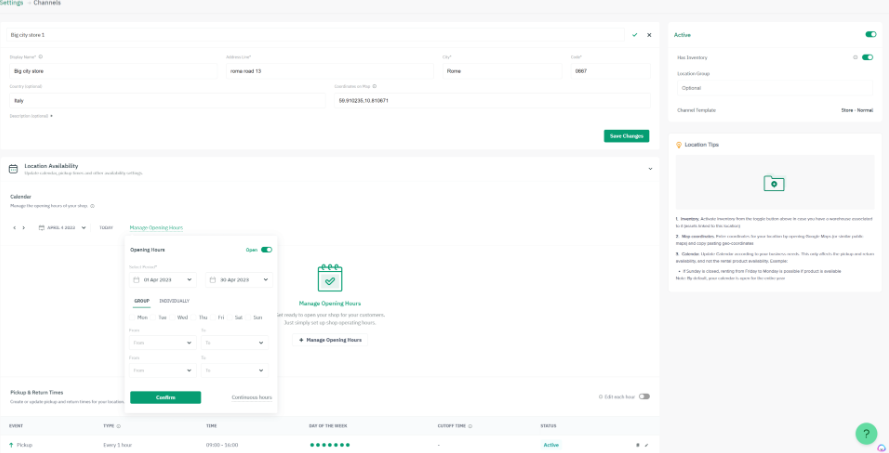
Real-world examples help here: self-storage operator Opbevaring.nu scaled its marketing and booking flow across several Danish sites using a single centralized system rather than juggling separate tools per location.
Inventory Management Across Multiple Locations
Challenges in Inventory Management
Managing inventory across multiple locations presents significant challenges for rental operators and mobility managers, often leading to fragmented tools and double work. Many still rely on outdated systems or spreadsheets, which results in a critical lack of visibility over bookings, damages, or availability across every location.
During busy seasons, this often culminates in operational chaos, making it difficult to maintain a seamless customer experience. Mobility managers, in particular, struggle with managing multiple systems and manual key handling, which can impact turnaround speed and overall efficiency — a challenge covered in more depth in our equipment rental inventory management guide.
Best Practices for Inventory Control
Implementing best practices for inventory control is essential for rental operators aiming to simplify and enhance their multi-location operations. The goal is to centralize booking, inventory, and invoicing into one robust system, thereby significantly reducing manual administration and human error across multiple locations.
This strategic move also enables online self-service for customers, providing greater convenience and increasing utilization and revenue per asset. The U.S. Small Business Administration notes that standardizing operating procedures across sites is one of the most reliable ways to keep quality consistent as a business grows — advice that applies directly to rental inventory control.
Analytics for Better Decision Making
Utilizing powerful analytics is crucial for making informed decisions regarding inventory management across multiple locations. A comprehensive multi-location management software provides deep insights into asset utilization, rental patterns, and operational efficiency across every location.
These analytics empower businesses to forecast demand accurately, identify underperforming assets, and optimize inventory distribution to meet specific location needs. By centralizing data and offering clear, actionable reports, the right multi-location management software allows local teams to make data-driven choices, leading to improved asset management and a more profitable operation across all business locations.
If you’re still deciding on the right foundation for your inventory strategy, our self-storage software and rental software pillar page are good starting points, or you can book a demo to see multi-location setup in action.

 All in one platform