Skip to main content


Choosing the right bedroom door lock for your rental property is a balancing act: tenants want privacy they can trust, and landlords need a way to manage access without holding a giant keyring for every unit. This guide breaks down the lock types worth considering, when a smart lock earns its price tag, and how to install and maintain whichever option you choose.
Understanding Bedroom Door Locks
Bedroom door locks range from a basic push-button knob to a premium biometric smart lock, and the right pick depends on how many rooms you manage and how often tenants turn over. For operators running shared housing, co-living units, or student rentals, this decision also ties directly into the self-service rental model many landlords are shifting toward — where tenants get in and out without a staffed front desk.
Types of Locks for a Bedroom Door
- Push-button or key-in-knob locks — the standard, low-cost option built into many door handles.
- Deadbolts — added alongside a handle for a stronger, harder-to-force barrier.
- Lever-style handles — often ADA-friendly, available with either a key cylinder or a push-button lock.
- Keyless entry systems — keypad, app-controlled, or biometric locks that remove the physical key entirely.
Key vs. Keyless Entry
A traditional key lock is simple and familiar, but every lost key means a lock change (and a bill) for the landlord. Keyless entry — a keypad, an app, or a fingerprint sensor — solves that by letting you reassign access with a few taps instead of a locksmith visit. That’s the same logic behind self-service check-in flows that rental businesses are adopting across other asset types, not just bedrooms.
Why Privacy Matters in Shared Rentals
In a shared house, HMO, or co-living setup, a bedroom lock isn’t a nice-to-have — it’s the one thing that turns a rented room into a private space. According to the National Apartment Association, resident satisfaction surveys consistently flag “control over who can enter my unit” as a top-three safety concern in multi-tenant housing.
Smart Lock Technology
Why Landlords Are Switching to Smart Locks
Smart locks solve a problem that’s specific to rentals: turnover. Every time a tenant moves out, a mechanical lock needs a physical rekey or a locksmith. A smart lock just needs its code changed. This is the same efficiency gain landlords see when they move other parts of the rental process online — as covered in our guide on running an unmanned rental business.
A bedroom lock is easy to treat as an afterthought — but it’s one of the cheapest safeguards against a bad tenant dispute. With a smart lock, it’s also the fastest way to hand over access to a new tenant without ever meeting them in person.
Keypad Locks with a Handle
A keypad lock built into the door handle gives tenants a private code instead of a key that can be copied or lost. Most models include auto-lock, so the door secures itself after a set time — a small feature that prevents the single most common tenant complaint: “I forgot to lock my door.”
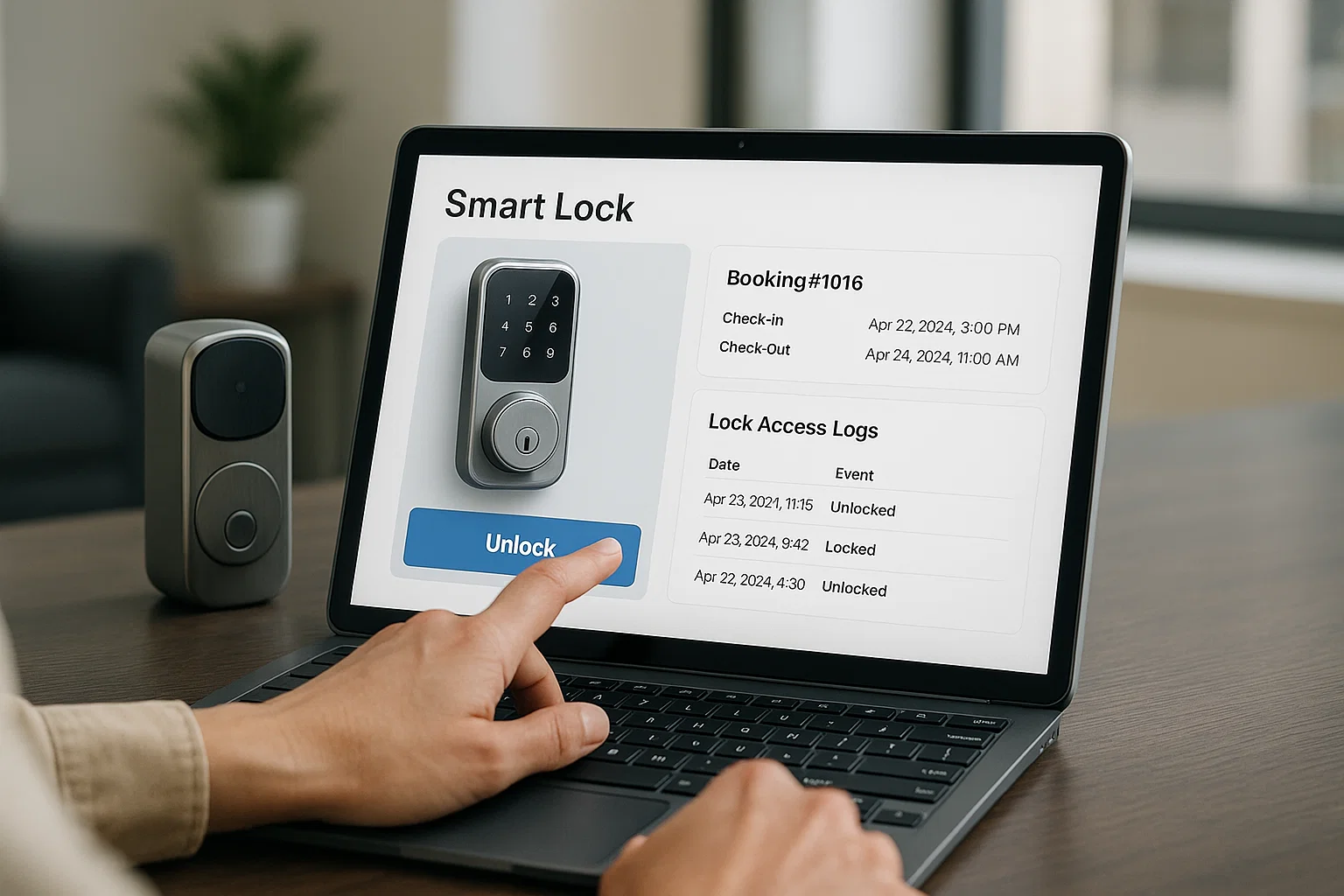
Remote Access via App
App-based control is where smart locks really pay off for landlords managing multiple rooms or properties. You can issue a one-time code before a move-in, revoke it the moment a tenant moves out, and see a log of every entry — without driving to the property. It’s the same remote-management logic behind self-service solutions for trailer and equipment rentals, just applied to a bedroom door instead of a fleet.
Comparing Your Options
| Lock Type | Security Level | Relative Cost | Remote/App Access | Best For |
|---|---|---|---|---|
| Standard knob lock | Basic | $ | No | Owner-occupied rooms, low turnover |
| Deadbolt (added) | High | $ | No | Any room storing valuables |
| Keypad lock with handle | High | $$ | Sometimes | Shared housing, frequent turnover |
| Smart lock (app-controlled) | High | $$$ | Yes | Multi-unit landlords, co-living, remote management |
| Biometric lock | Very high | $$$ | Often | High-security or premium rentals |
| Portable/adhesive lock | Low–Medium | $ | No | Temporary or tenant-added privacy |
Security Considerations
Choosing the Right Lock for Safety
Look past the price tag to three things: the lock’s ANSI/BHMA grade (Grade 1 is commercial-strength, Grade 2 residential-heavy-duty, Grade 3 standard residential), the strike plate’s screw length, and how the manufacturer handles firmware updates if it’s a smart lock. A high security grade protects belongings and builds the kind of trust that keeps good tenants renewing.
Deadbolt vs. Standard Locks
A deadbolt extends a solid bolt deep into the door frame, which is why it resists forced entry far better than a spring-latch lock alone. A standard knob lock gives basic privacy; a deadbolt is the upgrade worth making for any room where tenants store valuables, including home-office setups.
Biometric Options
Fingerprint-entry locks remove keys and codes entirely, which also removes the two most common failure points: lost keys and shared codes. They cost more, but for premium rentals or high-turnover shared housing, the reduction in access-management overhead often pays for itself within a year or two.
Installation and Maintenance
Tools You’ll Need
A Phillips-head and flat-head screwdriver cover nearly every lockset on the market, including most smart lock models designed for DIY installation.
Installation Steps
- Remove the existing hardware.
- Fit the new latch into the door’s edge bore, checking alignment.
- Attach the interior and exterior handles (or the keypad unit) and fasten through the door into the latch.
- Test the lock several times before handing the room over to a tenant.
Maintenance Tips
Check screws every few months — a loose strike plate is the most common reason a “secure” lock fails. Lubricate with a silicone-based spray, not oil, to avoid gumming up the mechanism. For smart locks, monitor battery levels; most models send a low-battery alert well before they fail, but it’s worth checking manually each quarter.
Portable and Temporary Solutions
Portable Door Locks
For tenants who can’t modify existing hardware — or landlords who want an easy add-on layer — portable locks install and remove without damaging the door or frame, making them a good fit for short stays.
Adhesive Locks: Pros and Cons
Adhesive locks are non-invasive and versatile but offer materially lower security than a mechanical or smart lock. They’re best suited to low-stakes doors — a bathroom or a home office — rather than a tenant’s primary bedroom.
Best Practices for Temporary Solutions
Check the fit every time, inspect adhesive bonds regularly for wear, and treat these as a supplement to — not a replacement for — a proper bedroom lock.

 All in one platform