Skip to main content


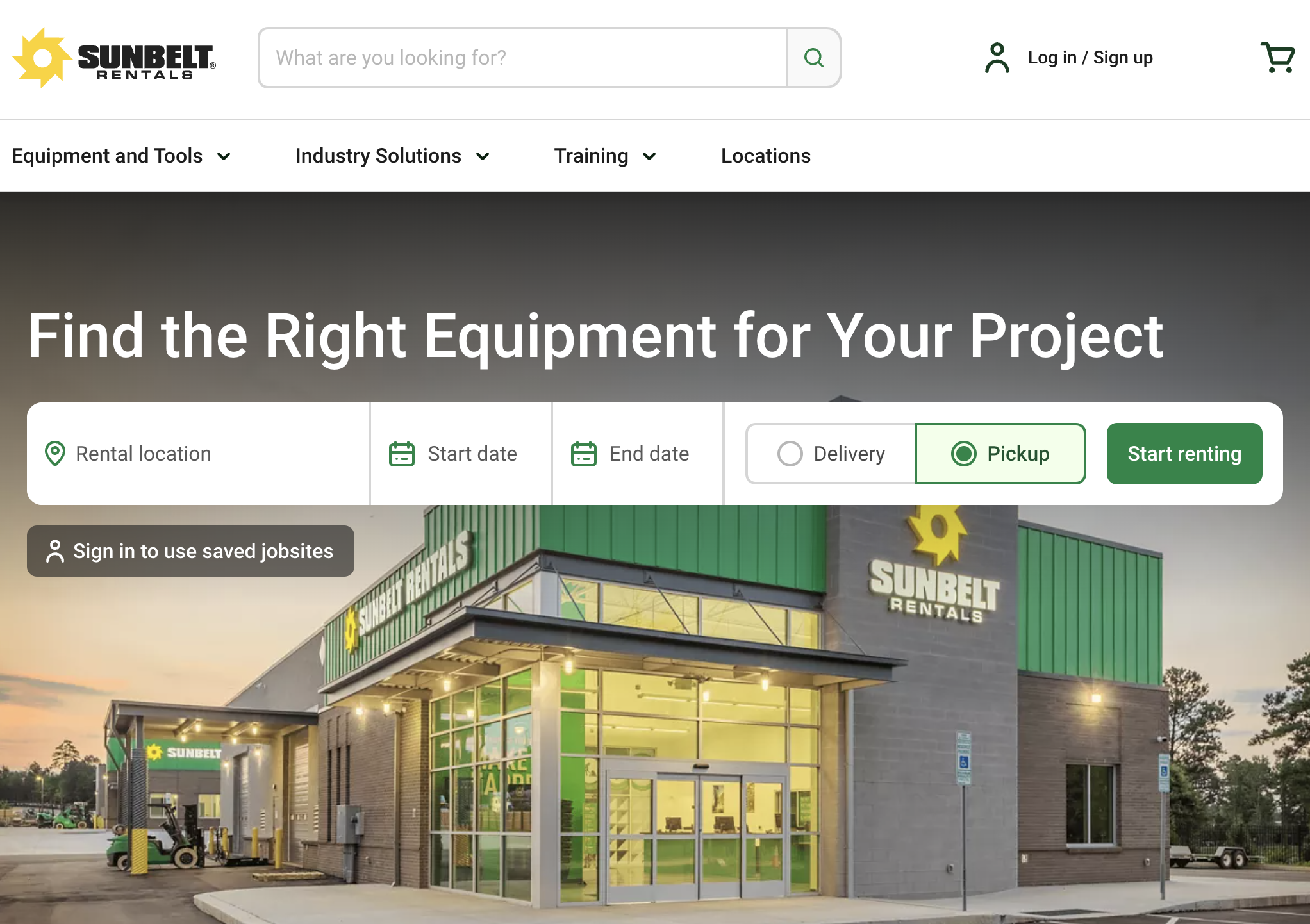
Sunbelt Rentals has become one of the most recognizable names in the rental equipment industry, and a large part of that story is strategic acquisitions. Rather than growing purely branch-by-branch, Sunbelt (the North American operating brand of UK-listed Ashtead Group plc) has repeatedly folded in regional and specialty rental businesses to widen its footprint, deepen its fleet, and shorten the distance between equipment and job site. This article breaks down how that acquisition strategy works, what it means for the broader equipment rental market, and what smaller rental operators can learn from it — whether they’re running a single yard or scaling a multi-location fleet with the help of equipment rental software.
Overview of Sunbelt Rentals
History and Growth
Sunbelt Rentals has a track record of steady, deliberate expansion — evolving from a regional player into one of the largest equipment rental networks in North America. That growth has been driven by a consistent focus on providing well-maintained equipment and reliable service across construction, industrial, and specialty markets. Over time, the company has broadened its catalog considerably, a pattern that mirrors what many smaller construction rental software users experience as their own fleets diversify: the more verticals a rental business serves, the more it depends on inventory and booking systems that scale with it.
Current Market Position
Sunbelt Rentals maintains a commanding presence in the industry today, with an extensive network of locations spanning North America. Its inventory ranges from heavy construction machinery to specialized power tools and generators, positioning it as a one-stop option for many project types. That scale is underpinned by consistent safety standards and broad equipment availability — the same fundamentals that matter to any operator managing a heavy equipment rental business, just at a much larger scale.
Strategic Vision
The company’s strategic vision centers on continuously improving its service offering while expanding its operational footprint. That includes leveraging its network and fleet diversity to respond quickly to client needs — including in disaster-recovery situations, where availability of generators and pumps can matter enormously. The underlying goal, as with most mature rental operators, is to become a trusted long-term partner rather than a one-time equipment source.
Strategic Acquisitions
Identifying Target Companies
Acquisition targets are typically chosen for how well they align with growth objectives: geographic gaps, adjacent equipment categories, and specialized expertise that would otherwise take years to build organically. This is a scaled-up version of a decision every regional rental company eventually faces — expand into a new construction machinery niche or vehicle category organically, or acquire the expertise outright.
“Acquisitions let a rental company buy time. You can build a new branch and a new customer base from scratch, or you can buy a business that already has both — and integrate the systems and inventory behind it,” as one regional equipment fleet manager put it, describing the trade-off many mid-sized operators weigh before either merging or scaling their own locations.
Benefits of Acquisitions
Strategic acquisitions let a company like Sunbelt integrate new technology, expand its specialized tool inventory, and add experienced staff faster than organic hiring and fleet-building alone would allow. For smaller operators without the balance sheet for M&A, the same benefits — broader inventory, faster technology adoption, and stronger operational depth — are usually achieved instead through platform investment, such as consolidating multiple locations onto one rental inventory management system.
Impact on Market Reach
Each new location added through acquisition expands delivery radius and local support, meaning generators, lifts, and pumps become available closer to where projects are actually happening. This “distance to equipment” dynamic is one of the most consistent drivers of customer retention across the rental industry, regardless of company size, and it’s a large part of why local logistics remain a strategic asset in equipment rental — not just an operational afterthought.
Equipment and Services Offered
Range of Rental Equipment
Sunbelt Rentals’ inventory spans heavy construction equipment, specialized power tools, pumps, generators, and lift categories such as scissor lifts. That breadth reflects a broader industry trend: rental businesses that once specialized in a single category are increasingly expected to offer adjacent equipment types, supported by the kind of unified booking and inventory tooling covered in Sharefox’s equipment rental inventory management guide.
Specialty Tools and Solutions
Large operators increasingly pair their physical fleet with digital infrastructure — booking systems, subscription and long-term rental options, and integrated service scheduling. This mirrors what smaller and mid-sized rental businesses now expect from a modern rental booking software platform: flexible support for short-term, long-term, and subscription rentals in one system, rather than juggling separate tools for each.
Well-Maintained Equipment Standards
Rigorous maintenance and inspection standards are non-negotiable at scale — a single equipment failure on a large industrial site can cascade into costly downtime and safety risk. This is equally true for smaller rental fleets, where maintenance scheduling tied directly to booking data (rather than a separate spreadsheet) is one of the simplest ways to reduce unplanned downtime.

Power Equipment and Delivery Solutions
Importance of Power Equipment
Reliable power equipment — from small portable generators to large-scale industrial units — is the backbone of most construction and industrial projects. Fleet depth in this category is one reason power equipment and generators remain a consistently strong-performing segment across the broader construction and heavy equipment rental market, not just for large national players.
Logistics and Delivery Efficiency
Timely delivery is one of the clearest differentiators in equipment rental, since downtime waiting on equipment directly costs the customer money. A dense network of locations — built partly through acquisition — shortens delivery distances and improves reliability. For smaller operators, the equivalent lever is usually route and trailer rental logistics planning built into the booking workflow itself.
Safety Measures in Delivery
Transporting and offloading heavy equipment safely requires trained personnel and consistent protocols — a cost center that scales more efficiently across a larger network, which is part of the operational case for consolidation in this industry. Even so, safety-first delivery practices are equally achievable for smaller fleets through clear driver training and standardized checklists at every handoff.
Industry Impact and Future Projections
Large-Scale Projects and Demand
Large-scale construction and industrial projects consistently drive demand for heavy machinery, generators, and specialized tools, positioning national rental networks as reliable partners for complex, multi-site builds.
Response to Disaster Recovery Needs
Rapid mobilization of generators, pumps, and other essential equipment plays a genuine role in disaster recovery efforts, where speed of access can matter as much as the equipment itself. This is one area where scale and geographic density provide a clear operational advantage.
Future Growth Opportunities
Continued demand for rental equipment — combined with further consolidation in the industry — suggests the acquisition-led growth model will remain common among large rental networks. For independent and regional operators, the more realistic growth path is usually a mix of organic expansion and better use of technology, an area explored further in Sharefox’s equipment rental pricing strategy guide and construction equipment rental management guide.
Organic Growth vs. Acquisition-Led Growth
Not every rental business can or should grow the way a national network does. The table below compares the two most common expansion paths in the equipment rental industry.
| Factor | Organic Growth | Acquisition-Led Growth |
|---|---|---|
| Speed to new markets | Slower — requires building local reputation and fleet from scratch | Faster — inherits existing customers, staff, and locations |
| Upfront capital required | Lower, spread over time | High, concentrated at time of purchase |
| Integration complexity | Low — one system, one culture | High — merging fleets, staff, and often multiple software systems |
| Typical technology need | A single inventory and booking platform that scales with new branches | Enterprise integration across multiple legacy systems |
| Risk profile | Gradual, more controllable | Concentrated, dependent on due diligence quality |
| Best suited for | Independent operators and regional businesses | Well-capitalized national or multi-regional networks |

 All in one platform