Skip to main content



Demand for self-storage keeps climbing as people move more often, downsize, and run businesses out of smaller footprints — but the operators who actually benefit from that demand are the ones who’ve stopped managing units, contracts, and overdue accounts by hand. This post covers where the self-storage rental market is heading, what has to be in a storage rental agreement to protect both sides, and exactly how lien notices and public auctions work when a tenant defaults, and why that process is the single easiest thing for an under-resourced operator to get wrong.
What’s Driving Self-Storage Demand Right Now
Self-storage demand is being pushed up by three overlapping forces: more frequent residential moves, shrinking average home and apartment sizes, and a steady rise in small businesses that use storage instead of leasing warehouse space. A facility that can show a prospective tenant real-time availability and book them in under two minutes is winning tenants that a phone-and-fax operation simply loses.
For renters, this shows up as more choice: standard units, climate-controlled units for sensitive goods, drive-up access, and specialised space for RVs, boats, and vehicles. For operators, it shows up as pricing pressure — the Self Storage Association tracks this kind of facility growth and supply data across the industry, and the broad pattern it reports (more supply chasing the same regional demand) matches what most multi-site operators see on their own occupancy dashboards.
Two secondary trends are worth naming because they change what tenants expect on the first visit:
- Smart access and remote monitoring. Keyless entry, individual-unit alerts, and app-based gate codes are moving from “premium feature” to baseline expectation, especially among tenants under 40.
- Sustainability signals. Solar panels, LED retrofits, and water-efficient landscaping are showing up more often in facility marketing — not because every tenant asks about it, but because it differentiates a listing in a crowded local search result.
What Belongs in a Self-Storage Rental Agreement
A self-storage rental agreement is a legally binding contract, and the tenant’s rights and the facility owner’s remedies both come directly from what’s written in it — not from what either party assumes is fair. If a clause isn’t in the agreement, you cannot enforce it later, no matter how standard it feels in the industry.
At minimum, a compliant agreement should set out:
- The monthly rental rate, due date, and accepted payment methods
- Late fees and the exact day they start accruing
- The facility’s access hours, security measures, and any liability limit on stored property
- The lien clause — the facility owner’s right to place a lien on the tenant’s stored property for unpaid rent
- The notice period and process required before that lien can lead to a public auction
Tenant Rights That Often Get Overlooked
Tenants are entitled to secure, accessible storage as described in the contract, but they’re also responsible for keeping their contact details current — because every lien and auction notice a facility is legally required to send depends on having a valid address, email, or phone number on file. When that information is stale, the eviction and lien process gets slower and riskier for the operator, not just the tenant.

What Actually Changes When You Move Off Spreadsheets
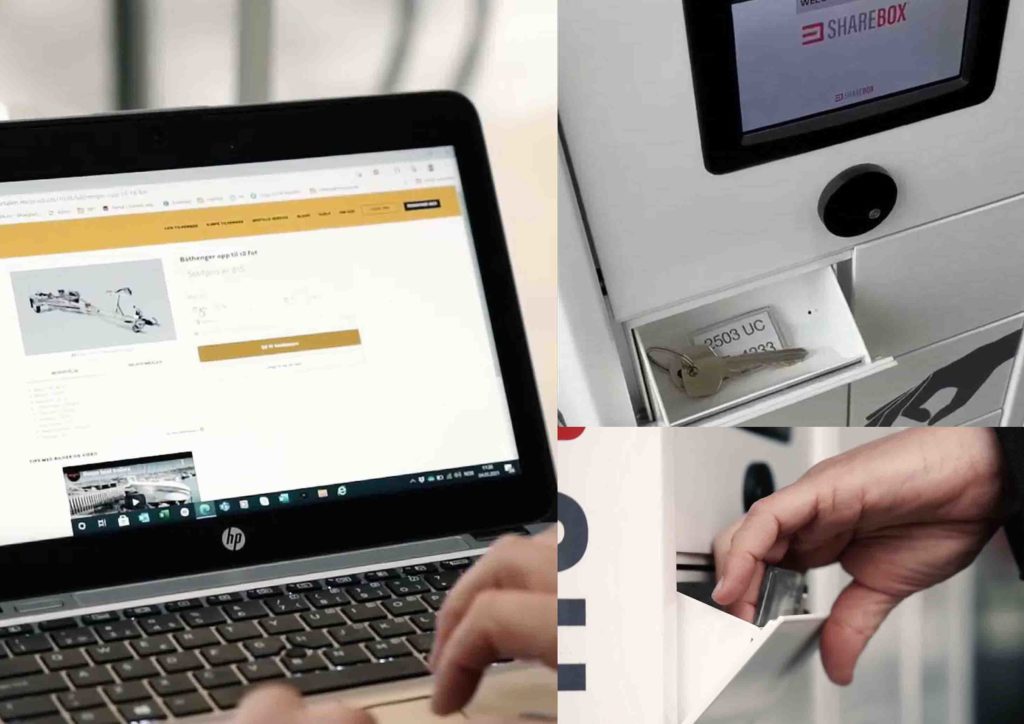
The clearest example we’ve seen of what this shift actually looks like is Opbevaring.nu, a self-storage operator in Hvalsø, Denmark, that launched without any manual booking or key-handling process from day one. Every rental runs the same way: a customer books a unit online against real-time availability, verifies their identity through MitID (Denmark’s national digital ID), signs the contract electronically, and gets access to their unit through an integrated smart lock — all without a staff member touching the booking, printing a contract, or handing over a physical key. Payments, invoices, reminders, and even termination requests run through a self-service customer portal, so the operator’s admin load doesn’t scale with the number of units under management. That last point is the real difference from a spreadsheet-and-paper setup: Opbevaring.nu has grown its customer base across Hvalsø, Tølløse, Lejre, Roskilde, and Holbæk without adding staff in proportion to that growth, because the booking-to-access flow simply doesn’t need a person in the loop.
Self-Storage vs. Commercial Storage: Different Tenants, Different Needs
Residential and business tenants rent storage for different reasons, and that difference should shape which unit sizes, contract terms, and add-ons a facility actually stocks. A facility that treats every tenant the same way leaves both segments underserved.
| Factor | Residential Tenant | Business Tenant |
|---|---|---|
| Typical unit size | Small to mid-size (personal belongings, furniture during a move) | Mid-size to large, often recurring capacity needs |
| Access pattern | Occasional, often evenings/weekends | Frequent, sometimes daily loading/unloading |
| Climate control | Situational (documents, electronics) | Often required (inventory, stock, sensitive goods) |
| Contract flexibility | Short-term, month-to-month common | Longer terms, sometimes rent-plus-expenses structures |
| Key decision factor | Price and proximity | Drive-up access and reliable availability |
What to Look For in Self-Storage Rental Software
Not all self-storage software solves the same problem, so the right starting point is knowing which parts of your operation are actually costing you time or revenue today. The software that pays for itself fastest is the one that automates the three things a manual process handles worst: billing, unit availability, and lien/notice tracking.
At minimum, evaluate a platform against:
- Online booking with real-time unit availability, so tenants can reserve without a phone call.
- Automated recurring billing and late-fee triggers, so nothing depends on someone remembering to invoice.
- Access control integration (smart locks, gate codes) tied to payment status, so overdue accounts can be restricted automatically rather than manually.
- Occupancy and revenue reporting, so you can see which unit sizes and locations are underpriced.
- Built-in lien-notice workflows that timestamp every communication sent to a defaulting tenant.
If you want the fuller breakdown before shortlisting vendors, see what self-storage management software actually includes, the detailed feature-by-feature guide, and a side-by-side comparison of the leading platforms.
Liens, Late Fees, and Public Auctions: Getting the Legal Side Right
A self-storage lien gives the facility owner the legal right to claim a tenant’s stored property after unpaid rent and a defined notice period — but the exact notice period, required delivery method, and auction procedure vary by jurisdiction, so this section is informational, not legal advice. Skipping a single required notice step is the most common reason a lien sale gets challenged after the fact.
The general sequence, once a tenant is in default, looks like this:
- Rent becomes overdue and late fees begin accruing per the signed agreement.
- The facility sends a formal notice of default, then — after the statutory waiting period — a notice of lien sale, to every contact method on file.
- If the account remains unpaid, the facility can proceed to a public auction of the unit’s contents, following local advertising and process requirements.
- Proceeds beyond the owed rent and reasonable expenses are typically owed back to the former tenant, depending on local law.
Software that logs every notice with a timestamp is what makes this process defensible if a tenant disputes it later; see how a subscription and payment management workflow handles this in practice.
Common Pitfalls
- Treating the lien clause as boilerplate. Operators copy a generic clause from a template and never check it against local statute — then discover during an actual dispute that the notice period or delivery method doesn’t match what the law requires. Have the agreement reviewed against current local law, not just industry convention.
- Losing track of tenant contact updates. A tenant who moves and doesn’t update their address can make a lien notice legally undeliverable, stalling the whole process. Build a reminder into renewal or payment flows to confirm contact details periodically.
- Manually calculating late fees. Inconsistent manual fee application is one of the fastest ways to lose a dispute — tenants notice when the same late payment is charged differently across accounts. Automate the fee schedule so it applies identically every time.
- Underpricing because occupancy data lives in someone’s head. Without a reporting dashboard, operators often leave revenue on the table by not adjusting prices for high-demand unit sizes. Pull an occupancy-by-size report at least monthly.
- No revenue management strategy at all. Storage demand is seasonal in most markets, and flat pricing year-round means missing the months when demand — and willingness to pay — is highest. See this guide to revenue management for self storage for a starting framework.



 All in one platform