Skip to main content


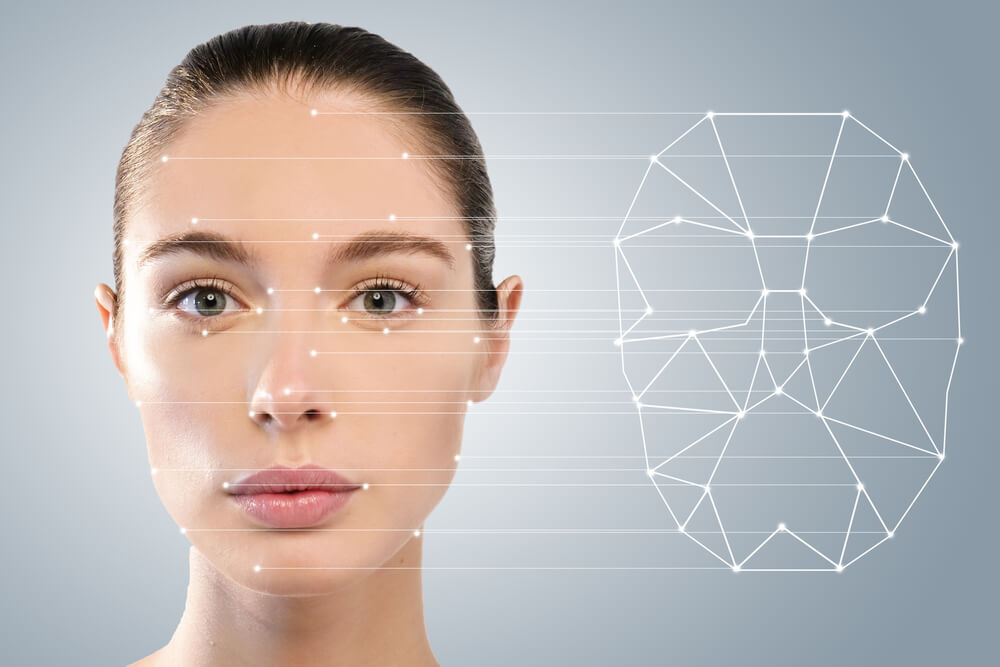
The beauty industry is in the middle of a genuine shift. What used to be a business built on trial, error, and shelf after shelf of half-used products is turning into something far more precise — and far less wasteful. That shift has a name: beauty tech. It’s the convergence of artificial intelligence, augmented reality, and diagnostic hardware with skincare and cosmetics, and it’s changing not just how products are chosen, but how much of them end up in landfill.
This article breaks down what beauty tech actually is, why it matters for personalization and product efficacy, and — the part that gets less attention — how it’s becoming one of the more practical levers for building a circular economy in an industry historically defined by overconsumption and single-use packaging. Some of the same principles show up across other asset-heavy industries moving from ownership to access, a shift we’ve covered in how the rental economy is here to stay.
Understanding beauty tech
Definition and importance of beauty technology
Beauty tech (or beauty technology) is the application of advanced technology — AI, AR, diagnostic sensors, and data platforms — to product development, retail, and the day-to-day consumer beauty routine. Its value isn’t cosmetic in the literal sense; it’s about precision. Instead of a consumer guessing which serum might work for their skin, a device or app can now analyze actual skin data and recommend — or formulate — something built around it.
Core components include:
- Artificial intelligence (AI) for skin diagnostics and formulation
- Augmented reality (AR) for virtual try-on
- Diagnostic hardware for tracking skin condition over time
- Personalized, data-driven product recommendations
Looking ahead, beauty tech is expected to keep integrating smart devices and data into everyday routines, addressing a much wider range of skin types and concerns with a level of precision that generic, one-size-fits-all products simply can’t match.
The role of beauty tech groups in innovation
Cross-industry beauty tech groups — collaborations between technology companies, beauty brands, and research institutions — are what actually move this space forward. Established beauty players such as L’Oréal and Estée Lauder have both made public, sustained investments in AI-powered skin diagnostics and virtual try-on tools, and their scale means adoption trickles down to smaller brands faster than it otherwise would. These groups are the ones pushing generative AI and AR from novelty features into standard parts of the beauty journey, with sustainability increasingly built into the brief rather than added as an afterthought.
Impact on skincare and skin health
The clearest impact of beauty tech shows up in skincare. AI-powered skin analysis tools can now flag specific conditions — pigmentation, early wrinkle formation, collagen loss — with a level of consistency that’s hard for the human eye alone to match. That translates into:
- More accurate identification of specific skin conditions
- Product recommendations and at-home regimens tailored to actual skin data, not guesswork
- Virtual try-on tools that let people preview a product’s effect before buying
The knock-on effect matters more than it might seem: better-matched products mean fewer returns, fewer abandoned half-used bottles, and less product waste overall.

Beauty tech innovations
Generative AI and personalized product recommendations
Generative AI has become one of the more concrete applications of beauty tech, particularly for personalized recommendations. It works by pulling together skin diagnostics, purchase history, and even environmental data (climate, UV exposure, water hardness) to suggest — or in some cases custom-formulate — products suited to one person’s actual skin. That’s a meaningfully different model from mass production aimed at an “average” consumer, and it’s one of the reasons personalization keeps coming up as a growth driver across the wider subscription and access economy, where matching supply to real demand — rather than guessing at it — is the whole point.
Revolutionizing salon services with beauty tech
Professional services are adopting the same tools. Salons using AR-based virtual try-on for makeup or hairstyles let clients preview a result before committing, cutting down on dissatisfaction and redo appointments. Aestheticians using AI-powered skin analysis get a more detailed read on a client’s skin than a visual assessment alone would provide, which supports more targeted (and less wasteful) treatment plans.
“The interesting thing about beauty tech isn’t the gadgets — it’s that better data means people buy less and use more of what they buy. That’s the circular economy playing out at the point of sale, not just in the supply chain.” — Asgeir Helland, Sharefox subject matter expert
Sustainability and the circular economy in beauty tech
This is where beauty tech earns more than a passing mention in a circularity conversation. According to the Ellen MacArthur Foundation, a circular economy is built on three principles: eliminating waste and pollution, circulating products and materials at their highest value, and regenerating nature. Beauty tech contributes to at least two of these directly.
- Refillable, sensor-monitored packaging — smart devices that track product usage and prompt a refill before a container is discarded, rather than replaced.
- AI-optimized supply chains — generative AI applied to demand forecasting reduces overproduction and supports more ethical, traceable ingredient sourcing.
- Reduced overconsumption — AI and AR-driven personalization means people buy products actually suited to their skin, cutting down on the “buy, try, abandon” cycle that drives a large share of beauty industry waste.
The parallel with other industries moving away from single-use ownership is worth noting. The same logic — using data to match supply with actual need instead of guesswork — is what’s driving subscription and rental models more broadly, and it’s a theme we’ve explored in depth in why the circular economy is an underused growth opportunity and in understanding the sharing economy.
Fashion has already gone further down this road than beauty has, with rental and subscription models for clothing gaining real traction — see our breakdown of the clothing rental service model and the broader fashion rental and subscription trend, along with the software layer that makes it operationally possible for clothing rental businesses. Beauty tech is arguably beauty’s version of the same shift — just powered by diagnostics and AI rather than a rental catalog.
Traditional beauty consumption vs. beauty-tech-enabled circular consumption
| Aspect | Traditional Model | Beauty-Tech-Enabled Circular Model |
|---|---|---|
| Product selection | Trial-and-error, generic marketing | AI diagnostics matched to individual skin data |
| Packaging | Mostly single-use, often non-recyclable | Refillable, sensor-monitored packaging |
| Overconsumption | High — mismatched or impulse purchases common | Lower — recommendations tied to verified skin needs |
| Supply chain planning | Static, historical forecasting | AI-optimized, demand-responsive sourcing |
| Product lifecycle | Linear: buy → use → discard | Circular: refill → reformulate → reuse |
| Return / waste rate | Higher, due to mismatched products | Lower, due to personalized matching |
The future of beauty tech
Trends shaping the landscape
Expect AI-powered skin diagnostics to get more granular — catching subtle pigmentation shifts and early wrinkle formation well before they’re visible to the eye — and expect that data to feed directly into custom formulations rather than generic product suggestions. Major players and beauty tech groups, L’Oréal and Estée Lauder among them, continue to invest heavily here, and that investment is what will keep pushing the rest of the market toward data-informed, less wasteful product cycles.
Advancements in anti-aging: collagen and wrinkle treatments
New beauty devices are emerging that use light therapy, microcurrents, and AI-guided diagnostics to target collagen production and wrinkle reduction more precisely than generic anti-aging lines ever could. The shift here is from broad-spectrum products toward active ingredients delivered specifically where they’re needed — informed by ongoing skin data rather than a single point-in-time purchase decision.
Sustainability as the defining trend
Sustainability is on track to become the single biggest differentiator in beauty tech, not a side feature. Refillable packaging tied to smart usage tracking, AI-optimized sourcing, and personalization that curbs overconsumption are converging into a genuinely circular model for an industry that has historically struggled with both. Global market research from Statista’s beauty and personal care industry coverage and sector analysis from McKinsey & Company both point to sustainability and personalization as the two forces reshaping the sector fastest — and beauty tech sits at the intersection of both.


 All in one platform