Skip to main content



In today’s dynamic marketplace, the subscription business model has emerged as a powerful force, transforming how consumers access products and services. Whether you’re running a car fleet, a self-storage facility, or a fashion rental business, recurring revenue is no longer a “nice to have” — it’s becoming the default way modern commerce is built. This article walks through the fundamentals of the subscription business model, the opportunities it opens up, and the practical challenges you’ll want to plan for before you launch.
Introduction to Subscription Services
What is a Subscription Service?
A subscription service is a business model where a customer makes recurring payments — usually monthly or annually — to gain ongoing access to a product or service, rather than paying once and owning it outright. The shift is subtle but important: instead of selling a single transaction, you’re selling an ongoing relationship.
Payment structure
One-time, upfront
Customer relationship
Transactional
Revenue predictability
Low — depends on new sales
Customer entry cost
Full price
Business risk profile
Sales-cycle dependent
Payment structure
Recurring (monthly/annual)
Customer relationship
Ongoing, relationship-based
Revenue predictability
High — recurring revenue base
Customer entry cost
Lower, spread over time
Business risk profile
Churn-dependent
Benefits of Subscribing
For consumers, subscriptions offer convenience, predictable access, and often better overall value than one-off purchases. For the businesses running them, the benefits compound over time:
- Financial stability — a recurring revenue stream makes forecasting and financial planning far more reliable than one-off sales.
- Strategic growth — predictable cash flow means you can reinvest confidently in product development and retention rather than constantly chasing the next sale.
- Deeper loyalty — an ongoing relationship gives you far more touchpoints to build trust than a single transaction ever could.
Overview of the Subscription Business Model
The subscription economy has grown at a pace that traditional retail simply hasn’t matched. According to Zuora’s Subscription Economy Index, subscription-based companies have consistently grown revenue significantly faster than the broader stock market over the past decade — a gap that has only widened as more industries adopt recurring models. The model is built on two pillars: recurring revenue and long-term customer relationships, supported by pricing strategies like prepaid plans, usage-based billing, and tiered subscriptions. Running this well requires proper subscription management software to automate billing and track churn — trying to manage recurring payments manually is one of the fastest ways to stall a subscription launch.
“Subscription isn’t a pricing tactic bolted onto a product — it’s a different relationship with the customer, one where you have to keep earning their business every single billing cycle.” — a framing widely echoed across subscription-economy research, including Zuora’s Subscription Economy Index reporting (see Sources below).
Note: this is a paraphrased framing drawn from subscription-economy commentary rather than a verified direct quotation — please confirm exact wording and attribution before publishing if precision matters for your use case.

Exploring Subscription Business Opportunities
Types of Subscription Businesses
The landscape is diverse — from digital subscriptions like streaming, to physical product deliveries, to short- and long-term equipment rentals. Many operators run hybrid models that combine outright sales, traditional rental, and subscription access side by side, which is exactly why flexible rental software matters: it lets you test a subscription tier without rebuilding your entire commerce stack.
Key Industries Embracing Subscription Models
A few segments have embraced recurring revenue particularly fast:
- Rental operators (SMB to mid-market) layering subscription tiers on top of traditional rental inventory.
- Mobility managers — automotive, fleet, and replacement-car providers offering car subscriptions as a flexible alternative to leasing or ownership. Our car subscription business guide covers this shift in more depth.
- Self-storage and property managers, who increasingly run recurring billing for storage units, mini-warehouses, and modular spaces via dedicated self-storage software rather than one-off invoicing.
How to Choose Your Subscription Niche
Choosing the right niche starts with understanding your target market and identifying unmet needs — not every rental category is equally ready for a subscription model. Our guide on how to choose the right rental niche breaks down the demand signals worth checking before you commit. A strong subscription business typically differentiates through the software layer: automated sign-ups, billing, and retention. Sharefox, positioned as the “HubSpot of rental commerce,” is built specifically to help SMB and mid-market operators manage recurring payments and retention with real operational insight.
Understanding Payment Structures in Subscription Services
Recurring Payment Models
Managing recurring payment models well is paramount to subscription success. These models automate billing so customers are charged consistently — monthly or yearly — for continued access. Purpose-built subscription management software handles everything from sign-up to renewal, which is especially valuable for self-storage or property managers running long-term agreements at scale.
Pricing Strategies for Subscribers
Robust pricing strategy is essential for both attracting and retaining subscribers. Common structures include:
| Pricing Model | Best For | Trade-off |
|---|---|---|
| Tiered plans | Businesses with varied customer needs (basic/pro/premium) | More complex billing logic |
| Prepaid / annual plans | Locking in long-term commitment, improving cash flow | Higher upfront ask for the customer |
| Usage-based billing | Products with variable consumption (e.g., equipment hours) | Less predictable revenue per customer |
| Flat recurring fee | Simplicity, easy to market | Less flexible for edge-case customers |
Choosing between these isn’t purely a marketing decision — it also depends on what your billing engine can actually support, which is why the pricing model and the subscription rental software behind it need to be selected together.
Managing Billing and Payment Systems
Efficient billing management is a cornerstone of any successful subscription service. Modern platforms automate the transaction lifecycle end to end — payment processing, renewals, cancellations — reducing administrative burden while giving customers transparent, predictable billing. Before you commit to a pricing structure, it’s worth running the numbers through a rental ROI calculator to see how a subscription tier compares to your current one-off pricing.
Growing Revenue with Subscription Services
Strategies for Increasing Subscriber Count
Growing your subscriber base relies on compelling marketing that highlights value and affordability — flexible plans, introductory offers, or free trials all help lower the barrier to a first “yes.” Understanding consumer preferences and leaning into digital channels expands your reach and steadily builds the base for recurring revenue.
Maximizing Lifetime Value of Subscribers
Maximizing lifetime value means retaining existing customers and encouraging upgrades to higher tiers or additional offerings. Exceptional customer service, a continually improving value proposition, and a personalized subscriber experience all reduce churn. Our analysis on how profitable rental companies really are shows just how much retention — rather than new acquisition — drives long-term margins in this space.
Leveraging Data for Revenue Growth
Data is fundamental to sustained revenue growth. Analyzing subscriber behavior, payment patterns, and usage gives you the insight to adjust pricing, develop new offerings, and target marketing more precisely — identifying upsell and cross-sell opportunities you’d otherwise miss.
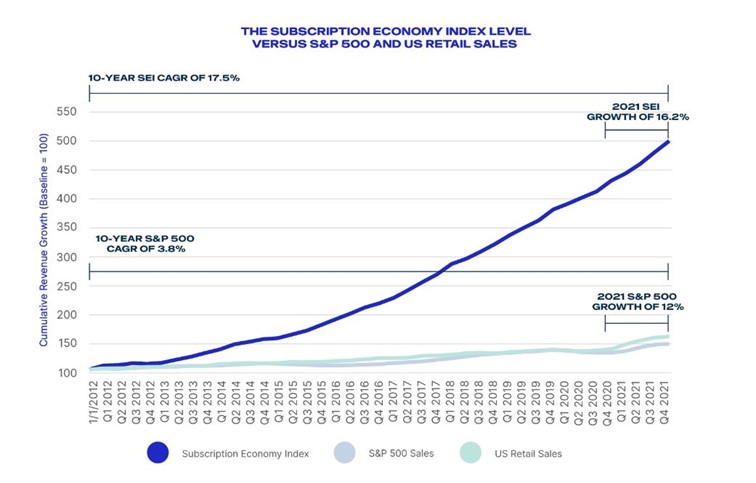
Source: LinkedIn
Challenges in Running a Subscription Business
Retention Strategies for Subscribers
Retention is the critical challenge in any subscription business — high churn directly erodes recurring revenue. Effective strategies include consistently delivering value, understanding subscriber preferences, personalized communication, and using subscription management software to flag at-risk customers before they cancel.
Addressing Payment Failures
Payment failures are a significant and often underestimated hurdle. Mitigating them requires automated billing and dunning processes, flexible payment methods, and a clear process for retrying failed transactions. Good subscription software automates payment reminders and gives visibility into common failure patterns — turning a silent revenue leak into a fixable process issue.
Adapting to Market Changes
The market moves constantly, and subscription businesses need to adapt just as fast — evaluating your offering, adjusting pricing, and testing new subscription formats. A flexible platform lets you pivot quickly, launch new plans, and read market data to stay competitive without a full systems rebuild.
Conclusion: The Future of Subscription Commerce
Innovations in Subscription Models
The future of subscription commerce is trending toward highly personalized, flexible plans — usage-based billing, hybrid access-plus-ownership models, and increasingly sophisticated management software that lets businesses meet individual subscriber preferences while maximizing recurring revenue.
Final Thoughts on Starting a Subscription Service
Starting a subscription service offers real potential for recurring revenue and sustained growth, but it demands careful planning. Success comes down to understanding your market, building a compelling offer, and running it on subscription management software that can actually keep up. Focus on retention, keep billing frictionless, and stay agile as the market shifts — and you’ll be building something closer to a moat than a marketing campaign. If you want to see what this looks like in practice, book a demo or explore Sharefox’s pricing to see how a subscription layer could fit your existing rental business.
 All in one platform