Skip to main content


Only 2.6% of the resources Norway consumes are ever put back into circulation. The rest is burned, buried, or dumped in the sea. That single number, from the Circularity Gap Report Norway, is the clearest sign yet that “sustainability” and “reuse” have become popular words in Norway long before they became popular practices.
The circular economy is the model built to close that gap — and rental, subscription, and repair businesses are already proving it can work at scale, not just in theory.
What is a circular economy?
A circular economy is an economic model designed to eliminate waste and pollution, keep products and materials in circulation, and regenerate natural systems. The Ellen MacArthur Foundation, one of the concept’s leading advocates, frames it as a deliberate alternative to the traditional “take–make–dispose” model that has driven industrial economies for the past century.
Where a linear economy extracts raw materials, turns them into products, and discards them as waste, a circular economy designs products from the outset to be reused, repaired, shared, or recycled — keeping their value in the system for as long as possible.
Linear vs. circular economy at a glance
| Linear economy | Circular economy | |
|---|---|---|
| Core logic | Take → make → dispose | Design → use → recirculate |
| Resource use | Extracts new raw materials continuously | Keeps existing materials and products in use |
| Ownership model | Buy, use, discard | Rent, share, repair, resell |
| Revenue driver | Volume of goods sold | Volume and longevity of use (rental, service, repair) |
| Waste outcome | Waste is an inevitable end-point | Waste is designed out from the start |
| Norway’s current rate* | 97.4% of resources not recirculated | 2.6% circularity (target: catch up to Dutch 24.5%) |
*Source: Circularity Gap Report Norway — see Sources & References.
The gap between the two columns is exactly what Norwegian trade organisation Virke is now pushing businesses to close.
Why the pressure is mounting — especially in Norway
Norway has long been a world leader in recycling and waste management. That, paradoxically, may be part of the problem.
“In Norway, we are world champions when it comes to recycling and waste management, but it has probably become a sleeping pillow. We haven’t figured out how to take the next step — into the circular economy, where sustainability and reuse are not just buzzwords, but an essential part of how people live their lives.” — Ivar Horneland Kristensen, CEO of Virke
Recycling happens at the end of a product’s life. The circular economy asks a more ambitious question: what if the product never needed to become waste in the first place? That reframing — from “how do we dispose of this responsibly” to “how do we keep this in use” — is exactly where rental, subscription, and repair-based business models come in.
Globally, the average circularity rate is 8.6%. The Netherlands leads at 24.5%. Norway sits at 2.6%, and the EU’s Circular Economy Action Plan, part of the wider European Green Deal, estimates the shift to a circular model could create roughly 700,000 new jobs across the bloc — many of them in repair and rental. Virke is calling on Norwegian authorities to move faster, arguing that the businesses willing to invest now, rather than wait for regulation to force their hand, will have a lasting competitive advantage.
Circular business models already in motion
The shift isn’t hypothetical. It’s already showing up in retail balance sheets.
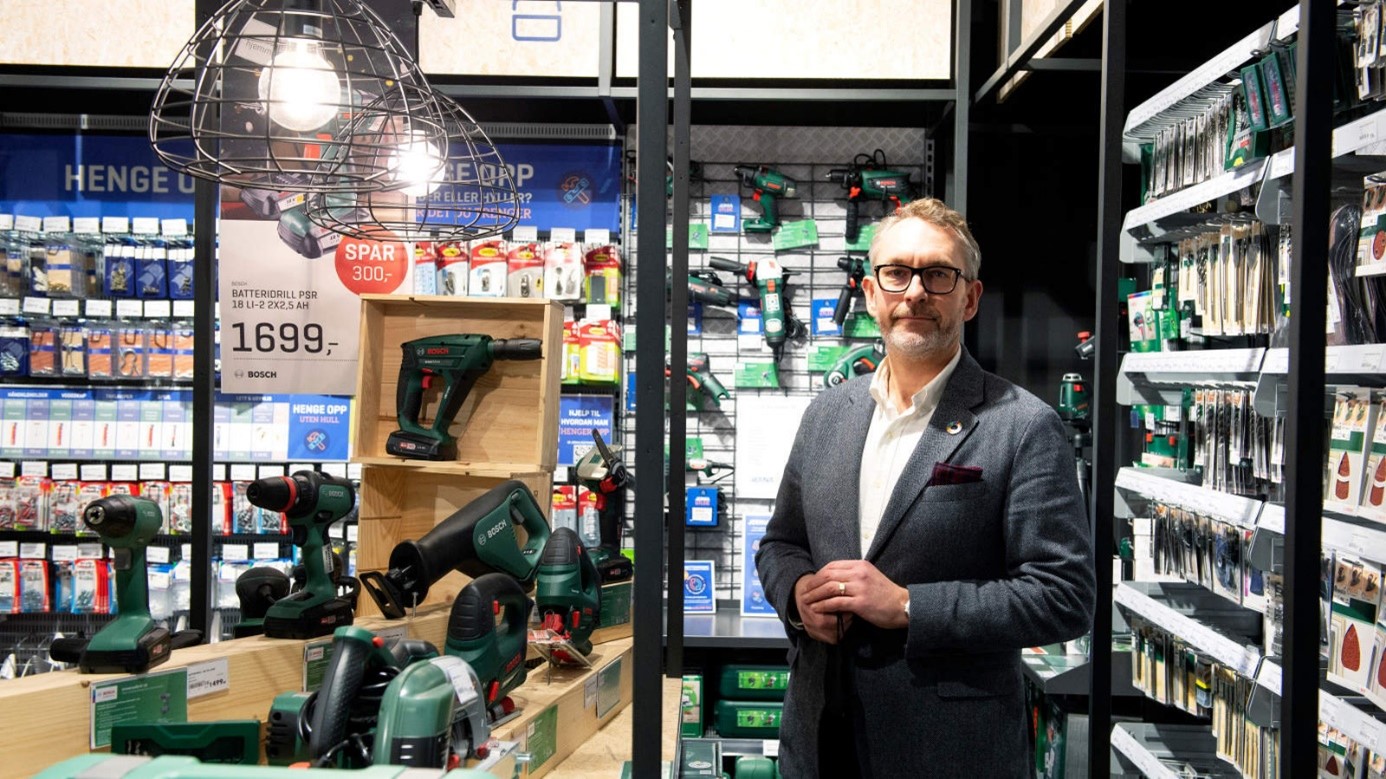
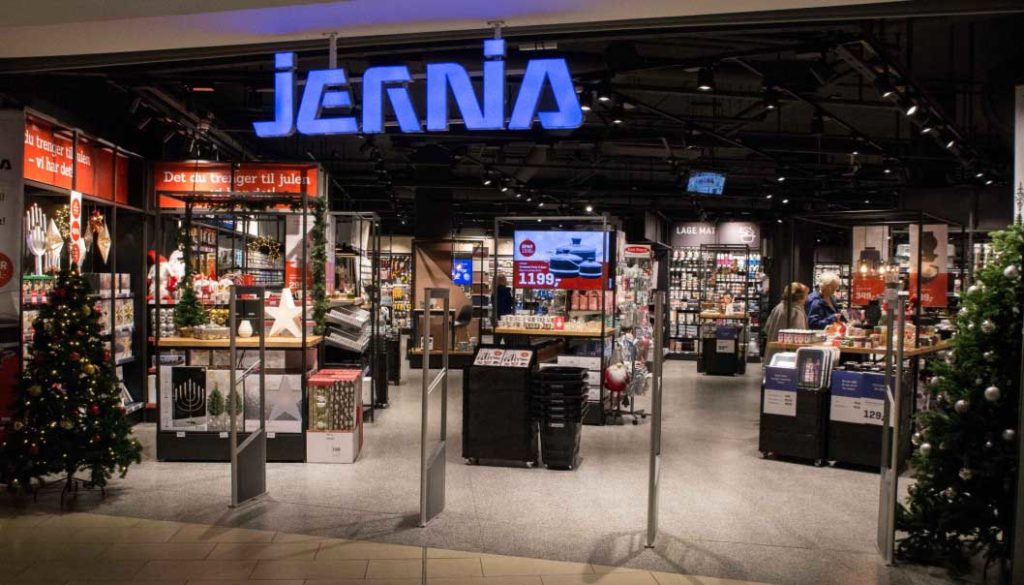
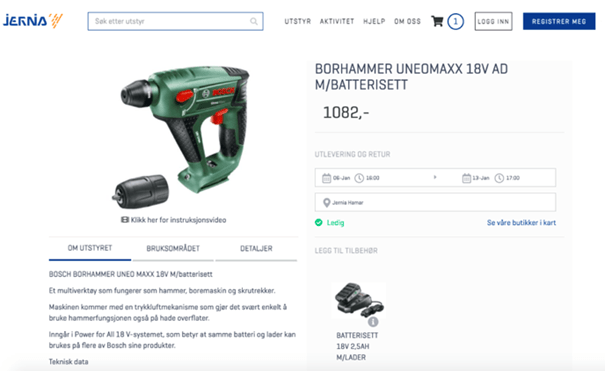
Jernia, one of Norway’s largest hardware and tool retailers, has committed to a services-first strategy. Its leadership expects services — rental, repair, and ongoing customer follow-up — to make up 30–40% of the chain’s revenue by 2025, and the company has rolled out tool rental across all of its stores alongside a workshop repairing lawnmowers and chainsaws.
“We have prepared Jernia to survive a transformation that society as a whole must go through. Consumption must become more sustainable.” — Espen Karlsen, CEO of Jernia
At a much smaller scale, an entrepreneurial Oslo company, Parkdressen, built a rental business around one very specific, very seasonal item: park suits. It’s a reminder that circular business models don’t require a national retail chain — they can start with a single well-chosen product category and grow from there.
Norwegian agricultural cooperative Felleskjøpet has taken a similar approach on a larger scale, using rental infrastructure to extend the working life of equipment across its member network.
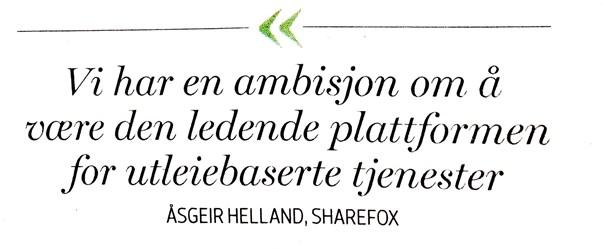
What connects these examples is technology, not just intent. As Sharefox co-founder Åsgeir Helland puts it:
“All the new and established rental services have a clear technology need. We are seeing an opportunity in a megatrend around reuse and the reuse economy.”
That megatrend has grown quickly: Sharefox, which began as the rental platform Tooler in 2016, now supports more than 30 companies — 20 of which joined within the past year alone, spanning sports equipment, tools, vehicles, and children’s clothing subscriptions.
The core principles behind circular design
Whether a business is a national retail chain or a two-person rental startup, circular economy strategy tends to rest on three principles:
- Design for longevity. Products are built — and businesses are structured — around durability, reparability, and reuse rather than planned obsolescence. This is the foundation of a workable rental business model: an asset only pays for itself if it survives many rental cycles.
- Maintain and restore value. Remanufacturing, refurbishment, and high-quality repair keep products and materials economically useful for longer, rather than letting value decay to zero at first use.
- Systems thinking. Circularity isn’t a single department’s job. It touches sourcing, product design, logistics, and customer relationships — which is part of why renting can measurably reduce a product’s lifecycle environmental impact when done at scale.
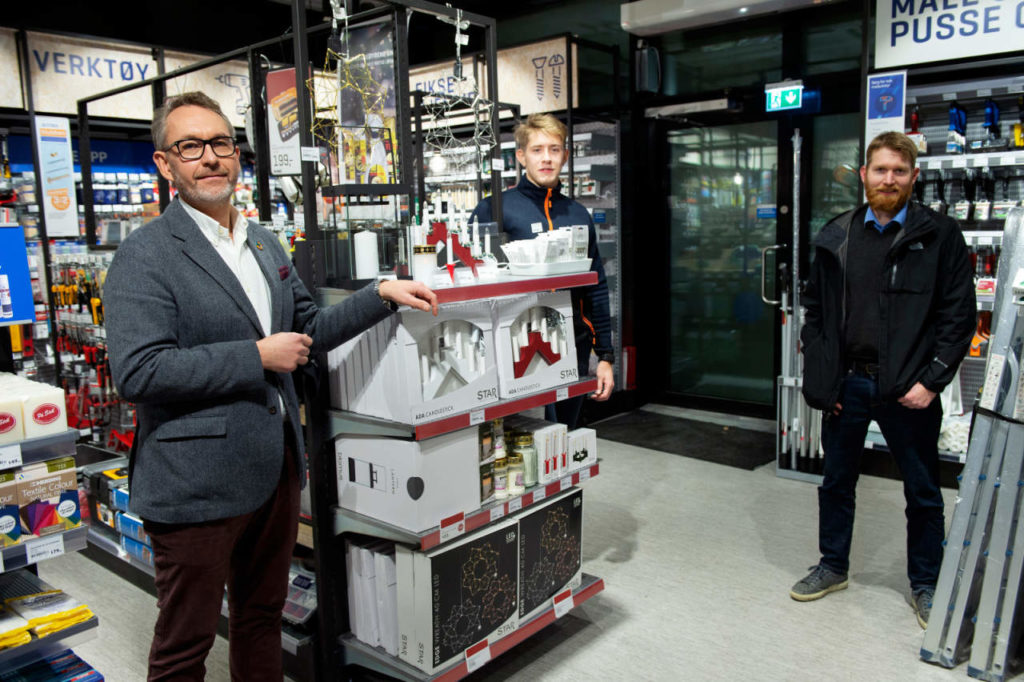
The trio of rental: CEO of Jernia, Espen Karlsen, Store Manager Morten Portaas and Åsgeir Helland at Sharefox.
Where the friction still is
None of this is frictionless. Three barriers show up consistently in the transition:
- Financial. Redesigning products for durability, or setting up reverse logistics for reuse, requires upfront investment that a purely volume-driven business doesn’t need. Jernia’s own leadership has been candid that finding a profitable services mix is still a work in progress.
- Technological. Recycling and material-separation technology hasn’t caught up with demand, particularly for complex, mixed-material products — a gap dump and waste-management rental services are partly designed to work around.
- Behavioural. Decades of “buy it, use it, bin it” habits don’t unwind quickly. Building trust in rental and shared-use models takes sustained customer education, not a single campaign.
Virke’s own read on the trade sector is mixed: some businesses have moved decisively, others haven’t started. The next five years, its CEO argues, will be the ones that separate the two groups permanently.
Circularity isn’t confined to hardware and tools
The same reuse logic is showing up in categories that don’t look like traditional “rental” at all — from beauty-tech subscriptions to children’s clothing. For most retailers, the practical starting point is the same one Jernia and Parkdressen used: pick a product category people already own too much of, and build a system — often a rental and booking platform — that makes borrowing it easier than buying it. It’s a pattern explored in more depth in 4 reasons the circular economy is an untapped growth opportunity for your business.
 All in one platform