Skip to main content


For years, Norway’s specialist retailers had two things going for them that no algorithm could replicate: knowledgeable staff and face-to-face trust. But as shopping moved online, that advantage stopped being enough on its own. Customers now expect the same guidance, convenience, and speed digitally that they used to get by walking into a store.
That gap is exactly where a wave of Norwegian technology companies is stepping in — not by trying to out-build Amazon or Alibaba, but by solving very specific operational problems that global platforms rarely bother with. This article looks at what’s driving retail’s technology shift, why Norwegian tech firms are unusually well positioned to help, and what the practical path forward looks like for rental, mobility, and self-storage operators in particular.
The Global Giants Set the Pace, but They Don’t Solve the Local Problem
It’s hard to talk about retail technology without acknowledging the sheer scale of the companies shaping it. Nvidia, Apple, Microsoft, and Alphabet regularly sit among the largest companies by market capitalization on indexes like the S&P 500, and their continued investment in AI compute, cloud infrastructure, and data centers keeps pushing the ceiling of what’s technically possible. Meanwhile, companies like Amazon, Adobe, and Salesforce have reset consumer expectations around personalization, checkout speed, and customer service — expectations that now apply to every retailer, regardless of size.
That scale is genuinely useful context, but it doesn’t translate directly into a fix for a 12-person rental shop juggling a spreadsheet, a POS system, and a shared inbox. Enterprise AI platforms are built for enterprise problems. The retailers actually losing hours to double-booked equipment, manual invoicing, or a self-storage gate that only the manager knows how to reset need something more specific — and that’s the opening Norwegian tech companies have been quietly filling.
Where Norwegian Tech Companies Actually Move the Needle
Norway’s tech sector doesn’t chase market-cap headlines. Instead, it tends to produce highly focused software built around one operational problem, done well. Sharefox is a good example: a rental commerce platform built specifically for equipment, vehicle, and self-storage operators running B2C and B2B rentals.
Rather than being a general e-commerce tool retrofitted for rentals, Sharefox’s platform is structured around the actual mechanics of the rental business — online booking and reservations, inventory and asset visibility, flexible and subscription pricing, and integrations with accounting, payments, and ID verification providers like Visma, Nets, and Criipto. The goal isn’t to be another point solution bolted onto an already fragmented stack — it’s to be the single system a rental business runs on.
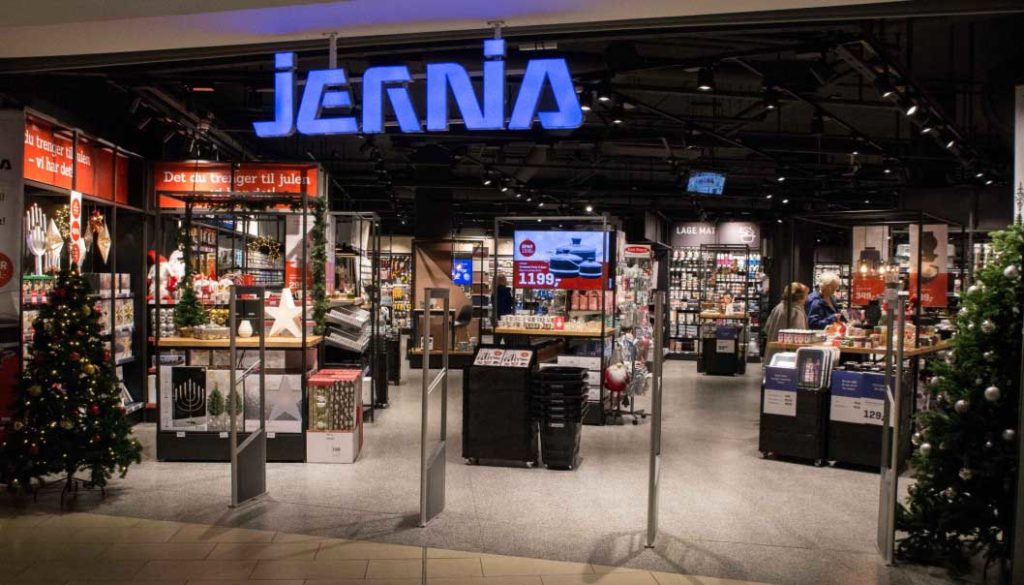
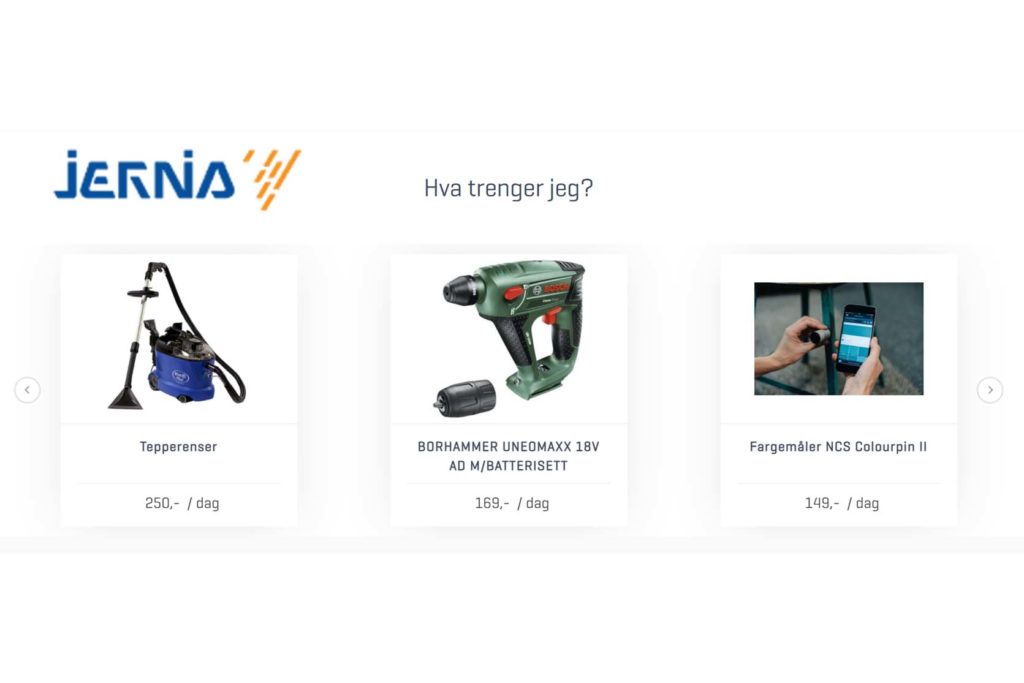
This is a pattern worth noticing in the wider Norwegian tech landscape, too. As reported in Retailmagasinet, retail chains like Jernia have already partnered with Norwegian rental tech to move equipment rental online, and Clas Ohlson has followed a similar path:
“Customer-oriented chains try to solve problems, not sell products. Few chains have taken this more seriously recently than Jernia. They have now started renting out tools online in collaboration with the Norwegian technology company Sharefox. Clas Ohlson and several other chains have also implemented similar measures.” — Ole Martin N. Evensmo, SpringBoard Martech, writing for Retailmagasinet
That’s a meaningful signal. It’s not a hypothetical use case — it’s established Norwegian retailers already routing real transaction volume through Norwegian-built rental infrastructure.
The same specialization shows up across specific rental verticals — vehicle rental and tool and equipment rental each carry their own operational quirks (deposit handling, damage documentation, key logistics), and purpose-built software tends to handle those details more cleanly than a generic booking tool ever will.
Legacy Multi-Tool Setups vs. a Purpose-Built Rental Platform
Most of the “barriers to adoption” retailers describe aren’t really resistance to technology — they’re the accumulated cost of running five disconnected systems instead of one. Here’s what that tends to look like in practice:
| Operational Area | Typical Legacy Setup | Purpose-Built Rental Platform |
|---|---|---|
| Booking & availability | Phone, email, or a shared spreadsheet | Real-time online self-service booking |
| Inventory visibility | Manual counts, no cross-location view | Live inventory and asset tracking across sites |
| Payments & invoicing | Separate POS and accounting software, manual reconciliation | Native payment and accounting integrations |
| Check-in / check-out | Staff-managed, paper waivers, physical key handover | Digital check-in/out with ID verification |
| Pricing | Static price lists, manual seasonal adjustments | Flexible, rule-based pricing and subscriptions |
| Scaling to new locations | New manual setup and staff training each time | Centralized system replicated per site |
The pattern is consistent: legacy setups aren’t necessarily cheaper, they’re just familiar. The actual cost shows up later, in staff hours, in busy-season errors, and in the ceiling it puts on how many locations one team can realistically run.
The Real Barriers Aren’t Really About the Technology
Ask a mobility manager or a self-storage operator what’s actually slowing them down, and it’s rarely “we don’t believe in software.” It’s more often:
- Fragmentation — separate systems for CRM, booking, and finance that don’t talk to each other
- Manual processes — physical key handling, paper contracts, and reconciling payments by hand
- Visibility gaps — no real-time read on bookings, damages, or availability across locations
- Change resistance — staff who are confident with the current (if inefficient) process and wary of learning a new one
- Scaling friction — every new site meaning a new manual setup rather than a repeatable one
None of these are exotic problems. They’re the same operational friction that better process design and the right integrations tend to solve — which is precisely the space specialist Norwegian rental-tech companies have chosen to compete in, rather than trying to out-innovate hyperscale AI labs.
What a Practical Fix Actually Looks Like
For most rental and storage operators, the fix isn’t “adopt AI” as an abstract goal — it’s collapsing several disconnected tools into one workflow:
- Rental and mobility operators: move booking, inventory, and invoicing into a single system, automate check-in/out, and let customers self-serve rather than routing every transaction through a staff member.
- Self-storage and property managers: pair online booking and payment with automated access and lock control, so new units and even new sites can be added without a proportional increase in front-desk staff.
- Everyone in between: use ROI modelling before switching systems, since the business case for consolidation is usually easier to make with real numbers than with a general pitch about “digital transformation.”
Retailers weighing their options against a broader market are also increasingly comparing dedicated platforms directly — independent comparisons of equipment rental software and deep dives into self-storage automation are a reasonable starting point before committing to any single vendor, including this one. If you’d rather see the mechanics firsthand, booking a walkthrough tends to answer more practical questions than a features page can.
Where This Goes From Here
The broader technology narrative — more generative AI, continued cloud investment, more capable mobile experiences — will keep being written by the largest companies in the world. That part of the story isn’t going to be led from Norway, and it doesn’t need to be.
What’s more likely is a continuation of the current pattern: Norwegian tech companies picking specific, underserved operational problems inside retail and rental commerce, and building software that’s genuinely good at solving just that. It’s a narrower ambition than “disrupting retail,” but it’s also a far more achievable one — and, based on how many established retailers have already adopted these tools, apparently a fairly effective one.

 All in one platform