Skip to main content


Retail is being squeezed from two directions at once. E-commerce keeps taking share from physical stores, while customers increasingly want access to products rather than ownership of them. For retailers willing to adapt, that second shift is an opening rather than a threat — and rental-based business models are one of the clearest ways to take advantage of it.
The e-commerce pressure retail can’t ignore
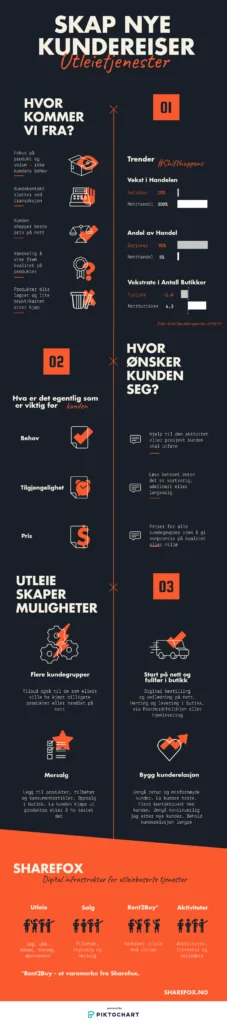
Banks, trade associations, and business media in Norway — DNB, e24, Danske Bank, Virke, and Dagens Næringsliv among them — have spent the last few years documenting the same trend: e-commerce is growing faster than retail overall, and physical stores are closing as a result. Even value chains like Clas Ohlson have shut stores in Germany and the UK while shifting sales onto marketplaces such as Amazon.
The numbers tell a consistent story. In the United States, online shopping has taken roughly 5% of total retail spend, and physical-store growth has slowed more sharply than it did during the 2008 financial crisis. A handful of large platforms — Amazon foremost among them — now account for around half of all online sales, meaning a single company can represent a meaningful share of an entire country’s retail trade.
Norway is following the same trajectory. By 2017, 75% of Norwegians had shopped online, and e-commerce was growing roughly three times faster than retail as a whole, according to Virke. Sharing-economy platforms such as Airbnb and Uber have shown how quickly access-based models can scale, and investors have taken notice: Alibaba founder Jack Ma backed the US clothing-rental company Rent the Runway at an $800 million valuation, a signal that rental is not a niche experiment but a serious asset class.
“With digitization, competitors from Sweden, the US, or China are just a click away — so retailers with a physical store have to invest more in the actual customer experience, and build the digital meeting places that bring customers in.” — paraphrased from commentary by Harald Andersen, Director of Virke Handel, in a DNB blog post on retail innovation
That combination — fewer reasons to visit a store, more reasons to shop from a phone — is exactly why rental deserves a serious look. It doesn’t ask retailers to compete with marketplaces on price or convenience; it changes what’s being offered in the first place.
Why rental fits retail’s real opportunity
Rental is a service that meets the customer’s actual need — completing an activity or a project — rather than selling them a product they may only use once or twice. It typically applies best to higher-quality items in a higher price bracket, and it does two things for a retailer at once: it opens a supplementary revenue stream, and it lets the brand communicate a genuine environmental benefit rather than a marketing claim.
That matters for several distinct customer situations:
- Short-term needs. A customer who only needs a product once doesn’t have to buy a lower-quality version just to save money — they can rent the right one, and the retailer can sell them accessories alongside it.
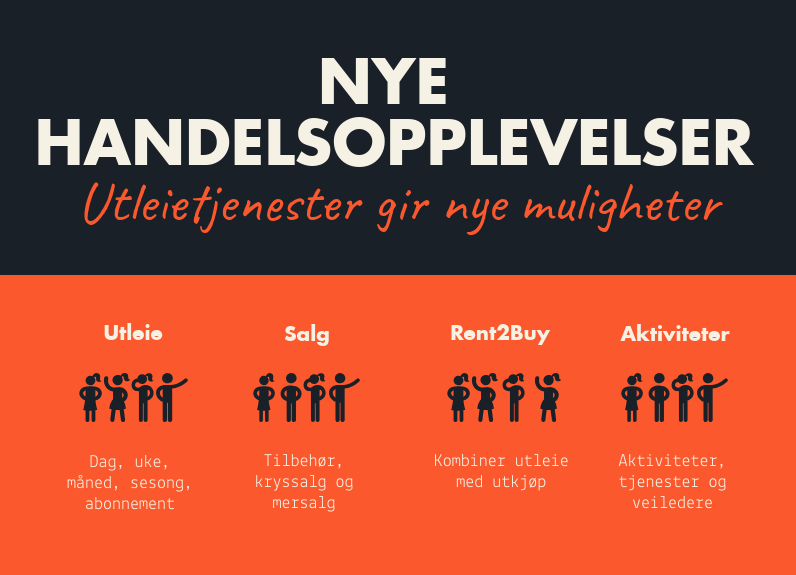
- Uncertain buyers. Someone who doesn’t know which product or price range is right for them can rent first and buy later once they’ve tested it. Sharefox refers to this pattern as Rent2Buy — using rental as a low-risk way to guide the customer toward the right eventual purchase.
- Long-term but flexible needs. Customers with an ongoing need — from seasonal use to full subscriptions — still benefit from renting rather than owning, particularly as urbanisation leaves people with less storage space at home.
- Unsold or returned inventory. Retailers often struggle to get returned or overstocked goods back into productive use. A rental channel gives that inventory a second life instead of writing it off.
The car industry has already shown what this looks like at scale. Volvo’s subscription service removes the maintenance overhead usually bundled with ownership, and Norwegian dealers and banks have built comparable subscription products of their own — a model retailers in other categories, from clothing to outdoor gear, can borrow directly. Sharefox’s guide to launching a car subscription business walks through how that specific model is built in practice.
Rental-enabled retail vs. traditional retail
The easiest way to see rental’s advantage is side by side with the traditional retail model it complements — not replaces.
| Feature | Free / Entry-Level | General Inventory (e.g. Zoho) | Industry-Specific Rental Platform (e.g. Sharefox) |
|---|---|---|---|
| Basic stock tracking | Yes | Yes | Yes |
| Multi-location inventory | No / limited | Yes | Yes |
| Real-time availability updates | No | Partial | Yes |
| Recurring booking / rental calendar | No | No | Yes |
| Self-service check-in/check-out | No | No | Yes |
| Subscription billing | No | Limited | Yes |
| Accounting & ID verification integrations | No | Partial | Yes |
| Industry-specific pricing & automation | No | No | Yes |
| Best suited for | Startups testing the waters | General retail/wholesale | Equipment, vehicle, tool, self-storage rental operators |
The pattern is consistent: general-purpose tools cover basic stock tracking well enough, but the mechanics unique to rental — calendars, self-service check-in/out, deposits, recurring billing — only show up once the platform is built for the rental industry specifically.
Making rental operational, not just theoretical
The idea of rental is straightforward. Running it well — bookings, availability, contracts, deposits, payments, returns — is where most retailers get stuck if they try to bolt it onto a standard e-commerce setup. This is the gap that dedicated rental commerce platforms exist to close.
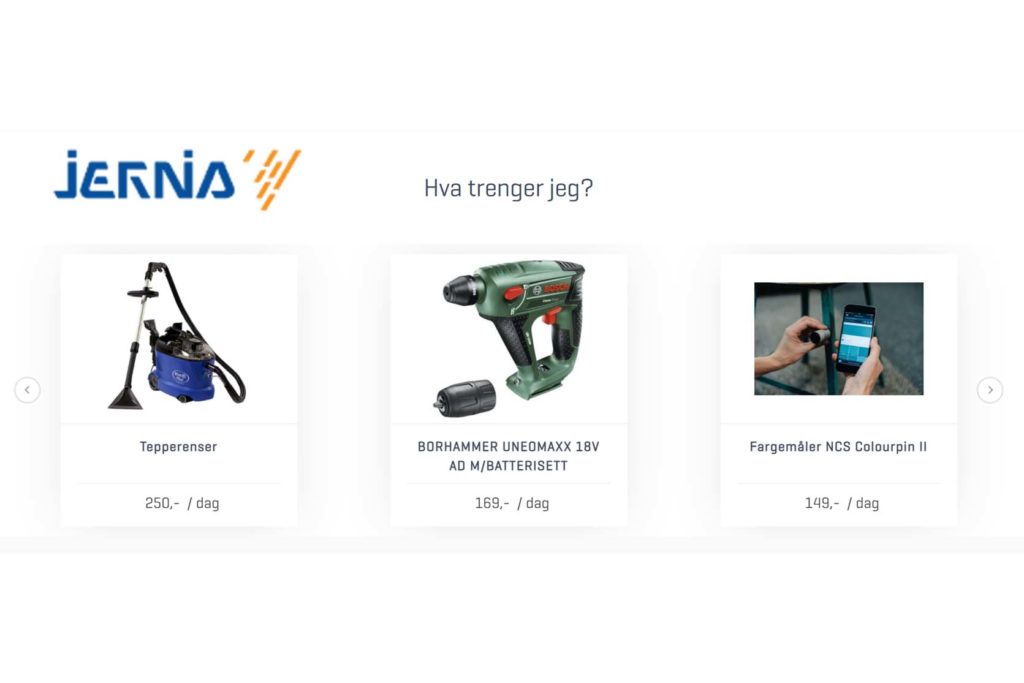
Sharefox is one example: a platform built specifically so retailers can launch rental or subscription services, blend them with existing sales, and manage the whole customer journey — booking, inventory, contracts, and payment — from one system, whether the customer is a consumer or a business account. Retail-specific deployments are covered under Sharefox’s retail & enterprise rental solutions, and businesses running recurring or subscription-style offers can use the dedicated subscription rental software module rather than trying to adapt tools that were built purely for one-off sales.
Crucially, the customer journey doesn’t have to live entirely online. It should combine a strong digital front end — browsing, booking, paying — with the physical pickup or return experience that only a store can offer. That combination is precisely what pure e-commerce competitors can’t easily copy, and it’s the retail industry’s best answer to the pressure described above.

 All in one platform