Skip to main content


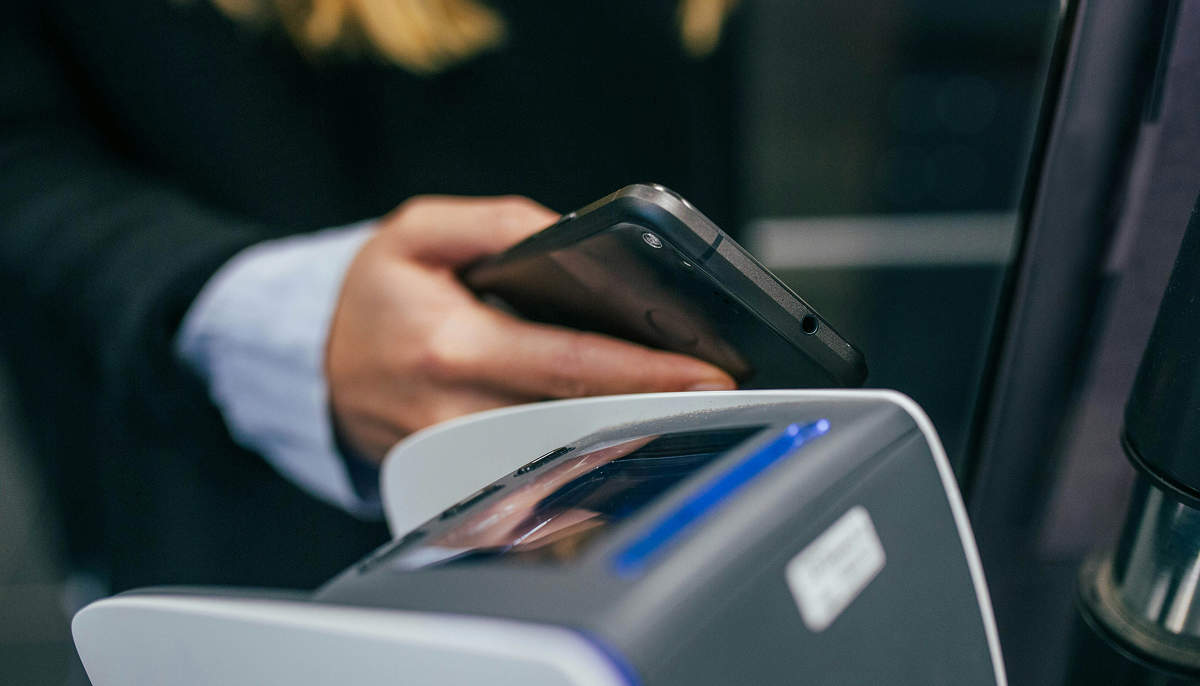
If you run a rental business, you already know the real cost of “where is it?” — a missing drill, an unaccounted-for excavator attachment, a storage unit nobody remembers unlocking. Radio Frequency Identification (RFID) is one of the few technologies that solves that problem at the source, by giving every item a digital identity a reader can pick up without anyone touching a scanner to a barcode.
This guide breaks down what RFID tags are, how they actually work, the real differences between passive, active and UHF RFID, and how the technology fits into a modern rental management system.
What Is an RFID Tag?
An RFID tag is a small electronic label made up of a microchip and an antenna, usually sealed inside an inlay, sticker, hard case, or hang tag. It stores a unique identifier — and sometimes additional data — and transmits that information over radio waves to an RFID reader, without needing a direct line of sight the way a barcode does.
That’s the core practical difference from barcoding: a warehouse worker with a barcode scanner has to aim it at each label one at a time. An RFID reader can pick up many tags at once, through cardboard, plastic totes, or a stack of equipment cases. If your rental operation already tracks stock manually or with barcodes, our guide on barcode tracking in rental management is a useful comparison point before deciding whether to move to RFID.
How RFID Tags Work
Every RFID tag has two jobs: receive a signal from a reader, and reply with its stored data. What happens in between depends on the tag type, but the sequence is broadly the same:
- The RFID reader emits radio waves that create an electromagnetic field.
- A tag entering that field either draws power from it (passive tags) or uses its own battery to respond (active tags).
- The tag’s chip sends its identifier and any stored data back to the reader.
- The reader’s software matches that data against a record — in a rental context, that record lives in your rental inventory management system.
Read range — the distance at which a tag can be reliably detected — is the main practical variable. It depends on tag type, reader power, frequency band, and physical obstructions like metal or water, both of which absorb radio signals and can shorten range significantly.
Types of RFID Tags: Passive, Active and UHF
Not all RFID is the same, and picking the wrong type is the most common reason a rental company’s RFID rollout underdelivers. There are three distinctions worth understanding before you buy anything.
Passive RFID tags have no internal power source. They draw energy from the reader’s radio waves, which makes them cheaper, smaller, and effectively maintenance-free — but with a comparatively short read range.
Active RFID tags carry their own battery, which lets them broadcast continuously and be read from much greater distances than passive tags, and often support onboard sensors (temperature, shock, location). The trade-off is higher unit cost and a battery that eventually needs replacing.
UHF RFID refers to the Ultra-High Frequency band rather than a power source. Most passive tags used in retail and rental inventory are UHF, because that band supports fast bulk reads — regulators such as the U.S. Federal Communications Commission and equivalent bodies elsewhere set the specific frequency allocations and power limits that make this possible in each region (see sources below).
| Passive RFID | Active RFID | UHF (typically passive) | |
|---|---|---|---|
| Power source | Reader’s radio waves | Onboard battery | Reader’s radio waves (usually) |
| Typical read range | Short range | Long range | Moderate range, multiple tags at once |
| Unit cost | Low | Higher | Low |
| Maintenance | Virtually none | Battery replacement needed | Virtually none |
| Best fit for rental | Tools, small equipment, apparel | High-value machinery, vehicles | Bulk inventory counts, warehouse stock |
Where RFID Fits in a Rental Management System
RFID isn’t a standalone gadget — it earns its value once it’s feeding data into the systems you already run your business on.
Asset tracking
Attaching a tag to each rental item gives you a live answer to “where is this, and is it out on rent or sitting in the warehouse?” That matters most for operators managing construction and heavy equipment rentals, where a single missing attachment or generator can stall a job site, and for anyone running high-volume tool rental where many small items move in and out daily. Our broader guide to asset tracking for rental businesses covers the tracking methods beyond RFID as well.
Typical Rental Application
Typical Rental Application
Inventory management
UHF RFID lets staff scan a shelf, cage, or entire storeroom in seconds instead of counting items one by one. Paired with a rental booking system, scanned check-outs and check-ins update availability automatically, so the booking calendar reflects what’s physically on the shelf — not what a spreadsheet says should be there.
Access control
RFID cards and fobs are also a practical way to automate entry, particularly for self-storage operators who want to offer 24/7 unit access without staffing a front desk. The reader simply logs every access event against the tenant’s account.
“Switching from manual clipboard counts to RFID-tagged inventory cut our end-of-day reconciliation time from hours down to minutes.” — Fleet operations manager, mid-sized construction equipment rental company
Benefits and Trade-offs of RFID for Rental Businesses
Efficiency and accuracy. Bulk, non-line-of-sight scanning removes most of the manual counting and human error that comes with clipboard or barcode-only processes.
Cost. Tags and readers are an upfront investment, and it isn’t always the right one — a small tool rental shop may get more value from barcodes first, while a multi-site equipment fleet is where UHF RFID tends to pay for itself through reduced loss and faster turnarounds.
Customer experience. Faster check-in/check-out and reliable 24/7 self-service access are the two most tangible improvements customers actually notice.
What RFID doesn’t solve. Metal and liquids can interfere with UHF signals, tags can be removed or damaged on rough-use equipment, and a rollout only pays off if the reader data actually connects to your inventory and booking system rather than sitting in a separate app.
Getting Started: A Practical Approach
Most rental operators are better served starting narrow than starting big:
- Pick one item category (tools, or a single equipment class) rather than tagging the entire fleet on day one.
- Choose passive UHF tags unless you specifically need the longer range or sensor data active tags provide.
- Confirm your reader integrates with — or exports data into — your existing inventory management and booking workflow.
- Measure the before/after on reconciliation time and lost-item rate before expanding to more categories.

 All in one platform