Skip to main content


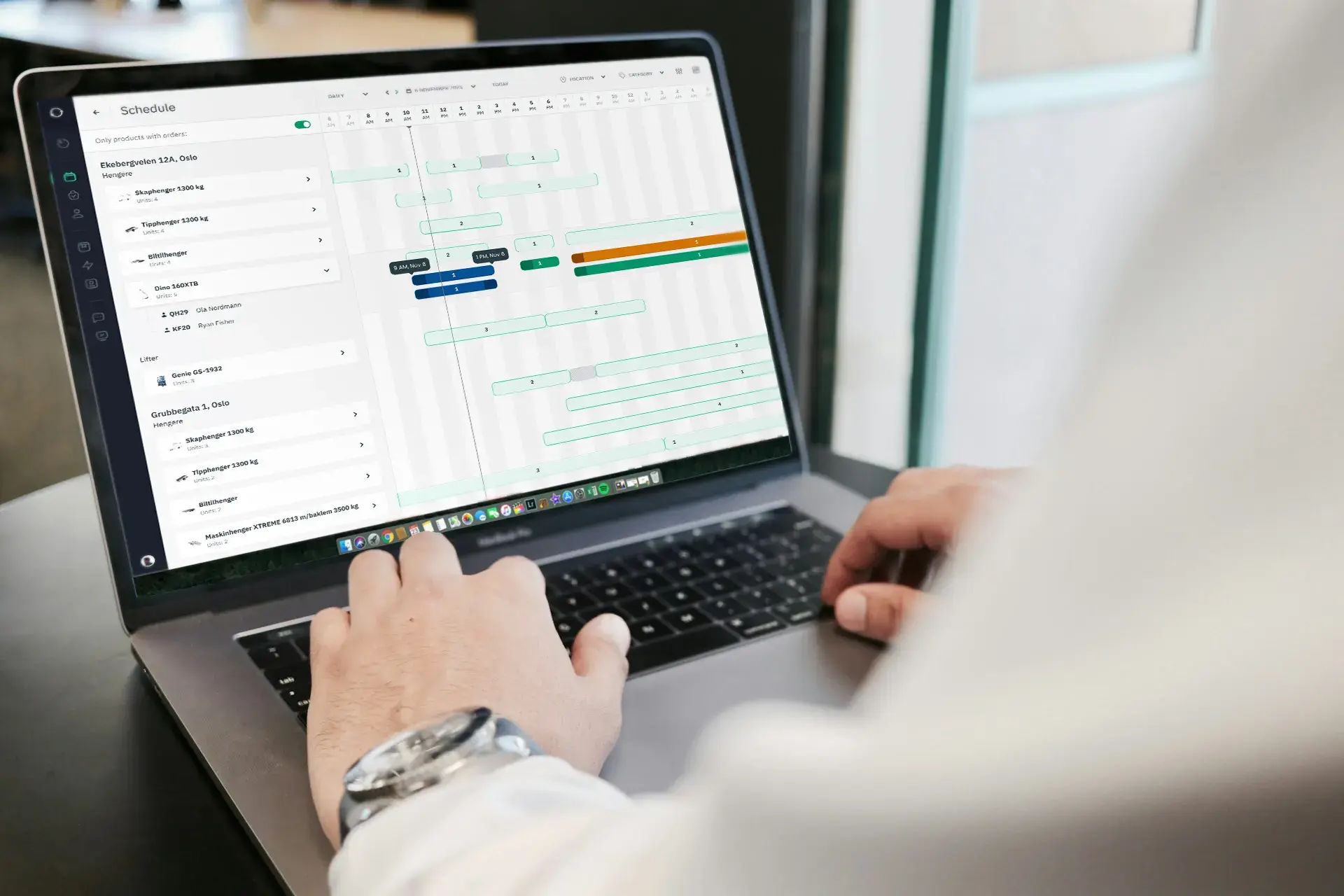
Ask any rental operator what keeps them up at night during peak season, and “where’s that excavator?” or “did anyone log the return on unit #214?” comes up fast. Machinery and tool rental businesses live and die by one number most owners rarely track explicitly: asset utilization. Every hour a piece of equipment sits idle because nobody knew it was available is an hour of revenue that’s gone for good.
This guide walks through what inventory management actually means for a rental business, the systems and techniques that work in practice, and how logistics — the physical movement, maintenance, and handoff of equipment — ties directly into your bottom line. We’ll also look at where a unified rental platform like equipment rental software fits into the picture, and where manual processes still hold businesses back.
What Is Inventory Management in Equipment Rental?
Inventory management, in a rental context, is the ongoing process of tracking what equipment you own, where it is, what condition it’s in, and whether it’s available to rent right now. Unlike retail inventory — which is sold once and gone — rental inventory is a revolving asset: the same drill or dumpster might go out twenty times a year, and each cycle needs to be tracked for availability, damage, and maintenance history.
For tool rental businesses and construction machinery rental operators in particular, this means managing hundreds or thousands of individual serialized or bulk-tracked items across one or more depots, often with multiple staff members checking items in and out throughout the day.
Why It Matters
Poor inventory visibility doesn’t just cause customer-service headaches — it has a direct, measurable cost. Common symptoms include:
- Double-booking the same machine for two customers
- Equipment sitting in a yard, “lost” in the system, while demand goes unmet
- Delayed maintenance because nobody flagged a returned item as damaged
- Manual spreadsheet errors during high season, when volume spikes
Each of these erodes either revenue (idle assets, missed bookings) or trust (damaged equipment reaching the next customer). Solving them is less about buying more equipment and more about knowing, in real time, what you already have.

Manual vs. Automated Inventory Systems: A Direct Comparison
Most rental businesses start with spreadsheets, and there’s nothing wrong with that at a small scale. The problems tend to surface as fleet size, locations, or transaction volume grow. Here’s how the two approaches compare on the factors that matter most:
| Factor | Manual (Spreadsheets / Paper) | Automated (Rental Management Software) |
|---|---|---|
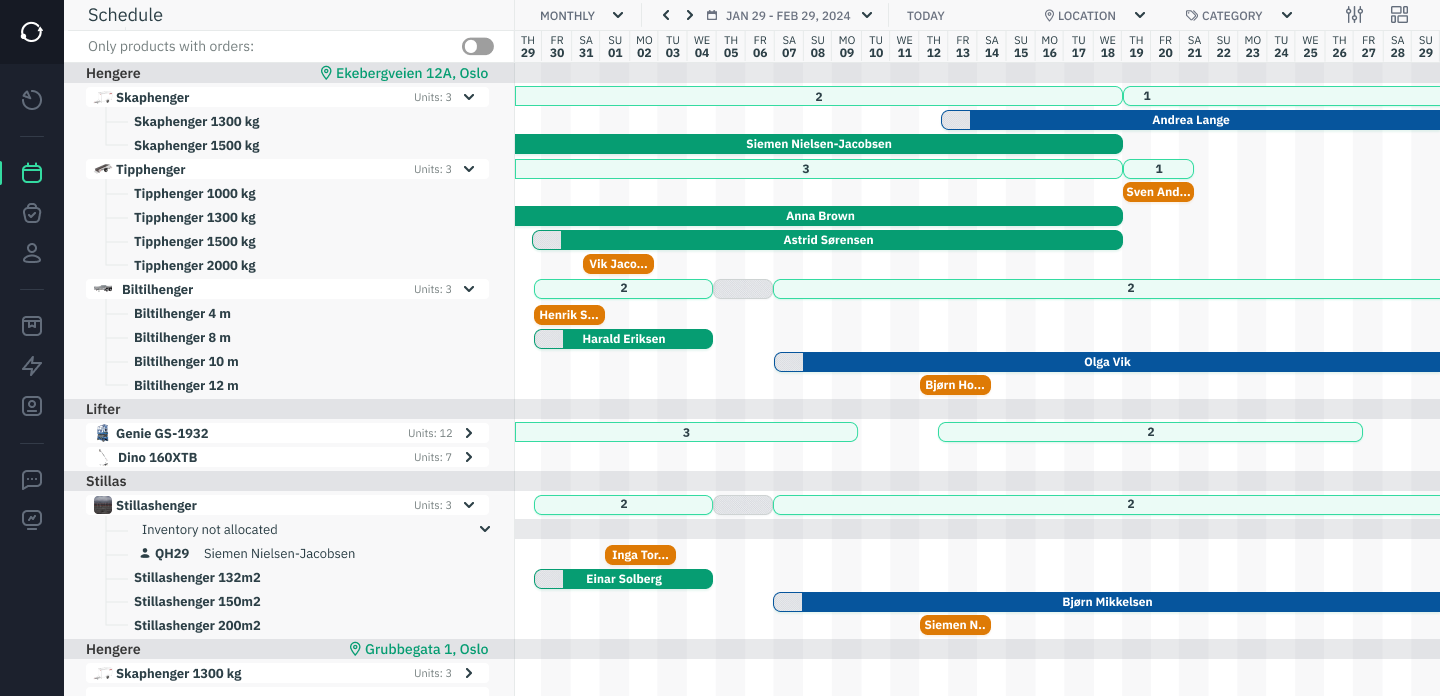
| Real-time availability | Updated manually, often lagging by hours | Updates instantly across all users and locations |
| Risk of double-booking | High, especially during busy periods | Low — the system blocks conflicting bookings |
| Damage & maintenance tracking | Dependent on staff memory and manual notes | Logged at check-in/check-out, tied to asset history |
| Multi-location visibility | Requires manual reconciliation between sites | Centralized view across all depots |
| Staff time required | High — repetitive data entry | Low — self-service booking and automated updates |
| Scalability | Breaks down as fleet size grows | Scales with the business |
None of this means spreadsheets are always wrong for every business stage — but the tipping point usually arrives sooner than operators expect, often right around the first season where growth outpaces the team’s ability to track things manually.
Types of Inventory in a Rental Business
Rental inventory isn’t one uniform category. It typically breaks down into:
- Heavy machinery — excavators, skid steers, generators, lifts
- Hand and power tools — drills, saws, compactors, smaller equipment often rented in higher volume
- Vehicles and trailers — used both as rental products and as part of your own delivery logistics
- Consumables and accessories — blades, fuel, safety gear bundled with rentals
Each category has different tracking needs. High-value, serialized machinery usually warrants individual asset IDs and full maintenance logs, while smaller tools may be tracked in bulk quantities by SKU. A platform built for equipment rental inventory management should support both models without forcing you into a one-size-fits-all structure.
Core Inventory Management Techniques for Rental Operators
ABC Analysis
ABC analysis segments inventory by value and importance:
- A-items — high-value, high-demand machinery that needs tight control and frequent condition checks
- B-items — moderate-value equipment with steady but less critical demand
- C-items — low-value, high-volume tools where loose tracking has a smaller financial impact
Applying this to a rental fleet means your excavators and generators (A-items) get serialized tracking and scheduled inspections, while smaller hand tools (C-items) might be tracked in batches.
Just-in-Time (JIT) Principles
True JIT — ordering stock only as needed — doesn’t map perfectly onto rental, since you’re renting existing assets rather than manufacturing goods. But the underlying principle still applies: minimizing idle time between a return and the next rental. This is where turnaround speed matters. Tightening the gap between “equipment comes back” and “equipment is inspected, cleaned, and ready to book again” functions as a rental-specific version of JIT, and it depends heavily on having a reliable maintenance schedule in place.
Consignment Inventory
Some rental operators expand their catalog by carrying equipment owned by a third party, paying the owner only when it’s rented out. This lets a business widen its range of specialized machinery — say, a niche demolition tool — without the upfront capital cost, while still needing the same tracking rigor as owned assets.
Real-Time Tracking: The Backbone of Modern Rental Inventory
Real-time tracking is what separates a modern rental operation from a reactive one. Instead of finding out an item is missing when a customer calls to complain, real-time systems flag discrepancies immediately. Common tracking methods include:
- Barcode tracking, which is inexpensive and works well for high-volume tool inventories
- RFID tagging, useful for automated check-in/check-out without manual scanning of each item
- GPS tracking for high-value or mobile equipment, particularly vehicles and towed machinery
Layering these onto a perpetual inventory system — one that updates records continuously rather than through periodic manual counts — gives operators a live, accurate picture of the fleet at any moment.
“In rental, the equipment doesn’t generate revenue while it’s sitting in the yard — it generates revenue while it’s out the door. The businesses that grow fastest are usually the ones that shrink the gap between ‘returned’ and ‘rentable again’ to almost nothing.”
— Common operational insight echoed across rental-industry benchmarking reports (see sources below)
Logistics: Moving, Maintaining, and Turning Around Equipment
Inventory management and logistics are often discussed separately, but for rental businesses they’re deeply linked. Logistics covers everything that happens to a piece of equipment between bookings: transport to and from the customer, inspection, cleaning or repair, and restocking to the right location. Weak logistics undermines even a well-tracked inventory system — you can know exactly where a broken generator is and still lose the booking if it isn’t repaired in time.
Good order management ties these pieces together: a booking triggers not just a calendar block, but a logistics workflow — delivery scheduling, driver assignment, and a post-return inspection checklist — so nothing falls through the cracks during busy weeks.
Multi-Location and Fleet Considerations
Operators running more than one depot face an added layer of complexity: knowing not just if an asset is available, but where. Centralized visibility across locations, paired with fleet management best practices, helps route the right equipment to the right site instead of leaving one yard overstocked while another turns down bookings.
Benefits of Getting Inventory Management Right
Cost Reduction and Efficiency
Fewer manual errors, less time spent reconciling spreadsheets, and better visibility into which assets are underused all translate into direct savings. Operators who tighten up inventory processes typically see this show up first in reduced idle time and lower administrative overhead, rather than in dramatic one-time cost cuts.
Improved Customer Experience
Customers notice when equipment shows up on time, in good condition, and matches what was booked. Reliable inventory data is what makes that consistency possible — and it’s what turns a one-time renter into a repeat customer.
Better Decision-Making
Clean, real-time inventory data also feeds into bigger decisions: which equipment categories to expand, which underperforming assets to sell off, and when to invest in new machinery rather than repair aging stock.
Common Challenges in Rental Inventory and Logistics
Even well-run operations run into recurring friction points:
- Fragmented tools — separate systems for booking, invoicing, and inventory that don’t talk to each other, creating double data entry
- Seasonal spikes — demand surges that expose the weak points in manual processes
- Staff adoption — new software only works if the team on the yard floor actually uses it, which means simplicity matters as much as feature depth
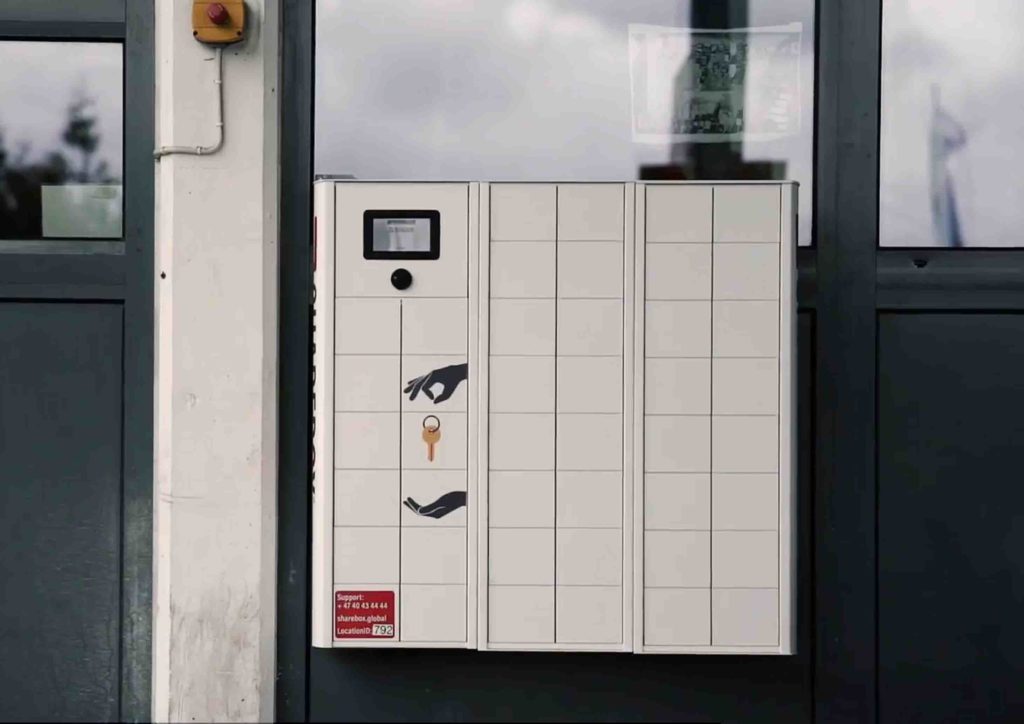
- Multi-site coordination — manual key handling and inconsistent processes across locations
Best Practices for Rental Inventory Management
- Move to a perpetual inventory system rather than periodic manual counts, so records reflect reality at all times.
- Segment inventory with ABC analysis so your highest-value machinery gets the tightest oversight.
- Standardize your turnaround process — inspection, cleaning, and restocking checklists reduce the gap between return and next rental.
- Centralize data across locations if you run more than one depot, rather than reconciling spreadsheets after the fact.
- Track condition history per asset, not just availability, so maintenance decisions are based on data rather than guesswork.
Future Trends in Rental Inventory Management
Several shifts are already reshaping how rental operators manage inventory:
- IoT-enabled equipment that reports usage hours and location automatically
- Predictive maintenance, using usage data to flag service needs before a breakdown happens mid-rental
- Demand forecasting, helping operators plan fleet size and category mix around seasonal patterns rather than reacting to them
None of these replace the fundamentals — accurate tracking, clear condition records, fast turnaround — but they do make it easier to act on the data once you have it.

 All in one platform