Skip to main content


Trailer rentals have become an indispensable asset for businesses navigating the complexities of modern logistics and supply chain management. This article looks at the most sought-after trailer types, the demand driving them, and the operational practices that keep rented equipment safe, efficient, and profitable to run — whether you’re renting a trailer for a project or running the rental fleet yourself.
Overview of Trailer Rental
Definition of Trailer Rental
Trailer rental is the temporary lease of a trailer — enclosed, dump, flatbed, or utility — from a specialized provider, giving a business access to transportation equipment without the long-term commitment of ownership. On the operator side, platforms like Sharefox’s rental software let rental businesses manage that entire process, from listing inventory to collecting payment, across both B2C and B2B customers. A modern rental management system typically covers:
- Seamless self-service booking
- Flexible pricing models
- Full ecosystem integrations with payments, accounting, and fleet tracking tools
Why Rented Trailers Matter in Logistics
Renting trailers gives logistics teams flexibility and cost control that a fixed fleet can’t match. Rather than investing in a diverse trailer fleet that sits idle for parts of the year, companies can bring in the specific trailer model they need, exactly when and where they need it. That keeps the operational budget lean and lets a business scale capacity up or down with demand — without carrying the maintenance burden of assets that spend most of their life parked.
Market Demand for Trailer Rentals
Demand for trailer rentals has stayed consistently strong, driven by industries that need flexible hauling capacity without the up-front cost of a new trailer, including:
- Construction
- Agriculture
- Retail and event logistics
Demand is further sharpened by specialized needs — refrigerated units or heavy-duty flatbeds, for example — that only come up for specific projects or seasonal peaks, which is exactly the kind of intermittent need rental is built for.
Types of Trailers Available for Rent
Enclosed Trailers
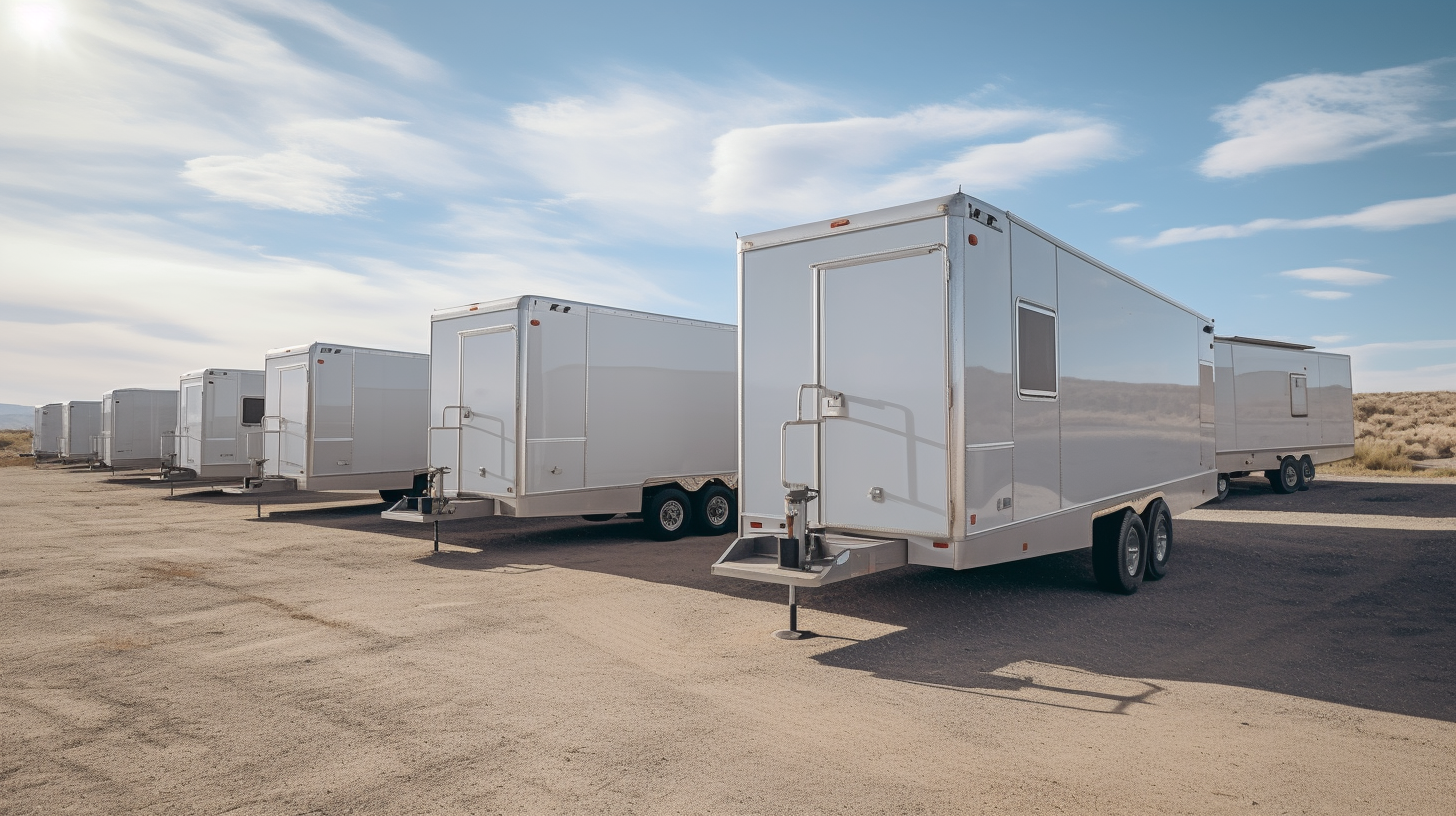
Enclosed trailers are a popular choice for businesses that need to move goods securely and keep them protected from weather and theft. Available from compact utility sizes up to large cargo units, they’re a reliable option for hauling sensitive equipment or valuable inventory — which is why they stay in steady demand across event organizers, delivery services, and retailers alike.
Dump Trailers
Dump trailers are heavy-duty equipment built for construction, landscaping, and agricultural work that involves hauling and unloading bulk material. Their hydraulic lift systems let crews dump dirt, gravel, sand, or debris quickly, which speeds up job-site turnaround. Renting rather than owning gives a business the lifting capacity it needs for demanding jobs without tying up capital in a trailer that may sit unused for months — operators running a fleet of these can track utilization through dumpster and dump-trailer rental software built for exactly this workflow, and our guide on renting dump trailers covers what to check before you book one.
Flatbed Trailers
Flatbed trailers are the go-to option for oversized or unusually shaped cargo that won’t fit inside an enclosed box. The open-deck design makes them ideal for machinery, construction materials, vehicles, and other bulky loads that can be strapped down securely. Because loading and unloading can happen from any angle — often with ramps — flatbeds remain indispensable for contractors and businesses moving heavy freight, and they’re a mainstay of construction rental fleets for exactly that reason.
Utility Trailers and Their Applications
Suitability for Different Operations
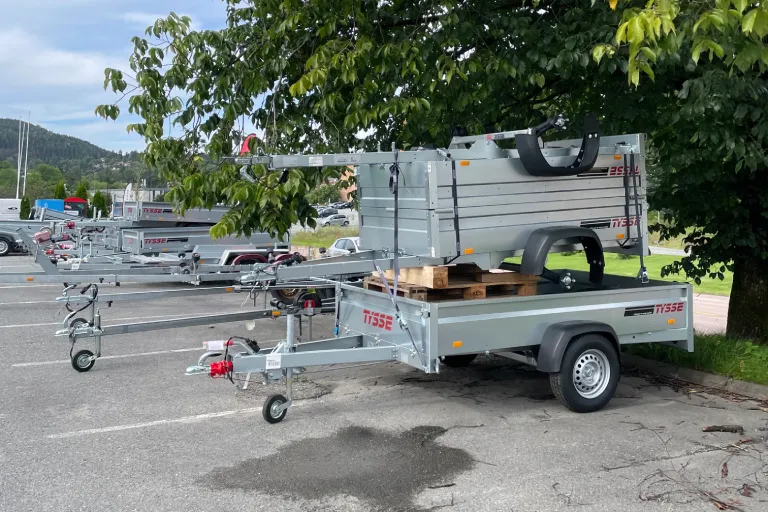
Utility trailers are the generalists of the category. They’re rented for hauling landscaping equipment, construction materials, recreational vehicles, and everyday cargo, and their open design makes loading and unloading straightforward across a wide range of sizes and shapes. For businesses that don’t want to commit to an entire specialized fleet, a utility trailer is often the flexible middle ground.
Capacity Considerations
Getting capacity right matters more than most renters expect. Gross Vehicle Weight Rating (GVWR), axle configuration, and deck size all determine how much a trailer can safely carry, and matching that to your actual cargo weight and dimensions is what keeps a job both safe and compliant. Some rental businesses now offer built-in ROI and cost calculators so renters can weigh capacity against rental cost before committing to a booking — worth checking before you assume the biggest trailer is the safest choice.
Mobile Utilization of Utility Trailers
Utility trailers increasingly do more than haul — they double as mobile workspaces, on-site equipment storage, or even portable concession setups. Their sturdy build makes them easy to relocate for projects that need frequent movement, cutting down the need for permanent infrastructure. Our post on getting more out of a rented dump trailer walks through several of these secondary uses in more detail.
Market Segments for Trailer Rentals
Construction and Industrial Segments
Construction and industrial work makes up a large share of trailer rental demand, since these sectors rely on specialized trailer types to move heavy machinery, materials, and equipment. Businesses in this segment rent rather than buy for two main reasons:
- To match capacity to project-specific demands without overcommitting capital
- To avoid the maintenance overhead of owning a diverse fleet
Short-term rental agreements let contractors bring in the exact trailer model needed for each job — our breakdown of fleet management best practices for equipment rental covers how rental operators keep that kind of rotating fleet running efficiently.
Niche Markets in Trailer Rental
Niche demand is growing fast, driven by operators who use specialized trailers to serve unique customer needs. Rental businesses — from small independents to mid-market companies — increasingly want a single digital system to automate booking, inventory, and invoicing, which cuts manual errors and lifts asset utilization. Mobility managers rely on similar booking and digital-key tooling for courtesy vehicles and fleets, and self-storage and property managers are folding trailer access into subscription-style, 24/7 self-service models. If you’re deciding which trailer types are worth stocking first, our comparison of the most-rented trailers for a rental business is a useful starting point.
Profitability of Trailer Rental Businesses
“In rental, the trailer that makes you money isn’t the one that’s cheapest to buy — it’s the one that’s booked the most weeks of the year.” — a common line among rental fleet managers when explaining why diverse, well-utilized inventory beats a single “flagship” trailer.
Profitability in trailer rental tracks closely with inventory diversity, competitive pricing, and utilization rate. A mix of utility, dump, and enclosed trailers widens the customer base a rental business can serve, while efficient booking systems and well-timed maintenance schedules push revenue per asset higher. Companies that also track how their offering stacks up against established trailer rental providers tend to spot pricing and inventory gaps faster.
Factors Influencing Trailer Rental Demand
Trailer Type Preferences
Preferences shift with the job: utility trailers for general hauling, dump trailers for construction and landscaping, enclosed trailers for secure cargo. Rental businesses that track these patterns can keep the most requested types in stock and available, rather than guessing at demand — a decision that also comes up when weighing the pros and cons of renting versus selling trailers as part of a broader fleet strategy.
Load Capacity Requirements
Load capacity is one of the first things a customer should check, not the last. Matching GVWR, axle configuration, and overall size to the cargo prevents overloading, reduces damage risk, and keeps the job compliant with safety regulations — whether that’s heavy machinery on a flatbed or delicate goods in an enclosed trailer. Rental businesses that keep accurate, real-time records through an inventory and rental management system can answer capacity questions for customers before a booking is even confirmed.
Seasonal Trends in Trailer Rentals
Seasonality shapes demand more than most new rental operators expect. Agricultural regions see a spike in dump trailer demand at harvest, while construction work keeps flatbeds and utility trailers busy year-round, peaking in warmer months. Businesses that plan inventory and pricing around these cycles tend to keep utilization — and revenue — more consistent through the year.
Safety and Efficiency in Trailer Operations
Hydraulic Systems and Their Benefits
Hydraulic systems are central to safe, efficient operation on dump trailers and many car haulers. They allow controlled lifting and lowering of heavy loads, cutting manual effort and reducing site risk, while also speeding up loading and unloading. For construction and agricultural work in particular, reliable hydraulics are what let a crew move heavy material with confidence rather than working around equipment they don’t fully trust.
Loading and Unloading Safely
Safe loading and unloading protects both people and cargo, and the basics apply across trailer types: even weight distribution, secure tie-downs, and the right ramps or loading equipment. Flatbeds need careful placement and robust securing since the load is exposed; enclosed trailers need internal bracing so cargo doesn’t shift in transit. The U.S. Federal Motor Carrier Safety Administration’s cargo securement rules (linked below) are a useful baseline reference regardless of which trailer type you’re loading.
Maintaining Trailer Integrity During Operations
Regular pre-trip inspections — tires, axles, lights, hitch connections — catch small issues before they become breakdowns. Prompt attention to tire pressure and brake function keeps a trailer road-ready and minimizes downtime. For a rental business, this kind of upkeep is also a trust signal: a well-maintained trailer fleet is a large part of what customers are actually paying for.
Comparison at a Glance
| Trailer Type | Best For | Relative Capacity | Key Consideration |
|---|---|---|---|
| Enclosed | Secure, weatherproof cargo; valuables; events | Light to moderate | Internal bracing to stop load shift |
| Dump | Bulk material — dirt, gravel, debris | Moderate to heavy | Hydraulic lift condition, site terrain |
| Flatbed | Oversized/irregular loads, machinery | Heavy to very heavy | Tie-down points, load balance |
| Utility | General hauling, mixed cargo | Light | Deck size vs. cargo footprint |

 All in one platform