Skip to main content


The event industry runs on trust: a couple needs their tent up before the rain rolls in, a corporate planner needs their chairs delivered on time, and a birthday parent needs the bounce house to actually show up. Event rental businesses are the operational backbone that makes all of this possible — and increasingly, the businesses that scale fastest are the ones that have swapped spreadsheets and phone bookings for purpose-built event rental software.
This guide walks through what running a modern party and event rental business actually looks like today, where operators get stuck, and how the right technology stack turns operational chaos into a repeatable, scalable system.

Understanding the Event Rental Business
Overview of Event Rental Businesses
Event rental businesses form the backbone of countless successful gatherings — supplying everything from party tents and folding chairs to bounce houses and photo booths for events ranging from a child’s birthday party to a large corporate gala. Because so much inventory moves in and out of a warehouse every weekend, a robust rental management system is the difference between a business that scales and one that stays capped by how many phone calls its staff can field.
Sharefox is one example of a digital rental commerce platform built specifically for this kind of operational complexity. It combines booking, inventory, and payments into a single system that supports both B2C and B2B customers, offers flexible pricing models, and connects to the accounting and identity tools rental businesses already rely on.
Importance of Party Rentals
Party rentals make celebrations accessible — customers don’t have to buy a tent they’ll use once, and businesses don’t have to guess how much inventory to stock for every possible event size. This “access over ownership” model is part of a broader shift in consumer behavior that has been well documented across the rental and subscription economy.¹ For operators, that demand only translates into revenue if the logistics behind it — booking, delivery scheduling, damage tracking — are handled with precision. That’s where rental booking software earns its keep: it directly shapes customer satisfaction and the bottom line.
Niches in the Event Rental Industry
The event rental space is genuinely diverse, and picking a niche is one of the first strategic decisions a new operator makes:
- Tents and outdoor structures for weddings and festivals
- Bounce houses and inflatables for birthday parties and family events
- Photo booths and AV equipment for corporate events and weddings
- Party supplies and decor — tables, linens, tableware, themed decorations
Most successful operators start narrow — one or two categories with strong local demand — and expand as they gather customer data on what’s actually booked most often.
Steps to Start a Party Rental Business
Creating a Business Plan
A comprehensive business plan is the foundation: it should include a market analysis, your target niche, startup costs, pricing strategy, and financial projections. The U.S. Small Business Administration recommends this document double as both an internal roadmap and an external tool for securing financing.² Defining your niche early — tents versus inflatables versus AV — shapes every later decision, including which inventory rental management system you’ll eventually need.
Essential Steps to Start a Party Rental Business
Beyond the plan itself, launching involves:
- Registering the business and securing local permits and licenses
- Funding the initial inventory through savings, loans, or investors
- Establishing supplier relationships for rental equipment
- Investing in rental software early — retrofitting a booking system onto years of paper trails is far harder than starting digital
- Building a brand and marketing presence, including a bookable website
- Delivering consistent service quality to generate repeat bookings and referrals
Our guide on how to start an event rental business goes deeper into sequencing these steps for a first-time operator.
Choosing Your Rental Equipment
Initial equipment choices should be driven by local demand data, not guesswork. Bounce houses and inflatables tend to have consistent year-round demand from family events, while tents see seasonal peaks around weddings and outdoor festivals. As the business grows, expanding into photo booths, AV, or specialty decor opens new niches — but only if maintenance and quality control keep pace. Tracking maintenance schedules and utilization by asset is one of the more underrated features of good rental software, and it directly protects the lifespan of expensive equipment.
Software Solutions for Event Rental
Types of Software for Party Rental Businesses
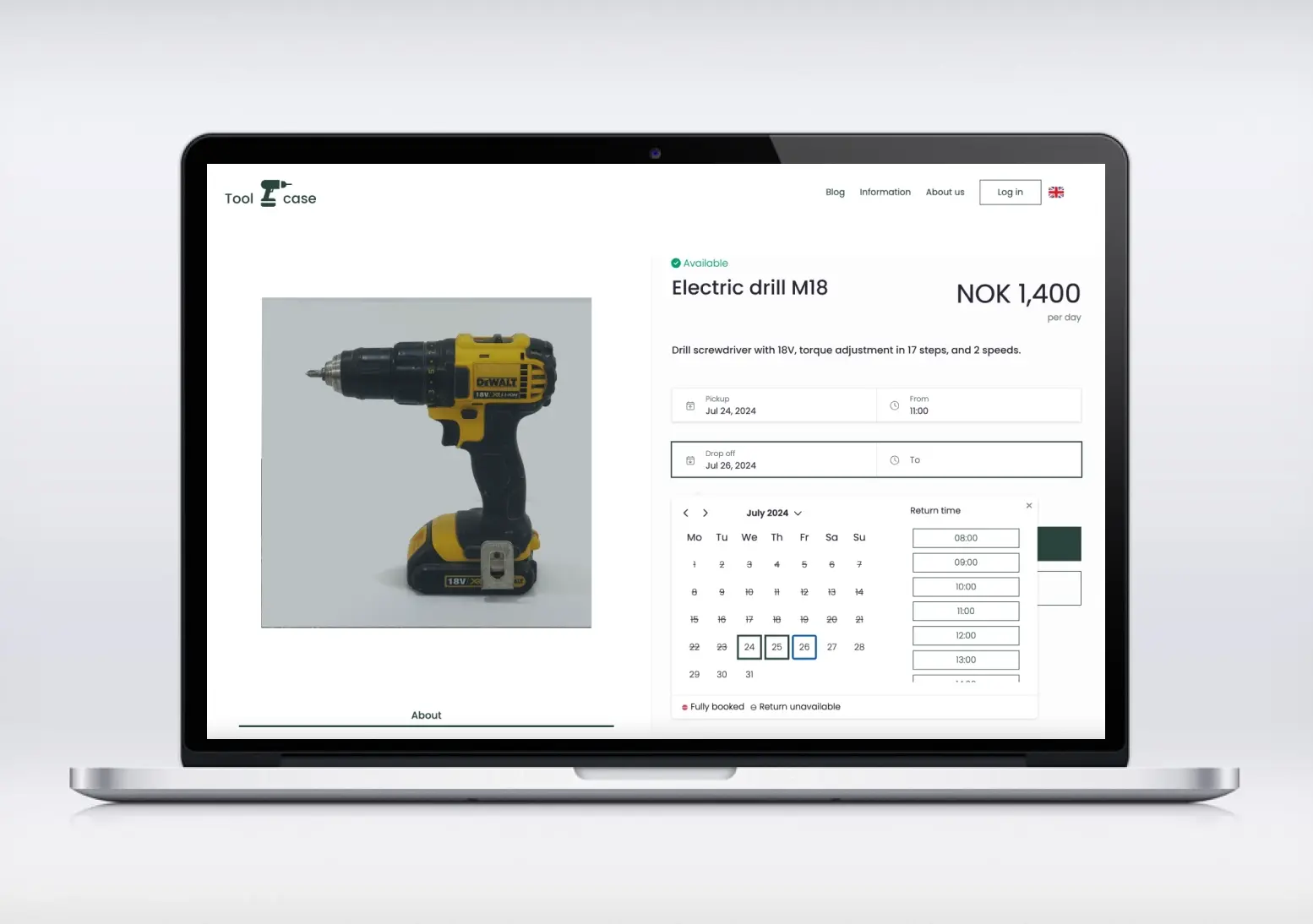
Modern rental platforms like Sharefox offer an all-in-one system covering booking, inventory, and the customer-facing checkout experience. Key capabilities worth evaluating in any rental booking software include:
- Self-service booking and check-in/check-out
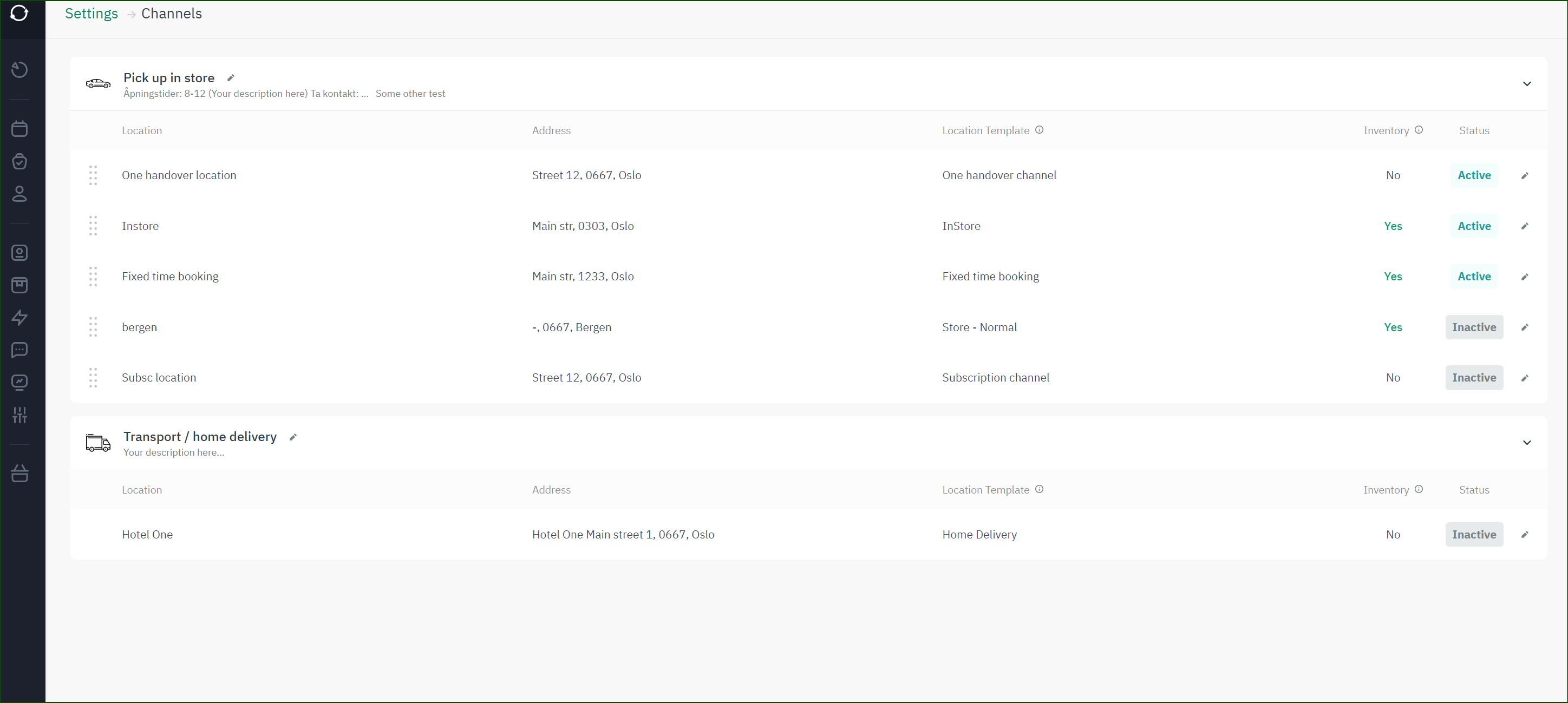
- Real-time inventory visibility across locations
- Flexible pricing (daily, weekly, subscription-based)
- Integrations with accounting (e.g., Visma), payments (e.g., Nets), and ID verification (e.g., Criipto)
- Built-in analytics for utilization and revenue-per-asset reporting
Benefits of Technology in Event Rental
“As experiential spending continues to outpace spending on physical goods, rental and access-based business models are capturing a growing share of consumer budgets — and the operators who make booking frictionless are the ones capturing that demand.” — representative industry insight drawn from rental-economy research; verify exact wording against the cited source before publishing.
Centralizing booking, inventory, and invoicing removes the manual admin that causes double-bookings and lost equipment — the two most common complaints among growing rental operators. During peak season, automation (digital check-in/out, integrated ID verification) is what actually prevents the “operational chaos” that stalls growth: idle equipment, slow turnaround, and frustrated customers. This is also the stage where a scalable inventory rental management system starts paying for itself many times over.
Integrating Software into Your Business Plan
Thinking about software from day one — not after the first busy season goes badly — is what separates operators who scale smoothly from those who spend a year migrating off spreadsheets under pressure. The right platform becomes the operational hub for everything: booking, maintenance scheduling, and profitability tracking by item. It also directly informs pricing decisions; our post on pricing strategies for event rental businesses breaks down how utilization data should shape your rates.
Manual Process vs. Rental Software: A Quick Comparison
| Operational Area | Manual / Spreadsheet Process | Purpose-Built Rental Software |
|---|---|---|
| Booking | Phone/email, manually cross-checked | Real-time online availability, self-service |
| Inventory visibility | Static spreadsheet, easily outdated | Live tracking across all locations |
| Payments & deposits | Manual invoicing, delayed collection | Integrated payments and automated deposits |
| ID / age verification | Paper forms, staff judgment | Digital ID verification at checkout |
| Peak-season turnaround | Bottlenecked by staff availability | Automated check-in/out, faster asset cycling |
| Reporting | Ad hoc, backward-looking | Real-time analytics on utilization and revenue |
| Scalability to new locations | High admin overhead per site | Centralized system, low incremental overhead |



 All in one platform